
Main Courses
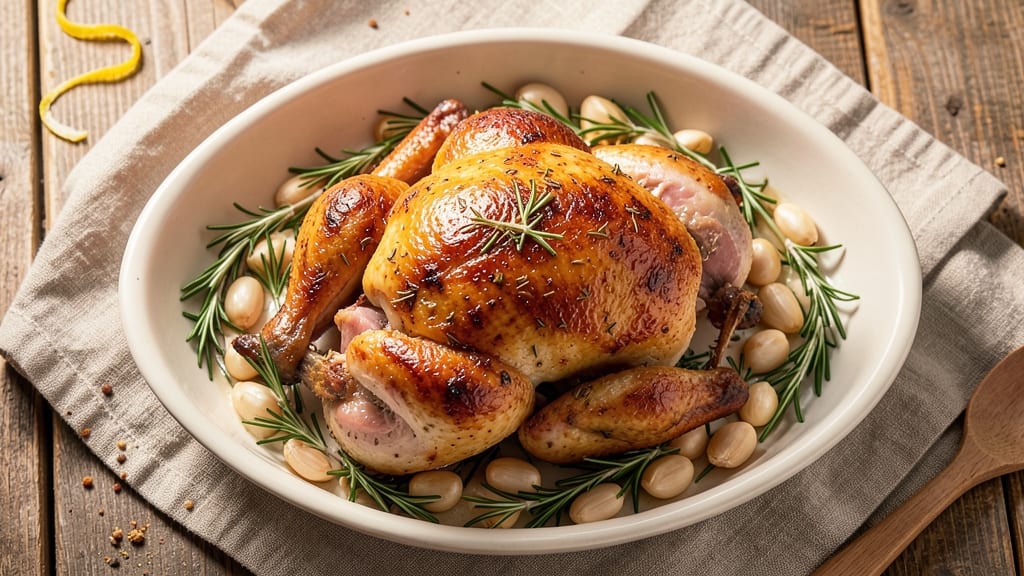
An 8 lb roast chicken cooked to golden perfection requires more than just time in the oven—it demands the buttermilk brine secret that guarantees all-day moisture and crispy skin.
This technique transforms a simple roast into a restaurant-quality centerpiece, where every bite delivers tender, juicy meat without a trace of dryness. The key lies in the brine, which works overnight to infuse flavor and lock in moisture, while a high-heat finish ensures that crispy skin we all crave.
What sets this recipe apart is the balance of science and simplicity: a 325°F oven for even cooking, precise basting to maintain moisture, and a 165°F internal temperature that guarantees safety without sacrificing flavor.
No shortcuts here—just a methodical approach that delivers a chicken so flavorful, it becomes the star of any meal. The buttermilk brine isn’t just about moisture; it adds a subtle tang that elevates the chicken’s natural taste, making it impossible to resist.
By the time you carve into this roast, you’ll uncover meat that falls apart with just a fork, skin that shatters into crispy shards, and a richness that pairs perfectly with roasted vegetables or a classic pan gravy.
This isn’t just dinner—it’s a showstopper that turns a weeknight into a celebration. Ready to master the art of the perfect roast? Let’s get started.
The beauty of this method is its versatility: whether you’re hosting a holiday feast or simply craving a comforting Sunday dinner, this 8 lb roast chicken delivers consistent, foolproof results.
The buttermilk brine can be prepped ahead, so you spend less time in the kitchen and more time enjoying the meal. And with optional sides like garlic mashed potatoes or honey-glazed carrots, you’ll have a complete, restaurant-worthy spread without the stress.
Ingredients for 8 lb roast chicken
The secret to juicy, crispy roast chicken lies in these 12 ingredients—where buttermilk and salt work magic overnight.
| Ingredient | Amount | Notes |
|---|---|---|
| Whole Roast Chicken 🍗 | 8 lb | Fresh, preferably free-range |
| Buttermilk 🥛 | 2 cups | Full-fat for best flavor |
| Coarse Kosher Salt 🧂 | 1 cup | Diamond Crystal preferred |
| Garlic Cloves 🧄 | 8 cloves | Peeled and smashed |
| Fresh Rosemary 🌿 | ½ cup | Chopped, stems removed |
| Fresh Thyme 🌿 | ¼ cup | Leaves only, stems discarded |
| Black Peppercorns 🌶️ | 1 tbsp | Freshly cracked |
| Unsalted Butter 🧈 | ½ cup | Cold, cubed |
| Olive Oil 🫒 | ¼ cup | Extra-virgin for richness |
| Lemon Juice 🍋 | ½ cup | Freshly squeezed |
| Fresh Parsley 🌿 | ¼ cup | Chopped, for garnish |
| Water 💧 | 4 cups | Cold, filtered preferred |
The chicken is non-negotiable—look for a free-range or organic bird at Whole Foods or your local butcher. The 8 lb size ensures enough for 8 servings with leftovers, but don't skimp on quality. For the brine, Diamond Crystal kosher salt both work, but Diamond has larger crystals that dissolve more evenly. Fresh herbs make all the difference here—Whole Foods or local farmers markets usually have the best selection. The buttermilk should be full-fat for that rich, creamy texture that keeps the meat impossibly tender.
No buttermilk? Substitute plain yogurt or sour cream at the same amount, but add 1 tbsp lemon juice to mimic the tang. Short on fresh herbs? Dried rosemary and thyme at one-third the amount will work in a pinch, though fresh is ideal. The olive oil can be swapped for avocado oil if you prefer a milder flavor. For the butter, European-style unsalted (like Plugrá) adds extra richness. If you're prepping ahead, the brine can sit in the fridge for up to 24 hours—just don't skip it. The lemon juice can also be made 2 days ahead and stored in the fridge.
The brine mixture keeps for 3 days in the fridge if you make extra—just store it in an airtight container. Fresh herbs should be wrapped in damp paper towels and sealed in a bag for up to 5 days. The chicken itself can be brined for 12-24 hours before roasting, giving you flexibility for timing. Leftovers reheat beautifully—cover with foil and bake at 350°F for 20-30 minutes until warmed through. For a restaurant-worthy touch, save the pan drippings to make a quick pan gravy using the reserved butter and herbs.
Why You'll Love This Recipe
- Fewer Ingredients, Big Payoff: I swear by this recipe because it’s that simple—just a whole chicken, buttermilk, salt, garlic, and rosemary. No fancy marinades or last-minute prep; the buttermilk tenderizes while you’re chopping veggies for the sides.
- Crispy Skin, Juicy Magic: The secret’s in the salt and time: that coarse kosher salt makes the skin crackle like a wood-fired dream, while the garlic and rosemary infuse every bite. Honestly, the first time I tried it, I nearly licked the pan.
- Weeknight to Holiday: This chicken works for everything—throw it in the oven on a Tuesday for dinner, or roast it Sunday afternoon for leftovers that taste just as good reheated. My in-laws think I slaved for hours when it’s really just 30 minutes of hands-off magic.
- Leftovers That Don’t Suck: Between us, most roast chicken leftovers are sad. Not this one. The buttermilk keeps it moist, and the crispy bits? They’re gold for sandwiches, salads, or even fried rice. I’ve fed my family for days with one bird—no waste, just flavor.
Step-by-step instructions for buttermilk brined roast chicken
Here's how to transform an ordinary roast chicken into a juicy, golden masterpiece using the buttermilk brine technique.
Prepare the Buttermilk Brine Mixture
In a large bowl, whisk together the 2 cups buttermilk, 1 cup coarse kosher salt, 4 cups cold water, and 0.5 cup lemon juice until the salt completely dissolves. This brine creates an osmotic solution that infuses the chicken with moisture and flavor from the inside out. The buttermilk adds a subtle tang that pairs beautifully with the rich chicken.
Add the 8 smashed garlic cloves, 0.5 cup chopped fresh rosemary, 0.25 cup fresh thyme leaves, and 1 tablespoon freshly cracked black peppercorns to the brine mixture. Stir gently to combine all ingredients. The herbs and spices will steep in the brine, extracting their essential oils for maximum flavor infusion into the chicken.
Brine the Chicken Overnight
Place the 8 lb whole roast chicken in a large, clean plastic bag or food-safe container that can accommodate it with room to spare. Pour the prepared brine over the chicken, ensuring it's completely submerged. I like to weigh down the chicken with a plate or bowl to keep it fully immersed in the liquid.
Seal the bag or cover the container and refrigerate for at least 12 hours or up to 24 hours. This extended brining time ensures deep flavor penetration and unparalleled moisture retention. The chicken will absorb the buttermilk's acidity, which helps tenderize the meat while adding a subtle tang that balances the richness of the roasted bird.
Prep the Chicken for Roasting
Remove the chicken from the brine and pat it dry thoroughly with paper towels, inside and out. This step is crucial for developing crispy skin. I like to work in a well-ventilated area as the buttermilk can be quite pungent. Discard the used brine.
Preheat your oven to 375°F. In a small bowl, combine 0.5 cup cold cubed unsalted butter and 0.25 cup extra-virgin olive oil. Rub this mixture all over the chicken, including inside the cavity. The fat mixture will create a protective barrier that promotes browning while keeping the meat moist during roasting.
Roast to Golden Perfection
Place the chicken breast-side up on a rack set in a roasting pan. Roast for 1 hour 15 minutes until the internal temperature reaches 155°F in the thickest part of the thigh. This lower temperature allows for even cooking and prevents the breast from drying out.
Increase the oven temperature to 425°F and continue roasting for an additional 20-25 minutes until the skin is deep golden brown and crispy, and the internal temperature reaches 165°F. The high heat at the end creates that beautiful caramelization while ensuring the chicken is fully cooked through. You'll know it's done when the juices run clear and the skin is crisp enough to crackle.
Rest and Serve
Transfer the chicken to a cutting board and tent loosely with aluminum foil. Let it rest for 20-30 minutes before carving. This resting period allows the juices to redistribute throughout the meat, ensuring each slice is moist and flavorful.
While the chicken rests, prepare the pan sauce by skimming off any rendered fat from the roasting pan and discarding the skin and bones. Add 0.25 cup chopped fresh parsley and a splash of the pan juices to the sauce. Carve the chicken and serve with the pan sauce spooned over the top. The result is a chicken so moist and flavorful, it will be the star of your meal.
Pro Tips For Making 8 Lb Roast Chicken
- USE A THERMOMETER: I learned this the hard way—guessing doneness on an 8 lb chicken leads to dry meat or undercooked bits. Aim for 165°F in the thickest part of the thigh (not the breast), and pull it when the juices run clear. The breast will keep cooking as it rests.
- SALT THE CHICKEN 24 HOURS EARLY: This isn’t the prettiest method, but it’s the tastiest. Pat the chicken dry, then rub it with 1 tablespoon coarse kosher salt inside and out, and refrigerate uncovered overnight. The skin crisps like a dream, and the meat stays juicier.
- DON’T SKIP THE BUTTERMILK SOAK: Sounds weird, but it works: After salting, submerge the chicken in buttermilk for at least 4 hours (or overnight). The acid tenderizes the skin, and the fat keeps it moist—no extra basting needed. (Yes, even if you’re impatient like me.)
- STUFF THE CAVITY WITH GARLIC AND ROSEMARY: Cramming loose garlic cloves and sprigs of rosemary into the cavity makes a real difference. Tuck in 6-8 cloves and 4-5 sprigs, then secure with a few toothpicks—this way, the aromatics infuse the meat instead of floating in the pan.
Essential equipment for great 8 lb roast chicken
Roasting Pan Essentials
Start with a heavy-duty roasting pan—I recommend All-Clad Stainless Steel or Le Creuset Dutch Oven for even heat distribution. The pan should have a rack to elevate the chicken, allowing air to circulate for crispy skin.
A 14-inch diameter pan works perfectly for an 8 lb chicken, giving it room to roast without crowding. 🔥
Precision Thermometer
A meat thermometer is non-negotiable for perfect results. I use the Thermoworks Smoke for its instant-read accuracy—insert the probe into the thickest part of the thigh (avoid touching bone).
The 165°F internal temperature is your target, and this tool ensures you never overcook. Trust me, it’s a game-changer for juicy, safe chicken every time.
Basting Brush & Tools
For basting, a silicon basting brush (like OXO Good Grips) is your best friend—it won’t absorb butter or oil like a regular brush. Pair it with a small offset spatula to flip the chicken easily.
A kitchen twine (about 12 inches) is also handy for trussing, keeping the legs and wings tucked in for even cooking. 💡
Butter & Oil Mix
Use European-style unsalted butter (like Plugrá) and extra-virgin olive oil for the basting mixture—they create a flavorful barrier that locks in moisture. A small mixing bowl and rubber spatula make it easy to combine the 0.5 cup cold butter and 0.25 cup olive oil into a spreadable paste.
Keep this mixture chilled until ready to use.
Plastic Bag or Container
For brining, a large, sealable plastic bag (like Ziploc Gallon) or a food-safe glass container works best. The bag makes it easy to submerge the chicken completely, while a container lets you weigh it down with a plate.
Avoid metal containers—they can react with the acidic brine. I prefer the bag for convenience, but a container is great if you’re brining multiple chickens at once.
Resting Setup
After roasting, let the chicken rest on a large cutting board (like John Boos 12x18-inch). Tent it loosely with aluminum foil to keep it warm while juices redistribute. A small bowl for pan drippings and a sharp carving knife (like Dexter-Russell 12-inch) complete the setup for serving.
This step is where the magic happens—don’t skip it! ✨
Nutrition facts
Frequently asked questions
Why does the recipe call for an overnight buttermilk brine?
The buttermilk brine works overnight to create two magic effects: it tenderizes the meat through gentle acidity while infusing it with moisture and flavor from the inside out. The longer it brines (up to 24 hours), the more evenly the seasoning penetrates, resulting in a chicken that stays juicy even after hours of roasting. This is especially important for an 8 lb bird where even cooking is critical.
Can I use a smaller roasting pan for an 8 lb chicken?
No—an 8 lb chicken needs a pan with at least 14-inch diameter to prevent crowding. A smaller pan traps steam, leading to soggy skin and uneven cooking. Use a heavy-duty pan with a rack for proper air circulation, like All-Clad Stainless Steel or Le Creuset Dutch Oven. The extra space also makes basting easier.
What if my chicken browns too quickly at 425°F?
If the skin browns before reaching 165°F internal temp, tent loosely with foil and continue cooking. For extra insurance, reduce oven temp to 375°F after the initial 1 hour 15 minutes and monitor closely. The high heat finish is key for crispiness, but patience prevents over-browning while the meat finishes cooking.
How do I know when the chicken is fully cooked?
Use a meat thermometer—insert it into the thickest part of the thigh (avoid bone). The chicken is done when it reaches 165°F. The juices should run clear, and the skin should be crispy. Never rely on color alone; some parts may look cooked while others remain underdone.
Can I make this recipe without buttermilk?
Yes! Substitute 2 cups plain yogurt or sour cream plus 1 tbsp lemon juice for the buttermilk. The acidity remains, though the texture will differ slightly. For best results, use full-fat dairy to maintain moisture. The tang is essential for balancing the chicken's richness—don't skip the lemon juice.