
Main Courses
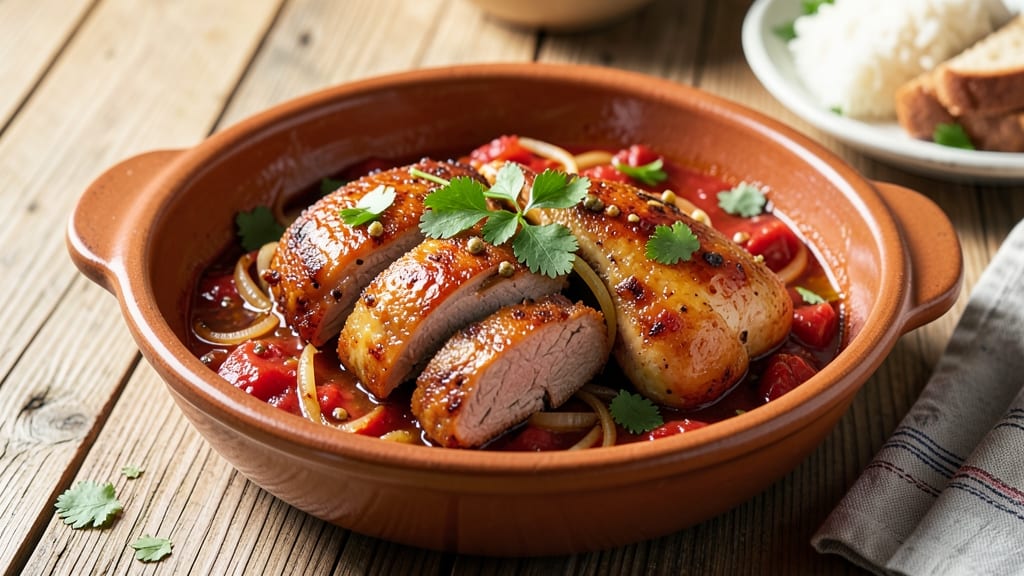
This Afritada chicken and pork recipe brings the rich, tangy-sweet flavors of Filipino comfort food to your kitchen with a perfect balance of tender meats and vibrant tomato sauce. 🔥 The secret lies in slow-braising the meat until it falls apart, creating a dish that's hearty enough for family gatherings but simple enough for weeknight dinners.
Traditional techniques like browning the meat and layering spices ensure deep, complex flavors that transport you straight to the Philippines.
The dish starts with chicken and pork pieces seared until golden, then simmered in a rich tomato-based sauce infused with vinegar, soy sauce, and garlic. This complete dish delivers melt-in-your-mouth meat paired with a sauce that's tangy, slightly sweet, and packed with umami.
The key is patience—letting the flavors meld over 30-45 minutes of gentle simmering transforms simple ingredients into something extraordinary.
What makes this recipe special is its versatility. Serve it over steamed rice to soak up every last drop of that flavorful sauce, or enjoy it as-is for a satisfying one-dish meal.
The combination of chicken and pork ensures a hearty portion, while the sauce's balance of acidity and sweetness keeps every bite exciting. This is the kind of dish that becomes a family favorite after just one taste.
Ready to master this Filipino classic? The process is straightforward, but the results are anything but ordinary. With just a few simple ingredients and a little time, you'll create a dish that feels like a warm embrace—perfect for any occasion. Let's get cooking!
Ingredients for afritada chicken pork
Simple ingredients, bold Filipino flavors—this Afritada delivers melt-in-your-mouth meat and tangy-sweet sauce.
| Ingredient | Amount | Notes |
|---|---|---|
| Chicken Thighs 🍗 | 1 ½ lb | Bone-in, skin-on preferred |
| Pork Shoulder 🐷 | 1 ½ lb | Cut into 2-inch pieces |
| Canned Tomato Sauce 🍅 | 2 cups | San Marzano preferred |
| White Vinegar 💧 | ½ cup | Distilled or apple cider |
| Soy Sauce 🍶 | ¼ cup | Light or regular |
| Garlic Cloves 🧄 | 8 cloves | Minced, not pressed |
| Onion 🧅 | 1 whole | Medium, diced |
| Bay Leaves 🍃 | 2 whole | Dried, crushed |
| Black Peppercorns 🌶️ | 1 tsp | Freshly cracked |
| Salt 🧂 | 1 ½ tsp | Kosher or sea salt |
| Sugar 🍚 | 1 tbsp | White or brown |
| Olive Oil 🫒 | ¼ cup | Extra-virgin for browning |
| Long-Grain White Rice 🍚 | 2 cups | Uncooked, for serving |
The meat makes this dish. Chicken thighs stay juicy while pork shoulder adds rich, fall-apart texture—both should be cut into even 2-inch pieces for consistent cooking. I grab bone-in, skin-on thighs from Costco or the butcher counter at Whole Foods for that extra flavor. If you're using pre-cut pork, look for well-marbled shoulder—it keeps the meat tender. For the tomato sauce, San Marzano cans are worth the splurge (or grab a Trader Joe's organic can if you're on a budget). Fresh garlic and onion are non-negotiable here—they're the flavor foundation.
No San Marzano? Any quality canned tomatoes work—just drain them well. Running short on vinegar? Substitute lemon juice at the same amount, but you'll lose that classic tang. The soy sauce can be swapped for coconut aminos if you're avoiding gluten, though traditional recipes rely on that umami kick. Bay leaves are essential—don't skip them! If you're in a pinch, dried thyme at half the amount gives a similar earthy note. The sugar balances the acidity, but honey or maple syrup work too (though they'll change the texture slightly).
This sauce gets better with time—reheat gently to preserve all those flavors. Keeps in the fridge for 4-5 days or freezes for 3 months (portion into containers for easy reheating). I always make extra because the leftovers taste even better the next day. For serving, steamed jasmine rice is traditional, but any long-grain white rice works. Pro tip: Brown the meat thoroughly before adding liquids—this builds deep flavor that makes all the difference in a crowd-pleasing dish.
Why You'll Love This Recipe
- One-Pot Magic: I swear by this recipe when I’m too tired to scrub a million dishes—just brown the meat, toss in the tomato sauce, vinegar, and soy sauce, then let it simmer. The pork gets fork-tender while the chicken stays juicy, all in one pan. No fancy techniques, no stress.
- Umami Bomb: That combo of white vinegar cutting through the richness of pork shoulder and chicken thighs? Chef’s kiss. The canned tomato sauce adds depth, and a splash of soy sauce ties it all together—salty, tangy, and just a little sweet. It’s the kind of flavor that makes you reach for seconds without thinking.
- Leftover Hero: Afritada tastes even better the next day, honestly. I make a double batch on Sundays because it reheats like a dream—soft, saucy, and packed with flavor. Perfect for packed lunches or when you’re too lazy to cook again. (Yes, even on a Tuesday night.)
- Budget Feast: Pork shoulder and chicken thighs are affordable cuts that stretch across meals, and canned tomato sauce? Always on hand. This recipe feeds four for under $15, and the leftovers keep well for days. It’s my go-to when I need to feed the family without breaking the bank.
Step-by-step instructions for afritada chicken and pork
Here's how to create this rich, tomato-based braise that balances tender meats with sweet-savory sauce.
🔥 Step 1: Brown the Meats for Maximum Flavor
Heat the 0.25 cup olive oil in a large Dutch oven over medium-high heat until shimmering. Working in batches, add the 1.5 lb pork shoulder cut into 2-inch pieces, spreading them out in a single layer. Let them sear undisturbed for 3-4 minutes until deeply golden brown on all sides.
Transfer the browned pork to a plate. Repeat with the 1.5 lb chicken thighs, skin-side down first, searing for 4-5 minutes per side until the skin is crispy and golden. This initial browning creates the rich, caramelized foundation for your sauce. Don't rush this step—patience here makes all the difference in flavor.
👨🍳 Step 2: Build the Aromatic Base
In the same Dutch oven, add the 1 whole onion and 8 cloves garlic (minced) to the rendered fats. Cook over medium heat for 5-6 minutes until the onions soften and the garlic becomes fragrant. You'll smell that sweet, nutty aroma—this is where the magic starts.
Add the 1 tsp black peppercorns (cracked) and 2 whole bay leaves (crushed), stirring for 30 seconds to toast the spices lightly. This releases their essential oils and deepens their flavor. The peppercorns should sizzle gently, and the bay leaves should release their piney aroma. This aromatic base forms the flavor backbone of your afritada.
🥘 Step 3: Develop the Tomato Sauce
Pour in the 2 cups canned tomato sauce, 0.5 cup white vinegar, 0.25 cup soy sauce, 1.5 tsp salt, and 1 tbsp sugar. Stir well to combine, scraping up any browned bits from the bottom of the pot. These bits, called fond, are packed with flavor that dissolves into your sauce.
Bring the mixture to a gentle simmer, then reduce heat to low. Add the browned meats back to the pot, spooning some of the sauce over them to begin cooking. Let everything simmer uncovered for 45-50 minutes, stirring occasionally, until the pork is fork-tender and the sauce has thickened slightly. You're looking for a sauce that coats the back of a spoon but still has good body.
⏰ Step 4: Rest and Serve with Perfect Rice
Once the meats are tender and the sauce has thickened, transfer everything to a serving platter. Let it rest for 10 minutes before serving—this allows the juices to redistribute throughout the meats, ensuring each bite is moist and flavorful. I know it's tempting to serve immediately, but trust me on this waiting period.
While the afritada rests, prepare the 2 cups long-grain white rice according to package instructions. Serve the rice in bowls and top with generous portions of the chicken and pork, ladling the rich tomato sauce over everything. Garnish with fresh cilantro if you like, but the classic afritada relies on its robust flavors without needing extra garnishes.
Pro Tips For Making Afritada Chicken Pork
- CRISP THE MEAT FIRST: Skip the slow start—sear pork shoulder and chicken thighs in batches over medium-high heat until they’re deeply golden. I used to rush this, and the sauce never stuck right. Two minutes per side, no crowding, and you’ll taste the difference when the vinegar and soy sauce meld with that crust.
- SWEAT THE ONIONS LOW: Don’t rush the onion-vinegar base. Cook them on low heat for 8-10 minutes until they’re translucent and the vinegar smell fades—this softens the acidity. I learned this the hard way when my first batch tasted sharp and underdeveloped. Patience here makes the sauce sing.
- SAVE THE SOY SAUCE: Add soy sauce after the tomatoes, not at the start. The vinegar’s acid will cook it off too fast, making your dish taste flat. Stir it in with the last 10 minutes of cooking—this keeps the umami bright and balanced. (Yes, even if the recipe says otherwise.)
- USE THICK TOMATO SAUCE: Grab the chunky canned tomato sauce, not the smooth kind. The texture clings better to the meat and adds body to the sauce. I was skeptical until I tried it—now I won’t go back. If you’re in a pinch, mash a few tomatoes by hand for extra depth.
Flavor customization for these flavors
Classic Tangy-Sweet
This is the signature flavor profile—bright from 0.5 cup white vinegar and balanced with 1 tbsp sugar to mellow the acidity. I recommend using distilled white vinegar for consistency, but apple cider vinegar adds subtle fruitiness.
For extra depth, add 1 tbsp tomato paste to the Dutch oven before the tomato sauce—it intensifies the umami. 💛
Spicy Kick
Want heat? Add 1-2 tbsp sriracha or 1 tsp chili flakes at the end of cooking. For smoky heat, stir in 1 tbsp adobo sauce (Filipino fermented chili) during the simmer.
I love this combo with 1 tbsp soy sauce for a balanced spicy-savory punch. Adjust to taste—Filipino cuisine often balances heat with sweetness.
Creamy Coconut Twist
For a modern take, stir in ½ cup coconut milk after the meats are tender. This transforms the sauce into a rich, velvety consistency while adding tropical notes.
I recommend full-fat coconut milk for best texture. Add it in the last 10 minutes of cooking to prevent curdling. Garnish with toasted coconut flakes for extra crunch.
Herb-Infused Freshness
Brighten the dish with 2 tbsp chopped cilantro or 1 tbsp finely chopped parsley at the end. For a more authentic Filipino touch, add 1 tbsp chopped kalamansi leaves (if available) or substitute with lime zest.
These herbs cut through the richness while adding freshness. I always add them just before serving to preserve their vibrant color.
Smoky BBQ Fusion
For a fusion twist, swap 0.25 cup soy sauce for 0.25 cup BBQ sauce (I like Sweet Baby Ray's) and add 1 tbsp smoked paprika to the aromatic base.
This creates a sweet-smoky depth that pairs perfectly with the tangy tomato sauce. The BBQ sauce also adds a subtle caramelized sweetness that complements the vinegar beautifully.
Vegetable Boost
Add 1 cup diced bell peppers and 1 cup sliced mushrooms with the onions for extra texture. For a heartier dish, include 1 cup diced potatoes (add them with the meats).
These vegetables soak up the flavorful sauce while adding bulk. I recommend green bell peppers** for a slightly sweeter taste, but any color works.
Nutrition facts
Frequently asked questions
Can I substitute chicken breast for thighs in this recipe?
I don't recommend it! Chicken thighs stay juicy and tender during the long simmer, while chicken breast can dry out. If you must use breast, cut it into 1-inch pieces and add it only after the pork has cooked for 20 minutes to prevent overcooking. For best results, stick with thighs—they're perfect for braising.
How do I adjust the recipe for a slow cooker?
Transfer all ingredients to your slow cooker after browning the meats. Cook on low for 6-7 hours or high for 3-4 hours until the pork is fork-tender. The sauce will be thinner, so reduce it on the stovetop for 10-15 minutes before serving. Just add 1 tbsp cornstarch mixed with 2 tbsp water and stir until thickened.
Why does my afritada sauce taste too acidic?
This usually happens when the vinegar overwhelms the other flavors. Balance it by adding ½ tsp sugar or 1 tsp honey to mellow the acidity. For extra depth, stir in 1 tbsp tomato paste or a pinch of salt to enhance the umami. The sauce should be tangy but not sour—think of it like a well-balanced vinaigrette.
Can I make afritada without tomato sauce?
Replace the tomato sauce with 2 cups crushed tomatoes (fresh or canned) and add 1 tbsp tomato paste for depth. Simmer the tomatoes with the vinegar and soy sauce for 10 minutes first to develop flavor. The sauce will be slightly thinner but still delicious. For a richer version, add ½ cup coconut milk at the end.
How do I reheat leftovers without drying out the meat?
Reheat gently in a skillet with 1 tbsp water or broth over low heat for 5-7 minutes, stirring occasionally. Avoid microwaving—it makes the sauce watery. For extra flavor, add 1 tsp soy sauce or a splash of vinegar while reheating. Store leftovers in an airtight container for up to 4 days.