
Soups & Stews
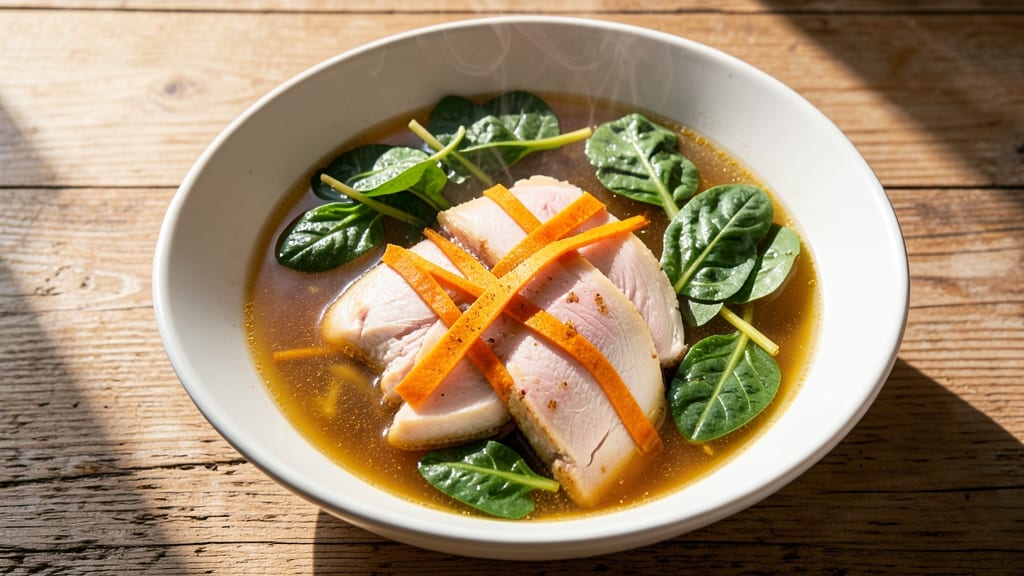
This alkaline chicken soup recipe transforms nourishing ingredients into a gut-soothing elixir that balances pH while warming your body. 🌿 The foundation begins with mineral-rich bone broth, where collagen-rich chicken simmers alongside turmeric and ginger—powerful alkaline allies that reduce inflammation and support digestion.
Every spoonful delivers not just comfort, but science-backed benefits: the turmeric's curcumin fights oxidative stress, while ginger aids circulation and soothes the digestive tract.
The secret lies in the ingredient synergy: leafy greens like spinach and kale provide alkaline minerals, while citrus zest brightens the broth without acidifying it. Traditional adaptations—like adding shiitake mushrooms for umami depth or coconut milk for healthy fats—elevate this beyond basic broth into a therapeutic meal.
What sets this apart is the balance: alkaline-friendly ingredients that still deliver bold, satisfying flavors without compromising health benefits.
By the time you ladle this golden-hued soup into bowls, you'll notice the aroma alone working its magic—earthy, slightly spiced, with a subtle citrus lift that lingers.
The texture is velvety yet light, with tender chicken that practically melts in your mouth, all while the broth remains rich enough to coat your throat soothingly. This isn't just soup; it's a restorative ritual for days when your body needs both warmth and balance.
Perfect for post-illness recovery, seasonal immunity support, or simply as a weekly staple, this recipe scales effortlessly for one or six. The beauty lies in its flexibility: swap in seasonal vegetables, adjust spice levels, or add a splash of apple cider vinegar for tangy contrast.
Here's how to craft it—step by step—for a bowl that heals as much as it satisfies.
Ingredients for alkaline chicken soup
These alkaline-boosting ingredients create a gut-soothing broth that balances pH while delivering deep flavor.
| Ingredient | Amount | Notes |
|---|---|---|
| Organic Bone Broth 🍲 | 6 cups | Homemade or high-quality store-bought |
| Free-Range Chicken Breast 🍗 | 1 ½ lb | Skinless, boneless, cut into bite-sized pieces |
| Fresh Turmeric Root 🌿 | 1 tbsp | Freshly grated for potency |
| Fresh Ginger Root 🌿 | 1 tbsp | Freshly grated, peeled |
| Organic Baby Spinach 🍃 | 2 cups | Packed, fresh or frozen |
| Organic Kale Leaves 🌿 | 2 cups | Chopped, stems removed |
| Organic Carrots 🥕 | 3 medium | Peeled, sliced into thin rounds |
| Organic Shiitake Mushrooms 🍄 | 4 whole | Stemmed, sliced |
| Extra-Virgin Olive Oil 🫒 | 1 tbsp | For sautéing mushrooms |
| Organic Lemon Zest 🍋 | 1 tsp | Freshly grated |
| Coconut Milk 🥥 | ½ cup | Full-fat for creaminess |
| Sea Salt 🧂 | 1 tsp | Diamond Crystal preferred |
| Black Peppercorns 🌶️ | ½ tsp | Freshly cracked |
| Apple Cider Vinegar 🍎 | 1 tbsp | For tangy contrast |
The bone broth is the heart of this recipe—homemade is ideal, but Pacific Foods or Kettle & Fire brands work beautifully. Look for broths with collagen-rich labels, as this adds to the gut-healing properties. Fresh turmeric and ginger are non-negotiable for their anti-inflammatory benefits, though organic powdered versions at one-third the amount work in a pinch. For the greens, organic baby spinach and kale from the grocery store's refrigerated section stay fresh longer than pre-washed bags. The shiitake mushrooms? Trader Joe's has them pre-sliced for convenience, but whole mushrooms last longer in the fridge.
No fresh turmeric? Ground turmeric at half the amount works, but it lacks the same potency. Substitute ginger with galangal root for a different but equally powerful flavor. Running low on coconut milk? Cashew cream gives a similar richness. The citrus zest can be swapped for lime zest if lemons aren't in season. For extra umami depth, add a dash of miso paste—just be sure it's gluten-free if needed. The carrots can be baby carrots if you prefer convenience, but whole carrots have more fiber.
Store the broth base (without greens) in the fridge for 4-5 days or freeze in ice cube trays for up to 3 months. The greens wilt quickly, so add them fresh when reheating. For meal prep, portion the soup into glass containers with tight lids—it reheats beautifully on the stove or in the microwave. The lemon zest and apple cider vinegar can be added fresh when serving to preserve their bright flavors. This soup actually tastes better the next day as the flavors meld together.
Why You'll Love This Recipe
- One-Pot Magic: I swear by this—just toss the chicken, turmeric, and ginger into simmering broth, then let it work its magic. No chopping, no fuss, and the broth does all the heavy lifting.
- Golden-Ginger Heat: That fresh ginger and turmeric? It’s like a warm hug in a bowl—earthy, slightly spicy, and soothing all at once. The spinach wilts into tender greens, but the real star is the broth’s deep, savory richness.
- Lunchbox Hero: Between us, this is my go-to for meal prep. The chicken shreds easily, the broth stays rich even reheated, and packing it in jars means zero sad desk lunches—just hearty, flavorful bites all week.
- Budget Booster: Organic bone broth stretches like crazy, and free-range chicken goes a long way when you’re simmering it low and slow. Honestly, it’s one of those recipes where the ingredients cost more upfront, but every leftovers portion feels like a treat.
Step-by-step instructions for alkaline chicken soup
Here's how to craft a vibrant, gut-soothing elixir packed with anti-inflammatory power.
🍳 Step 1: Sauté the Root Powerhouse
Heat the 1 tablespoon extra-virgin olive oil in a large pot over medium heat. Add the 1 tablespoon freshly grated turmeric root and 1 tablespoon freshly grated ginger root, stirring constantly for 1-2 minutes until fragrant and aromatic. You'll notice the spices release their essential oils and fill your kitchen with a warm, earthy scent—this is when they begin unlocking their potent anti-inflammatory properties.
Here's the thing—freshly grated turmeric and ginger are more bioavailable than powdered versions. I like to press them gently with the back of a spoon to release even more of their beneficial compounds. Don't let them brown, or they'll turn bitter. If the spices start to darken too quickly, reduce the heat slightly and keep stirring.
🍳 Step 2: Build the Alkaline Base
Add the 1.5 lb bite-sized free-range chicken breast pieces to the pot, searing them lightly for 2-3 minutes until just beginning to turn opaque. Remove the chicken with a slotted spoon and set aside temporarily. This initial sear helps lock in moisture and builds foundational flavor.
To the same pot, add the 3 medium sliced organic carrots and 4 whole stemmed and sliced organic shiitake mushrooms. Sauté for 4-5 minutes until the mushrooms release their moisture and the carrots begin to soften slightly. This step develops their natural sweetness and prepares them for the broth infusion. Here's where the magic happens—the mushrooms will release umami compounds that deepen the soup's complexity.
🥘 Step 3: Infuse the Bone Broth
Pour in the 6 cups organic bone broth and bring to a gentle simmer over medium-low heat. Return the chicken to the pot, add the 1 tablespoon apple cider vinegar, and let everything simmer uncovered for 15 minutes. The vinegar serves a dual purpose here—it helps extract minerals from the chicken and bone broth while adding a subtle tang that balances the earthy flavors.
I know it seems counterintuitive to add acid to an alkaline recipe, but apple cider vinegar actually supports alkalinity in the body when metabolized properly. The broth should be gently bubbling but not vigorously boiling—this ensures the chicken cooks evenly without becoming rubbery. Skim off any foam that rises to the surface during this time for a cleaner broth.
🥘 Step 4: Finish with Creamy Alkaline Elements
Reduce heat to low and stir in the 1 teaspoon organic lemon zest, 0.5 cup coconut milk, 1 teaspoon sea salt, and 0.5 teaspoon freshly cracked black peppercorns. Let the soup simmer gently for another 5 minutes to allow the flavors to meld. The coconut milk adds creaminess without the heaviness of dairy, while the lemon zest brightens the entire dish.
Here's a pro tip: If you're using frozen spinach and kale, add them now. For fresh greens, wait until the final step to preserve their vibrant color and texture. The soup should now have a beautiful golden hue from the turmeric, with the coconut milk creating a velvety sheen on the surface.
🥘 Step 5: Incorporate the Greens and Serve
Add the 2 cups chopped organic kale leaves and 2 cups packed organic baby spinach to the pot. Stir gently and let the soup cook for just 1-2 minutes until the greens are wilted but still bright green. Overcooking will turn them mushy—you want them to retain their nutritional benefits and vibrant color.
Ladle the soup into bowls immediately, making sure each serving gets a generous portion of chicken and vegetables. The broth should be rich and flavorful, with the greens adding a pop of color and texture. This alkaline elixir combines gut-healing properties with comforting flavors—perfect for supporting your body's natural balance while satisfying your soul.
Pro Tips For Making Alkaline Chicken Soup
- Simmer Low and Slow: I used to rush this soup and end up with a broth that tasted flat—turns out, alkaline benefits (and flavor) develop when you simmer the bone broth and chicken at a gentle 160°F (71°C) for at least 45 minutes. Too high, and you’ll scramble the proteins; too low, and you’ll waste time. A slow cooker on "low" works, but if stovetop, keep it at a bare simmer where bubbles barely break the surface.
- Grate, Don’t Mince Ginger: Fresh ginger loses its zing when finely minced—it oxidizes and turns bitter. Instead, use a box grater to make thin, long shreds (about 1 tablespoon per serving). They’ll infuse the broth without overpowering it, and you can fish them out easily. (Yes, even if you’re impatient like me.)
- Salt the Broth Early: Adding salt before the broth reaches a full simmer helps dissolve it completely and balances the alkaline minerals from the bone broth. Wait until the end, and you’ll end up with a broth that tastes unevenly seasoned—especially with the earthy turmeric and sharp spinach. Start with ½ teaspoon per quart, then adjust.
- Add Spinach Last: Baby spinach wilts into oblivion if tossed in too soon. Wait until the very end, when the soup is off the heat, and stir it in for just 30 seconds—enough to soften the leaves but keep them vibrant. Overcooking turns them mushy, and you’ll lose that fresh, alkaline kick. (Your future self will thank you.)
Perfect pairings for this dish
Citrus Brighteners
Freshly grated lemon zest adds a bright, alkaline-friendly acidity that cuts through the earthy turmeric and ginger. For an extra zing, I like to add a splash of warm lemon juice (about 1 tbsp) just before serving—it enhances the broth's flavor without disrupting its alkaline balance.
If you prefer a different citrus note, lime zest works beautifully too, especially if you're serving this with a side of grilled fish or avocado. 🍋
Herbal Garnishes
Fresh cilantro or parsley make excellent finishing touches—they add a fresh, slightly peppery note that complements the soup's warmth. I often sprinkle 1 tbsp chopped cilantro over each serving right before eating, as it retains its vibrant color and adds a pop of green.
For a more aromatic option, try thinly sliced scallions or a few microgreens for a delicate crunch.
Crunchy Toppings
A sprinkle of toasted sesame seeds or crushed peanuts adds texture and a nutty depth to the soup. I like to toast 1 tbsp sesame seeds in a dry pan over medium heat for 1-2 minutes until golden, then sprinkle them over the top.
For a more substantial crunch, try crushed wasabi peas—their spicy kick pairs surprisingly well with the soup's earthy flavors.
Beverage Pairings
A warm ginger tea or hibiscus infusion complements this soup beautifully, as both beverages share its anti-inflammatory properties. For a non-alcoholic option, I recommend green tea with a squeeze of lemon, which enhances the soup's citrus notes.
If you prefer something stronger, a light white wine like Sauvignon Blanc or a crisp dry Riesling balances the soup's richness without overpowering its delicate flavors. 🍷
Side Dish Harmony
Serve this soup alongside steamed jasmine rice or quinoa to create a complete alkaline-friendly meal. For extra protein, add a side of miso-glazed tofu or grilled tempeh.
I also love pairing it with a simple cucumber salad—tossed with rice vinegar, sesame oil, and thinly sliced red onion—to add a refreshing contrast to the warm broth. The cool, crisp salad helps balance the soup's hearty, comforting qualities.
Modern Twist: Coconut Lime
For a contemporary twist, finish each bowl with a drizzle of coconut milk lime curd—simmer ½ cup coconut milk with 1 tbsp lime zest and 1 tbsp honey—until slightly thickened.
The creamy, tangy curd adds a luxurious touch that elevates the soup from comforting to restaurant-worthy. This works especially well if you're serving it as a starter for a larger alkaline-themed meal. ✨
Nutrition facts
Frequently asked questions
Why does this soup use apple cider vinegar if it's supposed to be alkaline?
While vinegar is acidic, our bodies metabolize it differently—it actually supports alkalinity by helping eliminate toxins and improving mineral absorption. The key is balance: the alkaline minerals from bone broth, greens, and citrus outweigh the temporary acidity. Think of it like a detoxifying ally rather than an acidifier.
Can I make this soup dairy-free and gluten-free?
This recipe is already dairy-free (thanks to coconut milk) and gluten-free by default. Just ensure your bone broth is certified gluten-free and check any optional garnishes like wasabi peas for hidden gluten. The original ingredients naturally align with these dietary needs.
How do I adjust this for a lower-sodium version?
Reduce the sea salt to just ½ teaspoon and skip the apple cider vinegar (which contains sodium). For extra flavor, boost the lemon zest to 1½ teaspoons and add ½ teaspoon garlic powder when sautéing the mushrooms. The turmeric and ginger already provide rich, savory depth without relying on salt.
Will this soup taste different if I use powdered turmeric instead of fresh?
Yes, but not necessarily worse! Powdered turmeric works in a pinch, but fresh offers more potency and vibrant color. For equivalent flavor, use ½ teaspoon powdered turmeric (instead of 1 tablespoon fresh) and add ¼ teaspoon black pepper—the piperine in pepper boosts turmeric absorption. The soup will still be delicious, just slightly less intense.
Can I prep this soup ahead of time for meal prep?
Perfect for meal prep! Store the broth base (without greens) in the fridge for 4-5 days or freeze in portions for up to 3 months. Reheat gently on the stove, then add fresh greens and lemon zest just before serving. The flavors actually improve overnight as they meld together—just avoid adding coconut milk until reheating to prevent separation.