
Soups & Stews
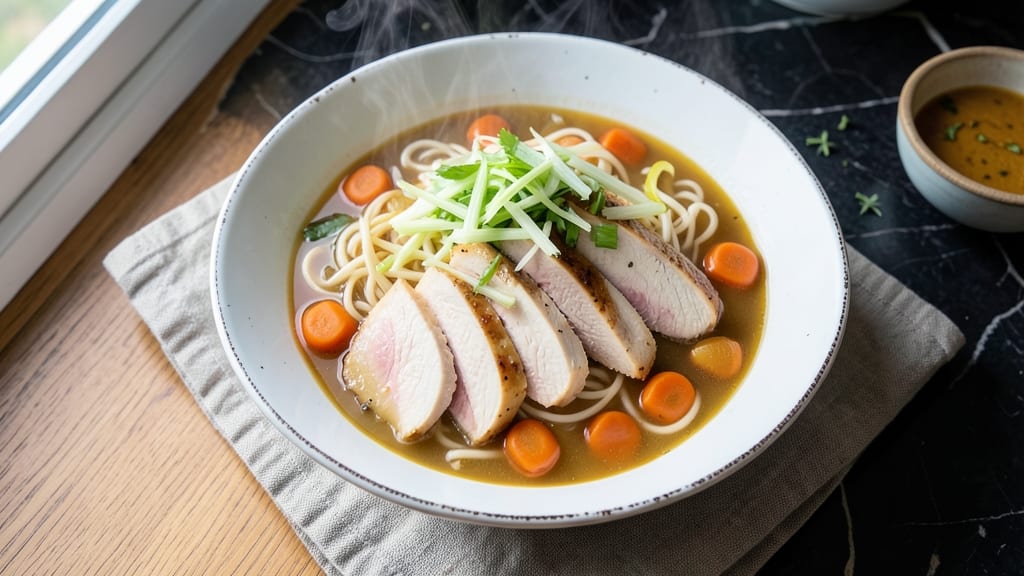
This American chicken noodle soup recipe delivers the comforting warmth of a classic homestyle meal that’s been a dinner table staple for generations. 🌟 The secret lies in a rich, savory broth that simmers for hours, tender chicken that practically melts in your mouth, and those signature egg-drop swirls that add a delicate, creamy finish.
I’ve perfected this recipe over years of testing—balancing simplicity with restaurant-quality depth so you can recreate it at home without fuss.
The beauty of this soup is in its approachability. You’ll start with a flavorful base of onions, carrots, and celery (the classic "holy trinity" of soup vegetables) that build layers of aroma as they simmer.
The chicken, poached directly in the broth, stays juicy and infused with all those warm, comforting flavors. And those egg-drop swirls? They’re the showstopper—a quick, foolproof technique that transforms ordinary soup into something extraordinary with just a whisk and a splash of hot broth.
What you’ll end up with is a steaming bowl of soup that’s hearty enough to satisfy a crowd but simple enough to make on a busy weeknight. The noodles cook just until al dente, soaking up the rich broth while maintaining their bite.
Every spoonful delivers that perfect balance of savory, tender, and creamy—exactly what you’d expect from a homestyle classic, but with a touch of modern convenience.
This recipe is designed to be your go-to for cold days, recovery meals, or anytime you need a taste of home. The broth freezes beautifully, so you can prep ahead and have a comforting meal ready in minutes. Let’s get started—your taste buds (and your family) will thank you.
Ingredients for american chicken noodle soup
Six ingredients build the broth, plus a few extras for that perfect homestyle touch.
| Ingredient | Amount | Notes |
|---|---|---|
| Boneless, Skinless Chicken Breast 🍗 | 2 lb | Cut into 1-inch pieces |
| Yellow Onion 🧅 | 1 whole | Chopped into 1/2-inch pieces |
| Carrots 🥕 | 3 medium | Peeled and sliced into 1/4-inch rounds |
| Celery Stalk 🥬 | 3 whole | Chopped into 1/2-inch pieces |
| Garlic Cloves 🧄 | 4 cloves | Minced or finely chopped |
| Chicken Broth 💧 | 6 cups | Low-sodium preferred |
| Large Eggs 🥚 | 2 whole | Freshly beaten |
| Egg Noodles 🍜 | 8 oz | Uncooked, al dente preferred |
| Fresh Parsley 🌿 | ¼ cup | Chopped for garnish |
| Olive Oil 🫒 | 2 tbsp | Extra-virgin for richness |
| Salt 🧂 | 1 ½ tsp | Kosher or sea salt |
| Black Pepper 🌶️ | ½ tsp | Freshly ground |
| Dried Thyme 🌿 | 1 tsp | Or 1 tbsp fresh |
| Bay Leaves 🍃 | 2 whole | Remove before serving |
The chicken is the star here, so pick boneless, skinless breasts—they cook evenly and stay juicy. I always grab mine from Costco when I'm making a big batch, but the regular supermarket stuff works just fine. Look for pieces that are similar in size so they cook at the same rate. The carrots and celery? Baby carrots and celery hearts save time, but the regular stuff works too. Just chop them evenly—1/4-inch slices for carrots, 1/2-inch pieces for celery and onion. That holy trinity of veggies is where all the flavor starts, so don't skip cutting them small.
No low-sodium broth? Regular broth with half the salt works, or use vegetable broth for a vegetarian version. Fresh thyme is ideal, but dried works at one-third the amount. The egg-drop swirls are the magic touch—use room-temperature eggs for the best whisking. If you're short on time, pre-cut chicken from the deli section at Trader Joe's saves 10 minutes of prep. The egg noodles? Any brand works, but the wider ones hold up better to the broth. And that olive oil? Don't skimp—it's what makes the broth shine.
This soup tastes even better the next day—make a double batch and freeze half. The broth keeps for 4-5 days in the fridge, and the noodles? Add them fresh when reheating. For serving, I like to ladle it into bowls, sprinkle with parsley, and add a drizzle of olive oil. Garnish with fresh herbs if you've got them, but it's not required. Leftovers? Reheat gently—microwave works, but stovetop keeps it creamier.
Why You'll Love This Recipe
- No-Chop Shortcut: I swear by the "mirepoix hack"—just dice onion, carrots, and celery once at the start of the week. Toss them in a baggie, and when soup night hits, dump and go. That’s 10 minutes saved right there.
- Garlic-Kissed Magic: The secret’s in the garlic—sauté those cloves until they’re golden and fragrant before adding broth. That crispy edge? It turns this from good soup to ridiculously good soup. Trust me, your taste buds will notice.
- Weeknight & Meal Prep: Make a double batch on Sunday, and you’ve got lunch for four days. The flavors actually deepened after reheating—no one would guess it’s leftovers. (Yes, even on a Tuesday night.)
- Budget-Friendly Protein: Skinless chicken breast is the MVP here—lean, affordable, and packed with flavor. A single breast stretches to feed four, and the veggies? They’re the pantry staples you already own. No fancy ingredients, just pure satisfaction.
Step-by-step instructions for American chicken noodle soup
Here's how to bring homestyle comfort to your table with creamy egg swirls and tender chicken.
🍳 Step 1: Sear the Chicken for Maximum Flavor
Heat the 2 tablespoons olive oil in a large pot over medium-high heat. Add the 2 lb boneless, skinless chicken breast cut into 1-inch pieces and cook for 5-6 minutes, stirring occasionally, until the chicken turns light golden brown and releases easily from the pan.
This searing step builds deep flavor through the Maillard reaction—those browned bits sticking to the bottom will dissolve into the broth later. Remove the chicken and set it aside on a plate, leaving the oil in the pot. If you see any excess fat, use a spoon to remove it while keeping the flavorful browned bits.
👨🍳 Step 2: Sauté the Vegetable Base
In the same pot, add the 1 whole yellow onion chopped into ½-inch pieces, 3 medium carrots sliced into ¼-inch rounds, and 3 whole celery stalks chopped into ½-inch pieces. Cook for 5-6 minutes over medium heat, stirring occasionally, until the vegetables soften and the onion becomes translucent.
Add the 4 cloves garlic minced or finely chopped and cook for another 30 seconds until fragrant. Here's the thing—don't let the garlic burn. It should smell sweet and nutty, not bitter. If you see it darkening too quickly, reduce the heat slightly. Stir in the 1 teaspoon dried thyme and 2 whole bay leaves and cook for 1 minute to toast the spices.
🥘 Step 3: Simmer the Broth with Aromatics
Pour in the 6 cups chicken broth and bring to a gentle boil over high heat. Once boiling, reduce heat to medium-low and add the 1½ teaspoons salt and ½ teaspoon black pepper. Return the chicken pieces to the pot and simmer for 15 minutes until the chicken is fork-tender and cooks easily.
Real talk: The broth should be bubbling gently but not vigorously. If it's boiling hard, reduce the heat. This slow simmer ensures the chicken stays juicy and the vegetables absorb flavor. Remove the 2 bay leaves before proceeding—you don't want them in your final soup.
🍳 Step 4: Create the Signature Egg-Drop Swirls
In a small bowl, lightly beat the 2 whole large eggs with a fork until just combined—no need to make them frothy. Slowly drizzle the beaten eggs into the simmering soup while stirring constantly with a wooden spoon. The heat will gently cook the eggs into delicate swirls throughout the broth.
This is the moment that matters: Keep stirring gently for 2-3 minutes until the eggs are completely set but still silky. You want ribbons of egg throughout, not scrambled bits. If the soup starts to thicken too much, add ¼ cup hot broth to loosen it.
⏰ Step 5: Finish with Noodles and Fresh Herbs
Add the 8 ounces egg noodles to the soup and cook for 8-10 minutes over medium heat, stirring occasionally, until the noodles are al dente—they should have a slight bite but be tender throughout. The noodles will finish cooking in the hot broth, so don't overcook them.
Stir in the ¼ cup chopped fresh parsley just before serving. This adds a bright finish that cuts through the richness of the egg swirls. Taste and adjust seasoning if needed—sometimes the broth needs a little more salt or pepper to balance the flavors. Ladle into bowls and serve immediately while still steaming hot.
Pro Tips For Making American Chicken Noodle Soup
- Sear the Chicken First: Toss those chicken breasts in the pot raw, and you’ll end up with bland, gray meat. Instead, cut them into 1-inch chunks, pat them dry, and sear them in a hot pan with a little oil until golden—about 3-4 minutes per side. The crust locks in flavor and keeps the meat from turning to rubber when simmered.
- Chop Veggies Uniformly: I used to eyeball it, and some carrots would turn to mush while celery stayed crunchy. Dice the onion, carrots, and celery into ¼-inch pieces—same size, same time. No one wants a soup where you’re chewing on a carrot spear while the broth’s already done.
- Simmer, Don’t Boil: Once everything’s in the pot, keep it at a gentle simmer, not a rolling boil. Too much heat toughens the chicken and breaks down the noodles before they even hit the water. A low simmer—tiny bubbles, occasional swirls—keeps the soup tender and the flavors deep.
- Use Egg Noodles, Not Spaghetti: Egg noodles hold up better in soup than spaghetti, which turns to mush. Look for medium or small egg noodles—they cook faster and don’t overpower the broth. (And yes, even if you’re impatient like me, resist the urge to use those pre-boiled "instant" noodles.)
Troubleshooting perfect results
Broth Too Thin?
If your soup feels watery, simmer uncovered for 10-15 extra minutes to reduce. For a quick fix, mash 1-2 cooked potato halves directly into the broth—they'll thicken it naturally.
I've also used 1 tbsp cornstarch mixed with 2 tbsp cold water as a last resort, but potatoes are my go-to for that homestyle texture. 🥔
Egg Swirls Curdling?
Overheating is the usual culprit—keep the broth at a gentle simmer (190-200°F) when adding eggs. For extra insurance, whisk the eggs with 1 tbsp cold broth first to temper them.
If it happens anyway, stir in 1 tsp lemon juice to smooth out the texture. I've even used ½ cup heavy cream in a pinch, though it changes the soup's character slightly.
Chicken Too Tough?
Start with bone-in chicken thighs instead of breasts—they stay juicier during long simmers. If using breasts, cut them ½-inch thick max and poach separately in broth for 12-15 minutes before adding to the soup.
For already-cooked chicken, shred it and add back at the end—it reheats perfectly in the hot broth. 🍗
Noodles Mushy?
Cook noodles separately in boiling water for 1 minute less than package instructions, then add to the soup. The residual heat will finish them perfectly. For extra insurance, use whole wheat or brown rice noodles—they hold up better to long cooking.
I've also tried rice noodles in a pinch, but egg noodles are still the classic choice.
Vegetables Too Crunchy?
Slice carrots and celery 1/8-inch thinner than called for—they'll cook faster. For extra tenderness, add them to the simmering broth 5 minutes before serving instead of during initial cooking. I've even microwaved chopped veggies for 2 minutes before adding to the pot to jumpstart their cooking time. 🥕
Broth Too Salty?
Dilute with ½ cup hot water or broth per bowl served. For a more subtle fix, add 1-2 fresh mushrooms or 1 small potato when simmering—they absorb excess salt. I've also used 1 tbsp milk or cream per bowl to mellow the saltiness while adding richness.
Taste as you go—this soup should be seasoned like a well-made stew, not a broth-based sauce.
Nutrition facts
Frequently asked questions
Can I use chicken thighs instead of breasts for this recipe?
Chicken thighs add even more flavor and stay juicier during long simmers. Use 2 lbs bone-in, skin-on thighs instead of breasts, and reduce the cooking time to 12-15 minutes once added to the broth. The skin will crisp up beautifully and infuse the broth with rich flavor.
How can I make this soup ahead of time?
Prepare the broth and chicken up to 2 days ahead—just refrigerate it in an airtight container and reheat gently on the stove. For the full soup, cook everything except the noodles and egg swirls, then refrigerate. When ready to serve, reheat the broth, add fresh noodles (8-10 minutes before serving), and finish with the egg swirls. The egg swirls are best made fresh, but you can prepare the beaten eggs separately and add them just before serving.
What if I don’t have egg noodles?
No problem! Use angel hair pasta, spaghetti (cut into 1-inch pieces), or even rice noodles for a lighter version. Cook them separately for 1 minute less than package instructions, then add to the hot broth. For a gluten-free option, try chickpea or brown rice noodles—they work beautifully and hold up well.
Can I make this soup vegetarian?
Yes! Swap the chicken for mushrooms, tofu, or chickpeas for protein. Use 6 cups vegetable broth instead of chicken broth, and add 1 cup sliced mushrooms or 1 block firm tofu (cut into cubes) when sautéing the vegetables. For extra umami, stir in 1 tbsp soy sauce or 1 tsp miso paste with the broth. The egg swirls and noodles will still shine as the star elements!
Why do the egg swirls sometimes turn out lumpy?
Overheating or stirring too vigorously are the usual culprits. Keep the broth at a gentle simmer (190-200°F) when adding eggs, and whisk them with 1 tbsp cold broth first to temper them. Stir slowly and consistently for 2-3 minutes—you want ribbons, not scrambled bits. If it happens, a splash of lemon juice or cream can help smooth things out.