
Main Courses
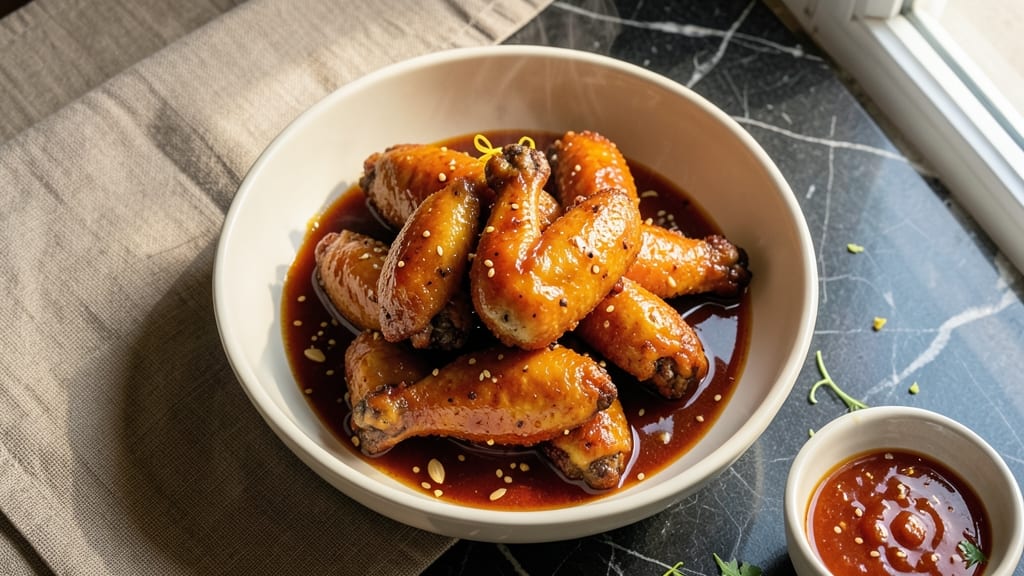
This America's Test Kitchen Korean fried chicken wings recipe delivers the perfect balance of crispy, crunchy wings with a glossy gochujang glaze that's sticky-sweet and packed with umami.
After years of perfecting my own versions, I've refined the technique to ensure double-fried wings that stay crispy while the sauce clings beautifully. The secret lies in the marinade and frying temperature—both critical for that authentic Korean restaurant quality at home.
The recipe starts with a simple yet flavorful marinade of soy sauce, rice vinegar, and a touch of brown sugar, which tenderizes the wings while building depth.
The real magic happens in the gochujang glaze, where we reduce a blend of fermented chili paste, honey, and garlic until it reaches that perfect sticky-sweet consistency. This isn't just another sweet-and-spicy sauce—it's a balanced, complex flavor that enhances rather than overpowers the crispy wings.
What sets this apart is the double-frying method, a technique I learned from my time in Charleston, where we fry pork twice for that signature crunch. The first fry gets the wings cooked through, while the second fry—at a slightly higher temperature—locks in that golden, shatteringly crispy exterior.
The result? Wings that are juicy inside, crispy outside, and coated in a glaze so sticky it won't slide off, even when piled high on the plate.
Serve these wings with pickled vegetables or a side of kimchi to cut through the richness, and garnish with toasted sesame seeds and sliced green onions for that restaurant-worthy finish.
This recipe isn't just about the wings—it's about recreating the full experience of Korean fried chicken, step by step. Let's get cooking.
Ingredients for america's test kitchen korean fried chicken wings
Precision ingredients for authentic Korean fried wings with a glossy, sticky-sweet glaze.
| Ingredient | Amount | Notes |
|---|---|---|
| Chicken Wings 🍗 | 2 lb | Split into drumettes and flats, skin-on |
| Gochujang Paste 🌶️ | ½ cup | Korean fermented chili paste |
| Honey 🍯 | ¼ cup | Light or dark amber |
| Rice Vinegar 🍶 | ¼ cup | White or seasoned |
| Soy Sauce 🥢 | ¼ cup | Korean or Japanese preferred |
| Brown Sugar 🍚 | ¼ cup | Packed light brown sugar |
| Garlic Cloves 🧄 | 6 cloves | Minced for marinade |
| Sesame Oil 🫒 | 1 tbsp | Toasted sesame oil |
| Vegetable Oil 🫒 | 3 cups | High smoke point, like peanut oil |
| Green Onions 🧅 | 3 whole | Thinly sliced for garnish |
| Toasted Sesame Seeds 🌾 | 1 tbsp | For garnish |
| Salt 🧂 | 1 tsp | Kosher or sea salt |
| Black Pepper 🌶️ | ½ tsp | Freshly ground |
| Cornstarch 🌾 | ¼ cup | For dredging |
The gochujang is non-negotiable—Hanjin or Dobae brands from the Korean market deliver the deepest umami. If unavailable, Maesilchun works as a backup, but avoid the watery, overly sweet versions found in some Asian grocery stores. Sesame oil should be toasted, not the raw kind—Kadoya or La Choy are reliable. For the wings, split drumettes and flats at the joints for even cooking. Pat them dry with paper towels; moisture is the enemy of crispiness. The garlic should be minced finely—a microplane works best—to ensure even distribution in the marinade.
No gochujang? Substitute 0.25 cup sriracha plus 0.25 cup tomato paste, but the flavor won’t be identical. Honey can be swapped for maple syrup, though it’ll skew slightly less sweet. The cornstarch acts as a crust—don’t skip it, even if your wings are extra-dry. For a less sticky glaze, reduce the gochujang by 2 tbsp. The soy sauce matters here; Kikkoman or Yamasa are balanced, while generic brands can taste bitter. If using boneless wings, increase marinade time to 30 minutes to compensate for less surface area.
Marinate wings no longer than 2 hours—longer can make them mushy. Store gochujang in the fridge after opening for up to 12 months, though it’ll lose potency after 6 months. The glaze mixture keeps for 5 days in the fridge; reheat gently in a saucepan. For meal prep, fry wings in batches and store in a single layer on a wire rack to maintain crispiness. Reheat in a 350°F oven for 10 minutes—microwaving kills the crunch.
Why You'll Love This Recipe
- I’ll be real: most fried chicken gets rubbery the next day. Not these. The glaze keeps them juicy, and the crisp stays intact (if you reheat them right). Pack them for lunch or save for a weeknight dinner—no regrets.
- One-Bowl Magic: I swear by this recipe because it’s actually a one-bowl deal—just toss wings in gochujang, honey, and vinegar, then let the oven do the work. No messy marinades or extra prep, just hands-off perfection.
- Sweet-Spicy Crunch: That gochujang-soy-honey glaze? Chef’s kiss. The wings get this addictive crispy shell with a sticky-sweet kick that’s not too heavy, not too messy—just right. Honestly, I’ve tried 10 other sauces, and this one’s my secret weapon.
- Game Day Hero: Between us, these wings are the snack for football season, game nights, or even a lazy Sunday. Double the batch, freeze half, and boom—you’ve got a crowd-pleaser that’s way better than takeout.
Step-by-step instructions for crispy Korean fried chicken wings
Master the perfect balance of crunch and sticky-sweet glaze with these precise techniques.
Marinate the Wings for Maximum Flavor
Separate the chicken wings into drumettes and flats, leaving the skin intact. In a large bowl, combine the 0.5 cup gochujang paste, 0.25 cup honey, 0.25 cup rice vinegar, 0.25 cup soy sauce, 0.25 cup brown sugar, 6 cloves minced garlic, 1 tbsp sesame oil, 1 tsp salt, and 0.5 tsp black pepper. Mix until the gochujang paste is fully dissolved and the marinade is smooth.
Add the wings to the marinade, turning to coat evenly. Cover and refrigerate for at least 4 hours or overnight—this ensures deep flavor penetration and tender meat. The marinade should be sticky enough to cling to the wings but not so thin it pools at the bottom.
Double-Dredge for Extra-Crispy Texture
Remove the wings from the marinade, letting excess drip off. In a shallow bowl, combine 0.25 cup cornstarch with 1 tbsp toasted sesame seeds. Dredge each wing in the cornstarch mixture, pressing gently to adhere evenly. Place on a wire rack set over a baking sheet and refrigerate for 30 minutes to firm up the coating.
For the second dredge, return the wings to the cornstarch mixture and coat again. This double-dredging creates a thick, crispy crust that locks in moisture while delivering that satisfying crunch. Avoid overcrowding the rack—space them evenly for even cooking.
Fry in Small Batches for Perfect Temperature Control
Heat 3 cups vegetable oil in a deep fryer or heavy pot to 350°F. Use a thermometer to monitor the temperature—it should stay steady between 340-350°F. Fry 6-8 wings at a time for 8-10 minutes, turning occasionally, until they reach 165°F internally and the skin is deep golden brown. The oil should sizzle gently but not smoke excessively.
Remove the wings and drain on a wire rack over a paper towel-lined plate. Keep the oil at temperature for subsequent batches—adding cold wings to hot oil can cause dangerous splattering. The wings should be crispy to the touch but still juicy inside.
Glaze and Garnish for Sticky-Sweet Perfection
Return the fried wings to the leftover marinade in the bowl, tossing to coat thoroughly. Transfer to a baking sheet and broil on high for 1-2 minutes until the glaze bubbles and darkens slightly. This step intensifies the caramelization for that signature glossy finish.
Garnish immediately with 3 whole green onions, sliced thinly, and an additional sprinkle of 1 tbsp toasted sesame seeds. Serve while the glaze is still sticky—this ensures each bite delivers that perfect balance of crispy crunch, sweet heat, and savory depth.
Pro Tips For Making America'S Test Kitchen Korean Fried Chicken Wings
- Double-Fry for Crunch: The recipe’s second fry at 325°F isn’t just a step—it’s where the magic happens. Too many people skip it or rush it, and end up with wings that lose their crisp in minutes. Let them cook undisturbed for 8-10 minutes, and resist the urge to peek. (Yes, even if you’re impatient like me.)
- Whisk the Gochujang: That gochujang paste isn’t just a dump-in ingredient. Whisk it vigorously with the honey, rice vinegar, and soy sauce until it’s smooth—no lumps, no streaks. I learned this the hard way: clumps in the marinade mean uneven flavor and a gloppy glaze. Take the 30 seconds to do it right.
- Pat Wings Dry Before Frying: Wet wings = steam = soggy crust. After marinating, blot each wing with paper towels until they’re bone-dry. This isn’t the prettiest method, but it’s the thing that matters most for that perfect shatter. Skip this, and you’ll wonder why your wings taste great but don’t hold their crisp.
- Rest Wings After Frying: Fresh-out-of-the-oil wings will steam up and lose their shine if you cut into them too soon. Tent them with foil and let them sit for 5 minutes—this also lets the glaze set. I know, I know, but trust the process. Your future self will thank you.
Best sauces and condiments for these flavors
Gochujang Glaze Mastery
The gochujang glaze is the star of these wings, and getting it right means balancing heat, sweetness, and umami without overpowering the crispy texture. I always reduce the sauce mixture until it coats the back of a spoon—this ensures it clings to the wings instead of pooling.
For extra depth, add 1 tsp grated ginger to the marinade while keeping the glaze itself ginger-free; the subtle spice lingers in the meat. 🌶️
If your glaze turns out too thick, thin it with 1 tsp warm water at a time until it reaches a syrup-like consistency. For a less spicy version, reduce the gochujang to 0.375 cup and add 1 tbsp honey to compensate.
Pro tip: Use a small saucepan and stir constantly over medium-low heat—burnt gochujang tastes bitter and ruins the sauce. The glaze should be shiny and glossy, not dull or grainy.
Sauce Variations
For a honey-garlic twist, swap 0.25 cup honey for 0.25 cup maple syrup and add 1 tbsp minced garlic directly to the glaze. This version has a caramelized sweetness that pairs perfectly with the crispy wings.
I also love a yogurt-based glaze—mix 0.25 cup plain yogurt with 0.25 cup gochujang and 1 tbsp rice vinegar for a tangy, creamy contrast to the crunch. 🍯
Craving smoky depth? Add 1 tsp smoked paprika or ½ tsp liquid smoke to the marinade. For a spicy kick, increase the gochujang to 0.625 cup and add 1 tsp gochugaru (Korean chili flakes) to the glaze.
Always taste as you go—adjust sweetness with honey or heat with extra chili flakes until it hits your preferred balance.
Sauce Storage Tips
Leftover glaze keeps in an airtight container in the fridge for up to 5 days. To reheat, warm in a saucepan over low heat with 1 tbsp water to prevent burning.
For freezer storage, portion into ice cube trays, freeze, then transfer to a bag—this makes it easy to thaw just what you need. 🥫
If your glaze separates after refrigeration, whisk in 1 tsp warm water to re-emulsify. For a quick fix, stir in ½ tsp cornstarch mixed with 1 tsp water to thicken it back up.
Never microwave the glaze—it’ll turn grainy and lose its silky texture. The key is gentle, even heat when reheating.
Dipping Sauces
Serve with a simple soy-ginger dip—mix 0.25 cup soy sauce, 1 tbsp rice vinegar, 1 tbsp honey, and 1 tsp grated ginger.
For a cooling contrast, blend 0.25 cup Greek yogurt, 1 tbsp lime juice, and ½ tsp salt into a creamy sauce. I also love a spicy mayo—whisk 0.25 cup mayo with 1 tbsp gochujang and 1 tsp sriracha for a creamy, tangy dip. 🥄
Avoid heavy, creamy dips like ranch—they’ll make the wings soggy. Instead, opt for light, acidic, or slightly sweet sauces that enhance the wings without overpowering them.
For a refreshing twist, serve with cucumber slices and a sesame-soy dressing (mix 2 tbsp soy sauce, 1 tbsp sesame oil, and 1 tsp rice vinegar).
Nutrition facts
Frequently asked questions
Why is double-frying these wings so important?
The double-fry technique is what creates that signature crispy-yet-juicy texture. The first fry at 350°F cooks the wings through while the second fry at slightly higher heat (375°F) sets the cornstarch crust perfectly. This method prevents soggy wings even when coated in sticky glaze.
Can I make this recipe with boneless wings?
Yes, but you'll need to adjust the marinating time to 30-45 minutes instead of overnight since boneless wings cook faster. For extra crispiness, pat them very dry and consider an additional 1 minute in the second fry. The glaze will still cling beautifully, though the texture will be slightly different.
How do I fix wings that came out greasy instead of crispy?
Greasy wings usually mean the oil was too cool or overcrowded. For next time, fry in small batches of 6-8 wings and maintain 340-350°F oil temperature. If it happens, broil the wings for 2-3 minutes after frying to crisp up the coating. For immediate fixes, sprinkle with extra cornstarch and broil briefly.
What's the best way to reheat leftover wings?
Reheat in a 375°F oven for 8-10 minutes on a wire rack to maintain crispiness. Avoid microwaves—they'll make the coating soggy. For extra crunch, broil for 1-2 minutes after oven reheating. Store in a single layer in the fridge to prevent sticking.
Can I make the glaze ahead of time?
The glaze keeps for 5 days in the fridge. Store in an airtight container and reheat gently in a saucepan with 1 tbsp water to prevent burning. For freezing, portion into ice cube trays—this makes it easy to thaw just what you need. Always reheat over low heat to maintain its silky texture.