
Soups & Stews
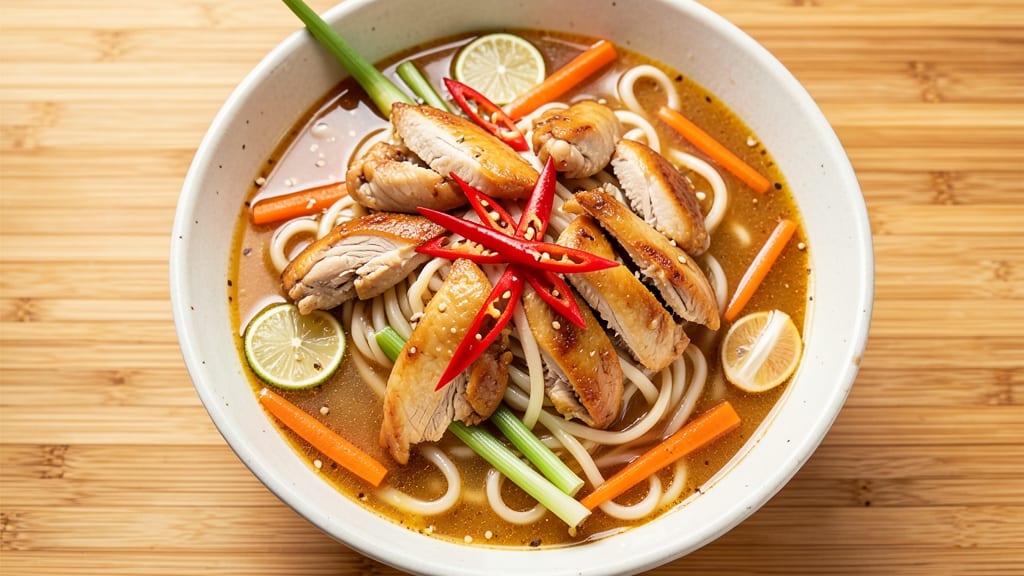
This Asian-style chicken noodle soup recipe transforms simple ingredients into a fragrant, comforting bowl of silky noodles and tender chicken bathed in a bright ginger-lemongrass broth.
The secret lies in stir-frying aromatic vegetables and herbs to build deep, complex flavors before simmering them into a harmonious broth that balances umami, sweet, and savory notes.
I developed this recipe during a particularly chilly evening when I needed something warm, nourishing, and quick to prepare—it became an instant family favorite.
The broth is where the magic happens, starting with a quick stir-fry of garlic, ginger, lemongrass, and chili to release their essential oils before adding chicken and vegetables.
This technique creates layers of flavor that infuse the broth as it simmers, resulting in a clear, aromatic liquid that's far more complex than store-bought versions. The chicken cooks just until tender, ensuring it stays juicy and flavorful, while the noodles absorb the rich broth without becoming mushy.
What you'll end up with is a bowl of soup that's both comforting and sophisticated—golden broth with delicate strands of noodles, tender chicken pieces, and a medley of vegetables that add texture and color.
The balance of ginger's zing, lemongrass's floral notes, and the subtle heat of chili creates a flavor profile that's deeply satisfying. This recipe delivers restaurant-quality results in under an hour, making it perfect for busy weeknights or cozy weekend meals.
Serve it hot with a sprinkle of fresh herbs, a drizzle of chili oil, and perhaps a side of steamed rice for extra heartiness. The leftovers taste even better the next day as the flavors continue to meld, making this an ideal make-ahead meal.
Let's get started on creating this fragrant, nourishing bowl of comfort.
Ingredients for asian style chicken noodle soup
Pantry staples meet aromatic freshness for this fragrant ginger-lemongrass chicken noodle soup.
| Ingredient | Amount | Notes |
|---|---|---|
| Boneless Chicken Breast 🍗 | 1 ½ lb | Cut into 1-inch pieces |
| Fresh Ginger Root 🌿 | ½ cup | Finely grated, peeled |
| Lemongrass Stalks 🌱 | 3 whole | Bruised, cut into 2-inch pieces |
| Garlic Cloves 🧄 | 6 cloves | Minced, fresh preferred |
| Red Chili Peppers 🌶️ | 2 whole | Thinly sliced, seeds removed |
| Carrots 🥕 | 3 medium | Peeled, cut into thin rounds |
| Celery Stalks 🧅 | 3 whole | Cut into 1-inch pieces |
| Fresh Cilantro 🌿 | ¼ cup | Chopped, stems removed |
| Fresh Thai Basil 🌿 | ¼ cup | Chopped, or regular basil |
| Egg Noodles 🍜 | 8 oz | Fresh or dried, silky texture |
| Chicken Broth 💧 | 4 cups | Low-sodium preferred |
| Fish Sauce 🍶 | 1 tbsp | For umami depth |
| Lime Juice 🍋 | 2 tbsp | Freshly squeezed |
| Sesame Oil 🫒 | 1 tbsp | Toasted, for aroma |
| Vegetable Oil 🫒 | 2 tbsp | For stir-frying |
The aromatic trio—ginger, lemongrass, and garlic—is non-negotiable for that signature depth. Look for fresh lemongrass with tight, pale stalks at Asian markets or well-stocked grocery stores like Whole Foods or Trader Joe's. The ginger should be firm and free of soft spots, while garlic cloves should be plump and unspotted. For fish sauce, Red Boat is my go-to—it's clean, potent, and free from additives. The carrots and celery can be organic if you prefer, but regular works fine. Just make sure they're crisp, not rubbery. Fresh Thai basil adds a unique anise-like note, but regular basil works in a pinch if you can't find it.
No lemongrass? Double the ginger and add 1 tsp of lime zest for a similar citrusy punch. Fresh ginger is ideal, but pasteurized ginger in a jar works if you're in a hurry. Substituting fish sauce? Soy sauce or coconut aminos add umami, though the flavor will be slightly different. The egg noodles can be swapped for rice noodles or udon, but they'll have a different texture. For a vegetarian version, replace the chicken with shiitake mushrooms or tofu. The broth is the soul of this soup—if you're using store-bought, opt for low-sodium to control the seasoning.
Fresh herbs like cilantro and basil should be stored in a damp paper towel in a sealed bag for up to 5 days. The ginger and lemongrass can be peeled and stored in the freezer for 3 months—just thaw before using. This soup reheats beautifully, but the noodles can get mushy. Reheat just the broth and chicken, then add fresh noodles when serving. It keeps well in the fridge for 3-4 days, or freeze the broth separately for up to 3 months. The flavors actually deepen overnight, making it even more comforting the next day.
Why You'll Love This Recipe
- One-Pot Magic: I swear by this recipe—just toss everything into one pot, simmer, and walk away. No fancy techniques, no stressing over multiple pans. The chicken shatters when you pull it, the broth thickens naturally, and the lemongrass infuses like a dream while you’re doing laundry.
- Flavor Bomb Combo: That ginger-lemongrass-chili trio? It’s chef’s kiss. The ginger adds warmth, lemongrass brings bright citrusy depth, and a single red chili (or two, if you’re brave) gives it a slow-building heat that lingers. Honestly, I’ve tried store-bought versions, and none compare.
- Lunchbox Hero: Between us, this soup is my weeknight lifesaver. Pack it in thermoses for work—it stays hot, tastes even better cold the next day, and my kids actually finish their portions. (Yes, even on a Tuesday night.) Plus, the noodles hold up perfectly, so no soggy disappointment.
- Budget-Friendly Powerhouse: Chicken breast is affordable, and the aromatics stretch flavor without cost. I make a double batch on Sundays, freeze half, and boom—cheap, restaurant-quality meals for days. My wallet thanks me, and so does my taste buds. Not the prettiest, but the taste makes up for it every time.
Step-by-step instructions for Asian style chicken noodle soup
This method delivers aromatic ginger-lemongrass broth with perfectly tender chicken and silky noodles.
Prepare the Chicken and Aromatics
Cut the 1.5 lb boneless chicken breast into 1-inch pieces and set aside. In a large bowl, combine the finely grated 0.5 cup fresh ginger root, minced 6 cloves garlic, and thinly sliced 2 whole red chili peppers (seeds removed). This aromatic blend forms the flavor base of your soup.
Next, prepare the 3 whole lemongrass stalks by bruising them with the flat side of a knife and cutting into 2-inch pieces. Add these to the bowl with the ginger mixture. The bruising releases the essential oils that will infuse your broth with bright, citrusy notes. Keep this mixture ready for the next step.
Stir-Fry Vegetables and Chicken
Heat the 2 tablespoons vegetable oil in a large pot over medium-high heat. Add the 3 medium peeled carrots (cut into thin rounds) and 3 whole celery stalks (cut into 1-inch pieces), cooking for 4-5 minutes until the vegetables begin to soften and develop a slight color.
Push the vegetables to one side of the pot and add the chicken pieces in a single layer. Cook undisturbed for 3-4 minutes until the chicken develops a light golden crust. This searing step ensures your chicken stays juicy while building flavor. Stir occasionally to prevent sticking, then add the ginger-lemongrass mixture and cook for another 1 minute until fragrant.
Build the Fragrant Broth
Pour in the 4 cups chicken broth and bring to a boil. Reduce heat to medium-low and let it simmer for 15-20 minutes until the chicken is fully cooked and the broth has deepened in flavor. You'll notice the lemongrass stalks will soften and release their citrusy aroma into the liquid.
While the broth simmers, prepare the 8 oz egg noodles according to package instructions for al dente texture. Drain and set aside. The noodles should be cooked just until tender but still slightly firm to prevent them from becoming mushy in the soup.
Finish and Assemble
Once the chicken is cooked through (internal temperature should reach 165°F), remove it from the broth and set aside. Stir the 1 tablespoon fish sauce and 2 tablespoons lime juice into the broth, along with the 1 tablespoon toasted sesame oil. Taste and adjust seasoning if needed—this is where the umami depth and bright acidity come together.
Return the chicken to the pot and add the cooked egg noodles. Stir gently to combine, then divide the soup among bowls. Garnish each serving with 0.25 cup chopped fresh cilantro and 0.25 cup chopped fresh Thai basil just before serving. The fresh herbs add a vibrant finish that contrasts beautifully with the rich broth.
Pro Tips For Making Asian Style Chicken Noodle Soup
- SIMMER CHICKEN LOW AND SLOW: I used to rush this and end up with rubbery chicken—don’t. Once your broth hits a rolling boil, reduce to the gentlest simmer you can manage (barely visible bubbles) and let the chicken cook for 25-30 minutes. The broth will taste richer, and the meat will practically melt off the bone when you shred it. No need to overcrowd the pot; give the chicken room to breathe.
- SCORE GINGER AND GARLIC HARD: Fresh ginger and garlic are non-negotiable here, but don’t just chop them—smash them. Use the flat side of your knife to bruise the ginger (peel first) and crush the garlic cloves before mincing. This releases more flavor into the broth, especially when you’re simmering for 30+ minutes. (Yes, even if you’re impatient like me.)
- SKIP THE RAW CHILI PEPPERS: I learned this the hard way—tossing whole red chilies into the broth means you’ll get a vague, ghostly heat instead of real flavor. Instead, finely slice or mince them (seeds in if you want heat, out if you want depth). Toast them briefly in a dry pan until fragrant before adding to the broth—this makes a real difference.
- USE COLD NOODLES FOR AL DENTE: Add your noodles when the broth is just simmering, but here’s the trick: rinse them cold first, then shock them in ice water for 30 seconds. This stops the cooking process temporarily, so when they hit the hot broth, they cook evenly without turning mushy. Stir them in and cook for exactly 2 minutes—set a timer. Overcooking is the fastest way to ruin a good soup.
Pro cooking tips for this dish
Stir-Fry Aromatics First
Start by cooking your ginger, garlic, and chili in oil for just 30 seconds until fragrant—this releases their essential oils before adding other ingredients. I use a 10-inch cast iron skillet for even heat distribution.
The key is to keep the heat at medium-high and stir constantly to prevent burning. This quick step builds the flavor foundation that carries through the entire soup. 🌿
Bruise Lemongrass Properly
Bruising lemongrass with a knife releases its citrusy oils, which infuse the broth beautifully. Place each stalk flat-side down and strike firmly with the blade's flat edge. Cut into 2-inch pieces and add to the pot with the ginger mixture.
If you can't find fresh lemongrass, substitute with 1 tsp lime zest + 1 tsp grated ginger, though the flavor won't be identical. The stalks can be removed after simmering to avoid bitterness.
Sear Chicken in Batches
To prevent overcrowding, cook the chicken in 2 batches over medium-high heat for 3-4 minutes per side. This creates a golden crust that locks in juices. Use a meat thermometer to check for 165°F internal temperature—overcooking turns chicken dry.
I like to pat the pieces dry with paper towels before searing for better browning. 🍗
Simmer on Low Heat
After adding broth, maintain a gentle simmer at 180-190°F to prevent the broth from boiling vigorously. A rolling boil can make the broth cloudy and scatter aromatics. Cover the pot partially to retain moisture while allowing steam to escape.
The longer you simmer (up to 30 minutes), the deeper the flavors develop—just don't let it reduce too much.
Cook Noodles Al Dente
Boil noodles for 1 minute less than package instructions suggest, then drain and rinse briefly under cold water. This prevents them from turning mushy when added to the hot broth.
Fresh egg noodles cook fastest—about 2-3 minutes—so monitor closely. Adding them directly to the pot at the end keeps them silky rather than soggy. 🍜
Finish with Fresh Herbs
Add chopped cilantro and Thai basil just before serving to preserve their bright flavors. I like to sprinkle them over each bowl individually so everyone gets a fresh aroma with every bite. For extra depth, drizzle with 1 tsp chili oil or a squeeze of lime.
The herbs not only add color but also cut through the richness of the broth, balancing the dish perfectly.
Nutrition facts
Frequently asked questions
Can I use chicken thighs instead of breast for this recipe?
Chicken thighs add even more richness and stay juicier than breast meat. For best results, use 1.5 lb boneless thighs and increase simmering time by 5 minutes to ensure they're fully cooked. The skin-on version adds extra flavor—just remove it before serving if preferred.
What if I can't find fresh lemongrass?
No problem! Substitute with 1 tsp lime zest + 1 tsp grated ginger for a citrusy punch, though the flavor won't be identical. For a deeper aroma, add ½ tsp lemongrass paste (found in Asian markets) or 1 tsp dried lemongrass (sold in tea sections). The broth will still taste bright and fragrant.
How can I make this soup spicier?
Add more chili! For heat, include 1 extra sliced chili pepper in the stir-fry or stir in ½ tsp chili flakes at the end. For smoky depth, add ½ tsp gochugaru (Korean chili flakes) or a dash of sriracha. Taste as you go—start with less and adjust to preference.
Can I make this soup ahead of time?
Yes! This soup tastes even better the next day as flavors meld. Store in an airtight container in the fridge for 3-4 days. Reheat just the broth and chicken, then add fresh noodles when serving. For freezing, store broth and chicken separately for up to 3 months—reheat gently and add fresh noodles.
What's the best way to serve this soup?
Garnish with fresh herbs and a drizzle of chili oil for extra vibrancy! Serve with steamed rice or crusty bread to soak up the fragrant broth. For a complete meal, pair with quick-pickled veggies or a simple side salad. The balance of textures makes it perfect for any occasion—from cozy weeknights to weekend gatherings.