
Main Courses
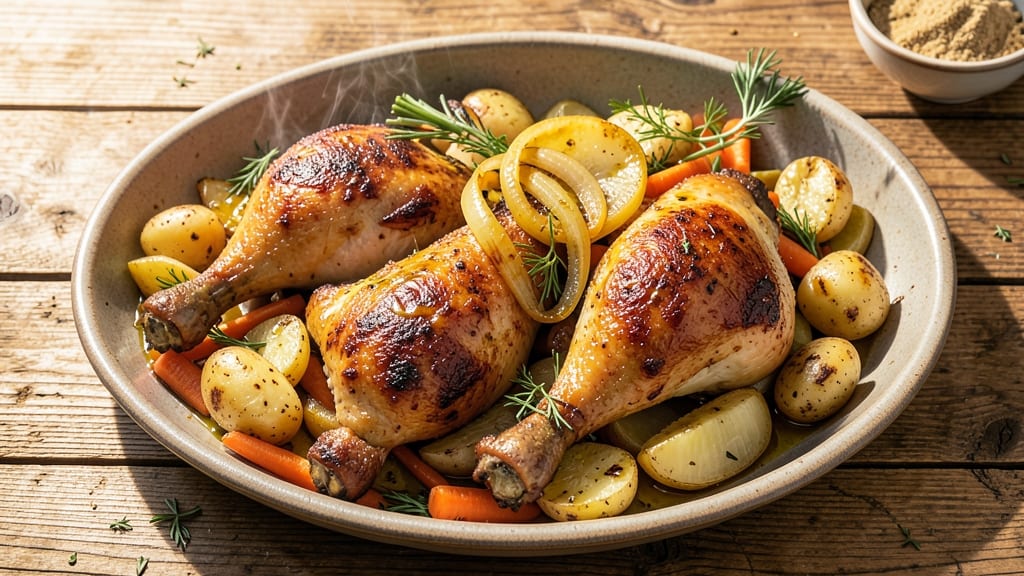
This baked chicken legs with vegetables recipe delivers crispy, golden skin and caramelized veggies in one simple pan. I developed this method after years of perfecting restaurant-quality roasting techniques at home, where high heat and proper seasoning transform humble ingredients into a showstopping meal.
The key lies in the 30-minute bake at 425°F, where the chicken's natural fats render slowly, creating that coveted crispy exterior while the meat stays juicy inside.
The vegetables—carrots, potatoes, and onions—roast alongside the chicken, absorbing the same savory flavors while developing their own caramelized sweetness. I use a blend of olive oil, garlic powder, and smoked paprika for depth, then let everything cook together until the skin shatters under gentle pressure.
This isn't just a recipe; it's a foolproof method that transforms weeknight dinner into something special with minimal effort.
What you'll end up with is tender, flavorful chicken legs with skin so crispy it practically shatters, paired with vegetables that are perfectly caramelized at the edges and tender in the center.
The aromas alone—smoky, herby, and slightly sweet—will have everyone at the table asking for seconds. This is the kind of dish that feels restaurant-worthy but comes together in your own kitchen.
Perfect for feeding a family or hosting dinner guests, this one-pan method means less cleanup and more time enjoying the meal. The technique scales easily, so whether you're cooking for four or eight, the results will be consistently delicious. Let's get started on this crowd-pleasing favorite.
Ingredients for baked chicken legs with vegetables
Restaurant-quality roasting starts with these carefully chosen ingredients for crispy chicken and caramelized vegetables.
| Ingredient | Amount | Notes |
|---|---|---|
| Chicken Legs 🍗 | 4 whole | Bone-in, skin-on, similar size |
| Baby Carrots 🥕 | 1 ½ lb | Whole or halved lengthwise |
| Baby Potatoes 🥔 | 1 ½ lb | Halved or quartered, skin on |
| Yellow Onions 🧅 | 1 whole | Cut into 1-inch wedges |
| Extra-Virgin Olive Oil 🫒 | ¼ cup | High-quality, fruity variety |
| Garlic Powder 🧄 | 1 tbsp | Freshly ground preferred |
| Smoked Paprika 🌶️ | 1 tbsp | For smoky depth |
| Kosher Salt 🧂 | 1 ½ tsp | Diamond Crystal preferred |
| Ground Black Pepper 🌶️ | ½ tsp | Freshly cracked |
| Fresh Thyme 🌿 | 2 sprigs | Or 1 tsp dried thyme |
| Fresh Rosemary 🌿 | 1 sprig | Wooden spoon works for crushing |
The chicken legs are the foundation—bone-in, skin-on thighs deliver the crispest skin and juiciest meat. Look for pieces with a golden-yellow skin and good marbling. Trader Joe's and Whole Foods carry excellent organic options, but any reputable grocery store's fresh poultry section will work. For the vegetables, baby carrots, potatoes, and onions ensure even cooking and maximum caramelization. The olive oil should be extra-virgin with noticeable fruity notes—California Olive Ranch or Colavita are reliable choices. Fresh herbs like thyme and rosemary should have vibrant green leaves and a strong aroma when crushed.
No smoked paprika? Substitute 1/2 tsp liquid smoke plus 1/2 tsp regular paprika for that smoky depth. Fresh thyme unavailable? Use 1/4 tsp dried thyme—it's more concentrated. For the vegetables, frozen baby carrots and potatoes work in a pinch (thaw and pat dry first). The garlic powder can be replaced with 1 fresh garlic clove minced, but the powder ensures even distribution. If you're short on time, pre-cut vegetables from the grocery store's fresh section save prep work. The key is maintaining the 1:1.5 ratio of chicken to vegetables for optimal roasting balance.
This dish shines best when made fresh, but the components can be prepped ahead. Marinate the chicken and chop vegetables up to 24 hours ahead, storing them separately in airtight containers in the fridge. The chicken will keep for 2 days uncooked in the refrigerator, while the vegetables stay crisp for 3-4 days. Once roasted, leftovers reheat beautifully—cover with foil and warm at 350°F for 10-15 minutes. For meal prep, portion the chicken and vegetables into individual containers so they reheat evenly. The crispy skin is best enjoyed fresh, but the flavors deepen overnight, making this an even better next-day lunch.
Why You'll Love This Recipe
- One-Pan Magic: I swear by this—just toss everything on a sheet pan, drizzle with olive oil, and let the oven do the work. No pots, no pans, no stress. The potatoes caramelize while the carrots stay tender, and the onions? They become sweet little morsels.
- Crispy-Creamy Perfection: That golden crust on the chicken legs? It’s the secret weapon. The olive oil keeps them juicy inside while the skin gets crisp enough to shatter, and the veggies soak up all the savory goodness. Honestly, the first bite makes me forget about takeout.
- Meal Prep MVP: Between us, this is my go-to for busy weeks. Bake a big batch on Sunday, and you’ve got lunch for Tuesday, dinner for Thursday, or a quick reheat for when you’re too tired to cook. The flavors even get better the next day—yes, really.
- Budget-Friendly Feast: Chicken legs stretch further than thighs or breasts, and baby veggies cost less than pre-cut fancy ones. You’re feeding a crowd for half the price of a restaurant meal, and leftovers? They disappear faster than I can say “seconds, please.”
Step-by-step instructions for baked chicken legs with vegetables
This one-pan method delivers perfectly crispy chicken skin and caramelized vegetables every time.
Prep the Chicken and Vegetables
Pat the 4 whole chicken legs dry with paper towels—this is crucial for crispy skin. Remove any excess fat but leave the skin intact. In a large bowl, combine the 1.5 lb baby carrots, 1.5 lb baby potatoes, and 1 whole yellow onion cut into 1-inch wedges. Toss them with the 0.25 cup extra-virgin olive oil until evenly coated.
Season the chicken generously with the 1.5 tsp kosher salt and 0.5 tsp ground black pepper, focusing on the skin side. The salt will draw out moisture, helping create that coveted crispy texture. For the vegetables, sprinkle them with the remaining 1 tbsp garlic powder, 1 tbsp smoked paprika, and an additional 0.5 tsp kosher salt. Toss again to distribute the spices evenly.
Arrange on the Baking Sheet
Preheat your oven to 425°F for maximum crispiness. Line a large rimmed baking sheet with parchment paper or aluminum foil for easy cleanup. Arrange the seasoned chicken legs skin-side up in the center of the sheet, leaving space around them for the vegetables.
Scatter the seasoned vegetables around the chicken, creating a single layer. Press down gently on the potatoes and carrots with a spoon to ensure they make contact with the hot pan. This helps them caramelize rather than steam. The onions should nestle between the chicken and vegetables for even cooking.
Roast for Crispy Perfection
Place the baking sheet in the preheated oven and roast for 45 minutes. After 30 minutes, carefully flip the chicken legs skin-side up and sprinkle the 2 sprigs fresh thyme and 1 sprig fresh rosemary over everything. Use a wooden spoon to gently press down on the rosemary sprig to release its aromatic oils.
Continue roasting for another 20-25 minutes, or until the chicken skin is deep golden brown and crispy, and the vegetables are tender with caramelized edges. The internal temperature of the chicken should reach 165°F when measured at the thickest part of the thigh. The potatoes should be fork-tender, and the carrots should have softened slightly while developing a glossy sheen.
Rest and Serve
Remove the baking sheet from the oven and let the chicken legs rest for 5 minutes before serving. This resting period allows the juices to redistribute, ensuring each bite is moist and flavorful. The vegetables will continue to caramelize slightly during this time, deepening their flavor.
Serve the chicken legs and vegetables directly from the baking sheet, using a slotted spoon to transfer the vegetables to plates. The crispy chicken skin should crackle when you cut into it, revealing juicy meat underneath. The vegetables should be tender yet retain their shape, with a sweet, caramelized crust. Pair with a fresh green salad or crusty bread to complete the meal.
Pro Tips For Making Baked Chicken Legs With Vegetables
- CRISP THE SKIN FIRST: I learned this the hard way—skipping the stovetop sear means your chicken legs will end up tender but pale. Pat them dry, heat a skillet over medium-high, and sear skin-side down for 6-8 minutes until golden. The oven finish will keep them juicy while the skin stays crisp.
- CUT POTATOES UNEVENLY: Baby potatoes are cute, but they’ll turn to mush if you bake them whole. Halve or quarter them, but leave some larger pieces intentionally uneven—this creates more surface area for browning and prevents soggy centers. (Yes, it looks messy, but it works every time.)
- DON’T OVERCROWD THE PAN: I used to jam everything in one sheet pan, thinking more space = faster cooking. Wrong. Give the chicken legs at least an inch of clearance so heat circulates, and the veggies roast instead of steam. If you’re short on pans, bake in batches—trust me, it’s worth it.
- SALT THE VEGGIES TOO: The chicken gets all the love, but your carrots and onions need seasoning too. Toss them with ½ teaspoon of salt and a drizzle of olive oil before baking—this draws out moisture and ensures they’re flavorful, not bland. (I know, I know, but it’s the thing that matters most.)
Storing and reheating this recipe
Refrigerator Storage
Store leftovers in an airtight container within 2 hours of cooking to preserve crispiness. I use glass Pyrex containers with tight-sealing lids—they maintain moisture better than plastic. The chicken and vegetables will keep for 3-4 days in the fridge, though the skin loses some crispness after day 2.
For best results, separate the chicken and vegetables into different containers to prevent sogginess. 🥗
When reheating from the fridge, cover the container with a damp paper towel to retain moisture. Microwave on medium power for 1-2 minutes, then check for even heating.
The chicken should reach 165°F internally—use a meat thermometer for accuracy. I find adding 1 tablespoon water before reheating helps restore some of that crispy texture.
Freezer Storage
For longer storage, freeze components separately in quart-sized freezer bags. Lay the chicken legs flat to minimize air pockets, and spread the vegetables in a single layer before sealing. Label with the date—they'll keep for up to 3 months without significant quality loss.
The key is thawing properly: transfer from freezer to fridge 24 hours before cooking to prevent uneven heating.
When reheating from frozen, bake at 375°F for 30-40 minutes with a splash of water or broth to prevent drying. The vegetables will soften more than fresh, but the flavors remain rich.
I avoid microwaving frozen chicken legs—they emerge rubbery instead of tender. For meal prep, portion into individual servings before freezing to make reheating easier during busy weeks.
Reviving Crispy Skin
The biggest challenge with leftovers is maintaining crispy chicken skin. My secret? Broil for 2-3 minutes at the end of reheating. Place the chicken skin-side up on a baking sheet and broil on high until golden and crispy again.
This works best with refrigerated leftovers—frozen chicken rarely recovers that perfect texture. For extra insurance, sprinkle with ½ teaspoon smoked paprika before broiling to enhance flavor.
If you're short on time, air fryer reheating at 375°F for 5 minutes gives surprisingly good results. The rapid heat helps restore some crispiness while keeping the meat juicy.
Just don't overcrowd the basket—leave space for air circulation. For vegetables, I toss them with ½ teaspoon olive oil before reheating to prevent drying out. 🔥
Meal Prep Tips
Prep components ahead for weeknight convenience. Marinate the chicken and chop vegetables 1 day ahead, storing them separately in airtight containers in the fridge. On cooking day, simply arrange on the sheet pan and roast as directed.
This cuts active prep time to just 10 minutes—perfect for busy schedules. I like to portion the vegetables into smaller containers so they reheat faster than the chicken.
For a make-ahead Sunday dinner, cook the full batch and store portions in the freezer. Label each bag with the date and contents—this helps with rotation. When ready to serve, thaw overnight in the fridge and reheat as needed.
The flavors actually deepen over time, making this an excellent option for lunchbox meals or quick suppers. Just remember: crispy skin is best enjoyed fresh, but the tender chicken remains delicious for days. 💡
Nutrition facts
Frequently asked questions
Why do you recommend bone-in chicken legs instead of boneless?
Bone-in legs stay juicier and more flavorful during roasting. The bones act as a natural thermometer, keeping the meat tender while the skin crisps perfectly. Plus, they're more economical and cook faster than boneless thighs. For best results, use thighs with skin intact—they develop that irresistible crunch.
Can I use frozen vegetables instead of fresh?
Fresh vegetables work best for caramelization, but frozen will work in a pinch. Thaw and pat completely dry before roasting to prevent steaming. For best texture, use frozen baby carrots and potatoes—avoid pre-cut mixes with sauces. The key is ensuring they're evenly coated with oil and spices.
What if my oven doesn't get hot enough at 425°F?
If your oven runs hot or cold, use an oven thermometer to verify temperature. For 400°F ovens, increase roasting time by 10-15 minutes and check for doneness at 165°F. For 450°F+ ovens, reduce time by 5-10 minutes to prevent overcooking. The chicken skin needs high heat to crisp properly.
How do I make this dish spicier?
Add ½ teaspoon cayenne pepper or 1 teaspoon chili flakes to the vegetable seasoning. For extra heat, sprinkle ½ teaspoon crushed red pepper flakes on the chicken skin before roasting. For smoky heat, swap smoked paprika for 1 teaspoon chipotle powder—it adds deep, smoky spice without overpowering.
Can I use this method for chicken drumsticks instead?
Drumsticks work perfectly—just increase roasting time by 5-10 minutes since they're smaller. For even cooking, place them skin-side up alongside the thighs. The same vegetable ratio applies, but you may need an extra ½ pound of potatoes to balance the smaller chicken pieces.