
Sauces & Condiments
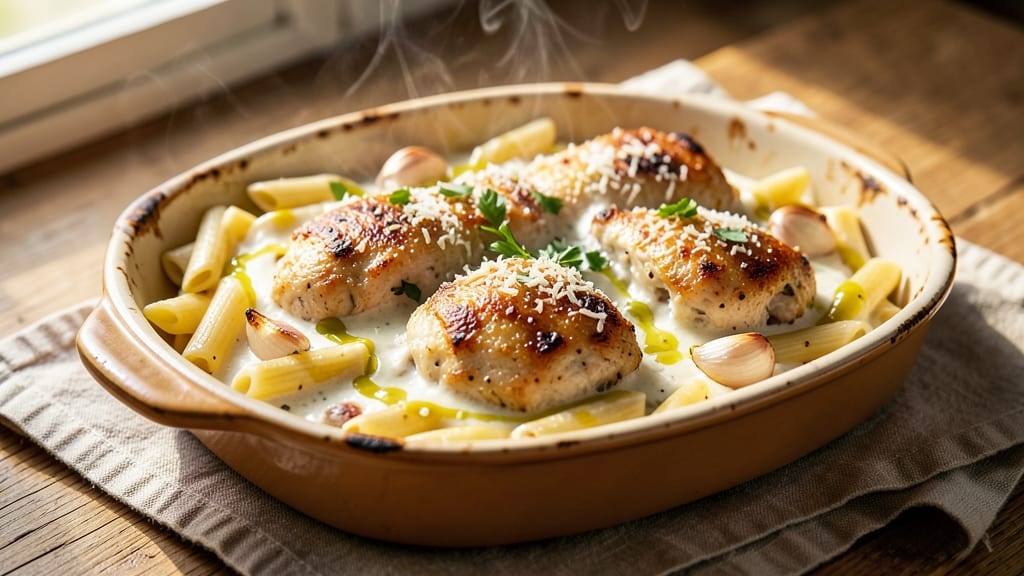
This baked chicken pasta recipe with white sauce delivers restaurant-quality comfort in just 25 minutes—no fancy techniques required. I created it after years of testing one-pan meals that actually work, combining tender chicken, al dente pasta, and a velvety sauce that holds together beautifully.
The secret lies in searing the chicken first to lock in juices, then building the sauce directly in the baking dish for maximum flavor without extra cleanup.
What makes this recipe special is how it transforms simple ingredients into a satisfying meal. The white sauce—made with heavy cream, parmesan, and a touch of mustard—creates a rich, creamy coating that clings to every strand of pasta and bite of chicken.
I use boneless chicken thighs for their juiciness, but breasts work too if you prefer leaner protein. The dish bakes at 375°F until the sauce is bubbly and golden, with crispy edges that add texture contrast.
By the time you pull this from the oven, you'll have a dish that's creamy, comforting, and packed with flavor—no separate saucepan required. The chicken stays moist, the pasta absorbs the sauce perfectly, and the whole thing comes together in one pan.
It's the kind of meal that feels indulgent but comes together faster than takeout. The best part? Leftovers reheat beautifully, making it perfect for meal prep.
Serve with a simple side salad or garlic bread to soak up any remaining sauce. This recipe proves you don't need complicated methods to create impressive results—just good ingredients and a little patience. Let's get cooking!
Ingredients for baked chicken pasta recipe white sauce
Pantry staples plus a few fresh ingredients—this one-pan meal delivers restaurant-style comfort.
| Ingredient | Amount | Notes |
|---|---|---|
| Boneless Chicken Thighs 🍗 | 1 ½ lb | Juicy and flavorful preferred |
| Penne Pasta 🍝 | 12 oz | Uncooked, al dente preferred |
| Heavy Cream 🥛 | 1 cup | Full-fat for richness |
| Parmesan Cheese 🧀 | 1 cup | Freshly grated from block |
| Yellow Mustard 🌶️ | 1 tbsp | For tangy depth |
| Garlic Cloves 🧄 | 3 cloves | Minced for sauce |
| Olive Oil 🫒 | 2 tbsp | For searing chicken |
| Salt 🧂 | 1 ½ tsp | Kosher or sea salt |
| Black Pepper 🌶️ | ½ tsp | Freshly ground preferred |
| Butter 🧈 | 2 tbsp | Unsalted for sauce |
| Chicken Broth 💧 | ½ cup | Low-sodium preferred |
| Fresh Basil 🌿 | ¼ cup | Chopped for garnish |
| Red Pepper Flakes 🔥 | ¼ tsp | Optional for heat |
The chicken thighs are the star here. Trader Joe's or Costco usually have great prices on bone-in, skin-on thighs, but boneless works too if you're short on time. Look for plump, firm pieces with good marbling—they stay juicier during baking. I always grab extra because they reheat beautifully. The pasta? Barilla or De Cecco are my go-tos for al dente results. If you're using dried pasta, cook it just one minute less than package instructions—it'll finish in the oven. Fresh pasta? Toss it in straight from the fridge, no pre-cooking needed.
No heavy cream? Full-fat coconut milk works, though the flavor will differ slightly. Fresh basil not available? Dried oregano at half the amount keeps things aromatic. The mustard adds that tangy kick—skip it if you prefer milder flavor, but trust me, it balances the richness. For the garlic, roasted cloves add sweetness, but raw minced works too. The Parmesan needs to be freshly grated—pre-shredded gets clumpy and won't melt as nicely. If you're watching calories, use half-and-half instead of heavy cream, but the sauce won't be quite as luscious.
This dish reheats like a dream—honestly better the next day as flavors meld. Store leftovers in an airtight container for up to 3 days in the fridge, or freeze for 2 months. I like to portion it into single servings before freezing so I can grab and reheat exactly what I need. The sauce thickens as it cools, so a splash of warm water or milk brings it back to perfection when reheating. Garnish with extra basil and red pepper flakes right before serving—those little details make all the difference.
Why You'll Love This Recipe
- One-Pan Magic: I swear by this recipe on days when I’m too tired to wash three bowls. Toss the raw chicken thighs and penne right into the baking dish with the sauce—no boiling pasta separately, no extra pots. The heavy cream and mustard blend into a silky sauce while everything bakes, and honestly? The cleanup is just a spatula and a wipe-down.
- Creamy Mustard Kick: That yellow mustard isn’t just for show—it adds a bright, tangy punch that cuts through the richness of the heavy cream and Parmesan. The result? A sauce that’s velvety but not heavy, with just enough bite to make every forkful satisfying. (Yes, even my picky husband asks for seconds.)
- Weeknight to Potluck: Between us, this dish is my go-to for lazy nights and Sunday gatherings. Double the recipe, bake it in two pans, and you’ve got a crowd-pleaser that feels fancy but takes zero effort. The Parmesan crust on the chicken? Always a hit—no one guesses it’s from a weeknight dinner.
- Budget-Friendly Luxury: Chicken thighs and penne stretch this recipe into four or five meals without breaking the bank. The heavy cream makes it feel indulgent, but the mustard and Parmesan keep costs low. Leftovers reheat beautifully—just add a splash of milk to loosen the sauce—and taste just as good the next day. (My lunchbox’s favorite.)
Step-by-step instructions for one-pan creamy chicken pasta
This easy method delivers restaurant-quality creamy pasta with tender chicken—all in one pan.
Sear the Chicken for Maximum Flavor
Preheat your oven to 375°F. Heat 2 tablespoons olive oil in a large oven-safe skillet over medium-high heat. Pat the 1.5 lb boneless chicken thighs dry with paper towels—this ensures crispy skin. Season both sides generously with 1.5 teaspoons salt and 0.5 teaspoon black pepper.
Place the chicken in the skillet and cook for 4-5 minutes per side until golden brown and cooked through to 165°F internally. You'll know it's ready when the edges are crispy and the juices run clear. Remove the chicken and set aside on a plate, leaving all that delicious browned chicken fat in the pan—it's the secret to flavorful sauce.
Cook the Pasta in the Same Skillet
Add 12 oz penne pasta to the skillet with the chicken fat. Pour in 4 cups water (just enough to cover the pasta) and bring to a boil. Stir once to distribute the pasta, then reduce heat to medium and cook for 8-10 minutes, stirring occasionally, until al dente. You want the pasta to be tender but still have a slight bite.
While the pasta cooks, melt 2 tablespoons butter in a small saucepan over low heat. Add 3 cloves minced garlic and cook for 30 seconds until fragrant—don't let it brown or it'll turn bitter. Remove from heat and stir in 1 tablespoon yellow mustard and 0.25 teaspoon red pepper flakes for a subtle kick.
Build the Creamy White Sauce
Once the pasta is al dente, drain any remaining water (you should have about 1 cup reserved pasta water). Return the skillet to the stove over medium-low heat. Add the garlic-butter mixture, 1 cup heavy cream, and 0.5 cup chicken broth. Stir well to combine, scraping up any browned bits from the bottom of the pan.
Let the sauce simmer for 3-4 minutes until it thickens slightly and coats the back of a spoon. If it becomes too thick, add 1-2 tablespoons of the reserved pasta water to loosen it. The sauce should be smooth and velvety—this is where the magic happens. Taste and adjust seasoning with more salt or pepper if needed.
Combine and Bake to Perfection
Return the chicken to the skillet and stir to coat everything in the creamy sauce. Sprinkle 1 cup freshly grated parmesan cheese evenly over the top. The cheese will melt into the sauce, creating that ultra-creamy texture we're after. Toss everything together gently to distribute the cheese evenly.
Transfer the skillet to the preheated oven and bake for 10-12 minutes until the cheese is bubbly and golden on top. You'll see the edges of the pasta start to crisp slightly—that's your signal it's ready. Remove from the oven and let it rest for 2-3 minutes before serving.
Garnish and Serve Immediately
Spoon the creamy chicken pasta onto plates and garnish with 0.25 cup chopped fresh basil. The basil adds a bright, fresh contrast to the rich, creamy sauce. Serve immediately while the pasta is hot and the sauce is silky—this dish doesn't wait well.
Each bite should deliver tender chicken, perfectly cooked al dente pasta, and that luscious white sauce clinging to every strand. The combination of mustard and red pepper flakes adds just the right amount of depth, while the parmesan gives it that classic Italian restaurant taste. Enjoy your one-pan creamy comfort!
Pro Tips For Making Baked Chicken Pasta Recipe White Sauce
- Sear Chicken First: I learned this the hard way—skipping the sear means bland chicken swimming in sauce. Hit the thighs with a hot pan for 3-4 minutes per side until golden before baking; the crust keeps them juicy and adds depth that no amount of Parmesan can fix.
- Use Cold Heavy Cream: The sauce will split if you dump in warm cream straight from the fridge, but cold cream? It tempers properly and thickens like a dream. Whisk it into the warm pan slowly—a splash at a time—while stirring constantly. (Yes, even if you’re impatient like me.)
- Don’t Overmix the Mustard: Yellow mustard is the flavor anchor here, but too much stirring turns it into a gloppy mess. Mix just enough to coat the chicken and pasta, then fold it in at the end. Think "marbled," not "smooth"—you want pockets of tang, not a uniform paste.
- Bake Pasta Covered, Then Uncover: The first 15 minutes with foil traps steam to cook the pasta evenly, but the last 5 minutes uncovered lets the sauce thicken and develop a light crust. Skip the foil the whole time, and you’ll end up with soggy noodles and a watery sauce. (Your future self will thank you.)
Troubleshooting this recipe
Sauce Separation Fix
If your white sauce ever splits or looks curdled, it's usually from overheating or adding cold ingredients too quickly. To fix it, whisk in 1 tablespoon cold butter while stirring constantly over low heat.
The fat helps re-emulsify the sauce. For prevention, always warm your cream and broth together gradually—never dump cold liquids into hot sauce. I've saved many a split sauce this way! 💡
Pasta Too Soft
Overcooked pasta ruins the texture of this dish. If your penne feels mushy after baking, start by cooking it 1 minute less than package instructions (about 7-8 minutes instead of 9).
Also, never fully drain the pasta—always reserve 1 cup pasta water to thin the sauce if needed. The starchy water acts like a natural emulsifier. 🍝
Chicken Overcooked
Boneless chicken thighs can dry out if baked too long. Remove the chicken from the oven when it reaches 160°F internally—it'll carry over to 165°F while resting.
For extra juiciness, brush the thighs with 1 tablespoon olive oil before searing. I also recommend using a meat thermometer—guessing leads to dry results. 🍗
Cheese Not Melting
Pre-shredded cheese contains anti-caking agents that prevent proper melting. Always grate your own Parmesan from a block—it melts beautifully into the sauce. If your cheese looks clumpy, whisk in 1 tablespoon warm water while the dish bakes.
For extra insurance, sprinkle cheese in two stages: half before baking, half after the first 5 minutes. 🧀
Sauce Too Thin
A watery sauce usually means the pasta absorbed too much liquid. Fix it by removing the skillet from heat and stirring in 1 tablespoon cornstarch mixed with 2 tablespoons cold water.
Simmer for 1-2 minutes until thickened. For prevention, reduce the chicken broth to 0.25 cup if your sauce tends to run. The mustard helps stabilize the sauce naturally too. 🥛
Pasta Sticking Together
Pasta clumping happens when it cooks too long or lacks fat. Toss the cooked pasta with 1 tablespoon olive oil right after draining. For extra insurance, stir in 1 tablespoon butter when building the sauce.
I also recommend using a wide, shallow skillet—it gives pasta more room to move without sticking. 🫒
Nutrition facts
Frequently asked questions
Can I use chicken breasts instead of thighs?
Yes, but thighs stay juicier during baking. If using breasts, pound them to ½-inch thickness and bake at 375°F for just 8-10 minutes after adding sauce. The leaner protein dries faster, so don't overbake.
What if I don't have heavy cream?
Substitute with ¾ cup whole milk + ¼ cup melted butter or ½ cup sour cream + ½ cup milk. The sauce will be lighter but still creamy. For extra richness, whisk in 1 tablespoon cornstarch with the milk to help thicken.
Can I make this ahead of time?
Assemble the dish up to 24 hours ahead and refrigerate uncovered. Before baking, cover tightly with foil and bake at 375°F for 15-20 minutes (the extra time accounts for cold ingredients). Add 1-2 tablespoons milk to the sauce if it thickens too much during storage.
Why does my sauce get watery?
This happens when pasta absorbs too much liquid. Always reserve 1 cup pasta water and add it gradually to thicken. For prevention, reduce chicken broth to ¼ cup or simmer the sauce longer. The mustard in the recipe helps stabilize the sauce naturally.
What's the best pasta shape for this?
Penne works perfectly, but fettuccine or rigatoni also hold sauce well. Avoid tiny shapes like orzo—they disappear into the sauce. For extra texture, try rotini or fusilli, but cook them 1 minute less than package instructions.