
Sauces & Condiments
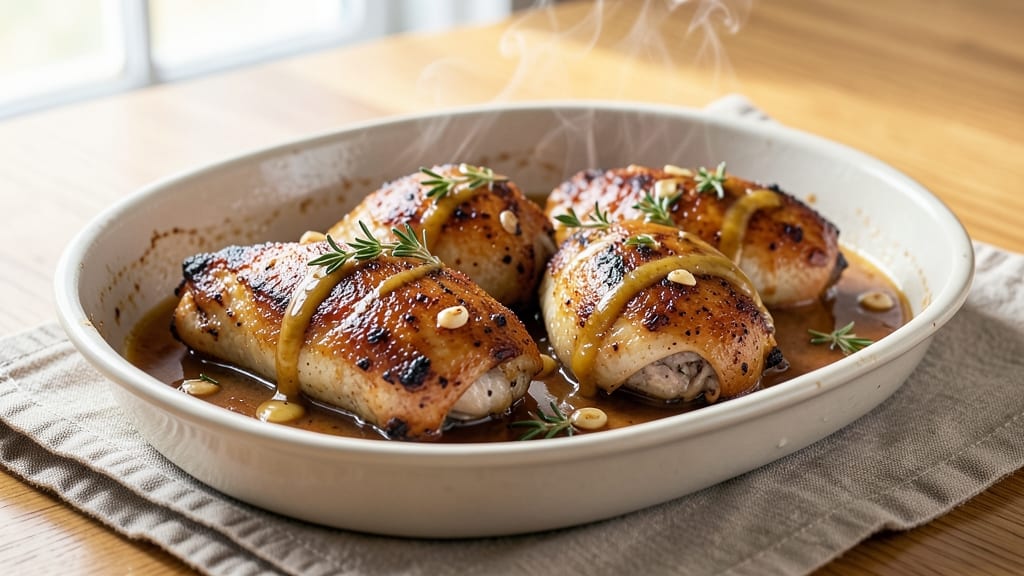
This baked chicken thigh sauce transforms ordinary leftovers into a restaurant-worthy experience with just five simple ingredients and a foolproof technique. The magic happens in the pan, where rendered chicken fat creates a rich, velvety base that's impossible to resist.
I developed this recipe after realizing how much flavor gets left behind when baking chicken thighs—so we're putting it back where it belongs.
The secret lies in deglazing the pan with white wine and chicken broth, then simmering until the sauce thickens into a glossy, aromatic gravy. Fresh garlic, thyme, and a touch of Dijon mustard add layers of depth that elevate even the simplest chicken dish.
What you'll end up with is a sauce that's equally at home drizzled over roasted thighs or spooned onto mashed potatoes.
This method works perfectly with either fresh or leftover chicken thighs, making it ideal for meal prep or turning last night's dinner into tonight's gourmet meal. The sauce thickens beautifully when reheated, so you can make a double batch and keep it in the fridge for up to five days.
Every spoonful delivers that perfect balance of savory, herby, and slightly tangy flavors that make ordinary chicken taste extraordinary.
Ready in just 15 minutes, this sauce requires no special equipment beyond what you likely already have in your kitchen. The best part? It transforms basic baked chicken thighs into something that feels like a special occasion dish without requiring any extra effort.
Let's create this flavor-packed sauce that will change how you think about leftovers forever.
Ingredients for baked chicken thigh sauce
Five ingredients transform leftover chicken into restaurant-quality sauce magic.
| Ingredient | Amount | Notes |
|---|---|---|
| Chicken Thighs 🍗 | 4 whole | Bone-in, skin-on preferred |
| White Wine 🍷 | ½ cup | Dry variety like Sauvignon Blanc |
| Chicken Broth 💧 | ½ cup | Low-sodium preferred |
| Fresh Garlic Cloves 🧄 | 3 cloves | Minced for depth of flavor |
| Fresh Thyme Leaves 🌿 | ¼ cup | Or 1 tbsp dried thyme |
| Dijon Mustard 🍯 | 1 tbsp | For tangy brightness |
| Olive Oil 🫒 | 1 tbsp | For finishing drizzle |
| Salt 🧂 | ½ tsp | Kosher or sea salt preferred |
| Black Pepper 🌶️ | ¼ tsp | Freshly ground for best flavor |
The chicken thighs are the secret weapon here—bone-in, skin-on gives you that golden, flavorful fat that becomes the sauce's velvety base. Costco sells them in bulk, or grab them from the grocery store's butcher section if you're making a smaller batch. Freshness matters, so if using leftovers, make sure they're not dried out. For the wine, any dry white like Sauvignon Blanc or Pinot Grigio works—just avoid anything too sweet. The broth? Low-sodium is key, or you'll need to adjust the salt later. I always keep a carton of Pacific Foods in my pantry—it's my go-to for depth without the salt overload.
No white wine? Substitute chicken broth with a splash of apple cider vinegar—it adds brightness. Fresh thyme is ideal, but dried works at one-third the amount. If you're missing Dijon mustard, yellow mustard in a pinch (though it won't be as refined). The garlic can be roasted for a sweeter note—just toss whole cloves in the oven at 400°F for 10 minutes before mincing. For extra richness, add a teaspoon of butter at the end—trust me, it's worth it. And if you've got lemon zest lying around, toss in a pinch for a bright finish.
This sauce reheats beautifully—just warm it gently on the stove, stirring until it thickens back up. Keeps for 5 days in the fridge, or freeze portions for 3 months. I always make a double batch because it disappears fast—great over mashed potatoes, roasted veggies, or even eggs the next morning. Store it in a glass jar so you can see that gorgeous golden color. And if it gets too thick when reheating, just add a splash of broth or water—it'll come together perfectly every time.
Why You'll Love This Recipe
- One-Pan Magic: I swear by this—just toss the thighs, sauce, and herbs on a sheet pan, then forget about it while you chop veggies or fold laundry. The wine and broth do all the heavy lifting, leaving you with crispy edges and tender meat without a single pot to scrub.
- Garlic-Thyme Bomb: That first bite? The garlic and thyme sing off the chicken like a duet—savory, bright, and just a little herby. Honestly, the sauce alone makes me want to lick the pan, but the chicken soaks up every drop.
- Weeknight to Dinner Party: Same recipe, different vibes. Toss it together for a lazy Tuesday or dress it up with crusty bread and a salad for guests. The sauce thickens beautifully, so it’s equal parts cozy and impressive without trying too hard.
- Budget-Friendly Leftovers: Chicken thighs are forgiving and cheap, and this sauce freezes like a dream. I make double batches—one for dinner, one for lunch the next day—because reheating it just makes it richer. Plus, the wine and broth stretch the flavor without breaking the bank.
Step-by-step instructions for garlic-herb pan gravy
Transform simple baked chicken thighs into restaurant-quality dishes with this rich, aromatic sauce.
Sear the Chicken Thighs for Maximum Flavor
Preheat your oven to 400°F. Pat the 4 whole chicken thighs dry with paper towels—this helps the skin crisp beautifully. In a large oven-safe skillet, heat 1 tablespoon olive oil over medium-high heat until shimmering.
Place the chicken thighs skin-side down in the skillet and cook for 5-6 minutes until the skin is golden brown and crispy. You'll see the fat begin to render out—this is what creates that rich, flavorful base for your sauce. Flip the thighs and cook for another 3-4 minutes until the skin is evenly browned. Transfer the skillet to the preheated oven.
Bake the chicken thighs for 25-30 minutes or until the internal temperature reaches 165°F and the juices run clear. The thighs should be golden and fully cooked through. Remove the chicken from the skillet and let it rest on a plate for 5 minutes before serving or shredding.
Deglaze the Skillet with Wine and Broth
While the chicken rests, reduce the oven temperature to 350°F. Return the skillet to the stovetop over medium heat. Pour in the 0.5 cup white wine and scrape up all the browned bits from the bottom of the pan with a wooden spoon—this is where all the flavor hides. Let the wine simmer for 2-3 minutes until it reduces by half and the alcohol cooks off.
Add the 0.5 cup chicken broth and bring to a gentle simmer. The mixture should bubble softly—you want it to reduce slightly but not boil vigorously. Stir in the 3 cloves minced fresh garlic cloves and 0.25 cup fresh thyme leaves, letting them infuse into the liquid for 1-2 minutes. This step builds the aromatic foundation of your sauce.
Thicken and Finish the Sauce
Reduce the heat to low and stir in the 1 tablespoon Dijon mustard. Let the sauce simmer gently for 3-4 minutes until it begins to thicken slightly. If the sauce looks too thin, continue simmering—it will reduce further as it cools. Season with 0.5 teaspoon salt and 0.25 teaspoon black pepper, tasting as you go.
Return the chicken thighs to the skillet and spoon the sauce over them, letting it baste for 1-2 minutes to infuse with flavor. If you're serving the chicken whole, drizzle the sauce generously over the top. For shredded chicken, use two forks to pull the meat apart directly in the skillet, mixing it with the sauce until fully coated.
Serve Immediately for Maximum Richness
Transfer the chicken and sauce to a serving platter, ensuring every bite is coated in that luscious garlic-herb gravy. The sauce should be glossy and thick enough to cling to the chicken without being gluey. Serve immediately over mashed potatoes, with crusty bread, or alongside roasted vegetables to soak up every last drop.
This sauce transforms simple baked chicken into a showstopping dish—perfect for elevating leftovers or impressing dinner guests. The key is timing: the sauce thickens as it cools, so serve it while warm for the best texture and flavor balance.
Pro Tips For Making Baked Chicken Thigh Sauce
- Brown the Thighs First: I learned this the hard way—skipping the sear means flavorless sauce. Pat the chicken thighs very dry, then hit them with a hot pan for 3-4 minutes per side until deep golden. That crust releases into the wine and broth, turning your sauce from "meh" to "rich and complex."
- Deglaze Aggressively: Don’t just splash wine over the pan—scrape the browned bits with a wooden spoon while the pan’s still smoking. Add the wine immediately after removing the chicken, let it bubble for 30 seconds, then deglaze with broth. This step makes a real difference in depth of flavor.
- Use Thyme Stems: Toss the thyme stems into the sauce with the leaves—no one’s judging your presentation. They’re packed with flavor and add subtle earthiness that fresh leaves alone can’t match. (Yes, even if you’re impatient like me, leave them in until the very end.)
- Reduce Sauce Low and Slow: After adding broth, crank the heat to medium-high to start, but drop it to low once it simmers. A fast boil makes the sauce watery; a gentle simmer thickens it naturally. Cover loosely and let it work for 10-15 minutes—your future self will thank you.
Dietary considerations for this baked chicken thigh sauce
Gluten-Free Adaptations
This sauce is naturally gluten-free as written, but I always double-check my ingredients to ensure no hidden gluten lurks in the broth or mustard. For extra peace of mind, use certified gluten-free chicken broth like Annie's Homegrown or Pacific Foods gluten-free line.
The Dijon mustard should also be gluten-free—Maille or Grey Poupon are safe brands. If you're using dried thyme, confirm it's processed in a gluten-free facility. 🌱
Dairy-Free Options
While this recipe doesn't contain dairy, you can easily make it dairy-free by ensuring your chicken broth is dairy-free (most are, but check labels). The sauce's richness comes from the chicken fat and wine reduction, so no substitutions are needed.
Just avoid adding butter at the end if you're strictly avoiding dairy. The sauce will still be velvety and delicious.
Low-Sodium Versions
For a low-sodium adaptation, use low-sodium chicken broth and reduce the added salt to ¼ teaspoon or eliminate it entirely. The wine and mustard already provide plenty of flavor, so the sauce won't miss the extra salt.
If you're using a regular broth, taste before adding salt—you might not need any at all. This version works perfectly when paired with naturally low-sodium sides like roasted vegetables.
Allergen-Friendly Swaps
If you're avoiding mustard allergens, skip the Dijon or substitute 1 teaspoon of apple cider vinegar for brightness. For garlic allergies, use asafetida powder (a pinch) as a flavorful alternative—it mimics garlic's depth.
Always check your wine for sulfite warnings if you're sensitive. The sauce remains flexible enough to accommodate most dietary restrictions while keeping its rich, herby character intact.
Vegetarian Adaptations
While this sauce is designed for chicken, you can adapt it for a vegetarian diet by using mushroom or tofu-based "chicken" substitutes that render fat (like King Oyster mushrooms). Sear them first to create the same flavorful base, then proceed with the wine and broth deglazing.
The sauce's garlic-herb profile will complement plant-based proteins beautifully. Just ensure your broth is vegetarian-friendly.
Keto-Friendly Adjustments
This sauce is already keto-friendly, with no added sugars or carbs. To make it even lower-carb, use bone broth instead of regular chicken broth—it's naturally rich and adds depth. Avoid adding any sweet elements like honey or maple syrup (though this recipe doesn't include them).
The sauce pairs perfectly with keto-friendly sides like cauliflower mash or zucchini noodles. Just watch your portion sizes if you're tracking macros.
Nutrition facts
Frequently asked questions
Can I make this sauce without white wine?
Replace the 0.5 cup white wine with 0.5 cup chicken broth plus 1 teaspoon apple cider vinegar for acidity. The sauce will still develop rich, herby depth—just skip the alcohol reduction step. For extra brightness, add a pinch of lemon zest at the end.
How do I fix a sauce that's too thin?
Simmer the sauce uncovered for 5-7 minutes on low heat—it will thicken as the liquid evaporates. If it's still too runny, mix 1 teaspoon cornstarch with 1 tablespoon cold water, stir into the sauce, and cook for 1-2 minutes until thickened. Avoid adding flour directly to wine-based sauces—it can create lumps.
What's the best way to reheat leftovers with this sauce?
Gently warm the sauce in a saucepan over low heat for 3-4 minutes, stirring frequently. If it thickens too much, add a splash of broth or water. For chicken, reheat separately to 165°F before mixing back with the sauce. Microwaving can make the sauce watery—always use stovetop heat for best results.
Can I use bone-in, skin-on chicken for extra flavor?
Yes! Bone-in, skin-on thighs create the richest, most flavorful sauce base. The skin renders crispy while the bones infuse the pan drippings with gelatinous depth. Just remove the chicken from the pan before baking—you'll get even more golden fat for your sauce. For maximum flavor, don't trim excess fat before cooking.
What are the best sides to serve with this sauce?
This sauce pairs perfectly with creamy mashed potatoes, buttery egg noodles, or roasted root vegetables like carrots and parsnips. For a lighter option, try it over quinoa or with a fresh green salad. The herby, garlicky profile also works wonderfully with crusty bread to soak up every last drop!