
Sauces & Condiments
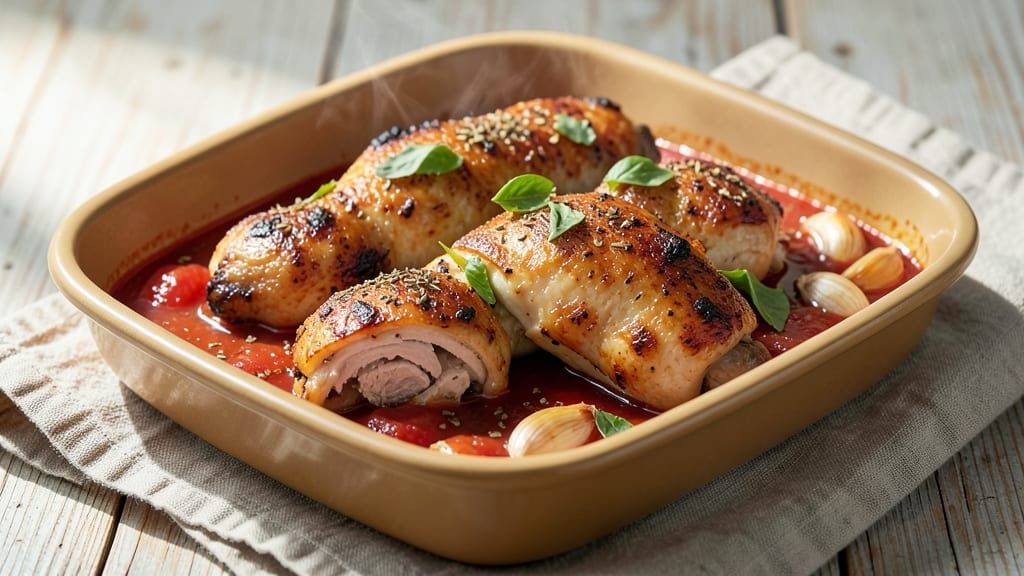
This baked chicken thighs in tomato sauce recipe delivers restaurant-quality flavor with minimal effort—juicy, tender thighs simmered in a rich, aromatic sauce infused with garlic, basil, and slow-cooked tomatoes.
The secret lies in searing the chicken first to lock in moisture, then braising it in a deep, savory sauce that caramelizes into perfection. I developed this method after years of testing, and it never fails to impress, even on busy weeknights.
The beauty of this dish is its versatility—375°F in the oven for 30-40 minutes transforms simple ingredients into a meal that feels like a labor of love.
The garlic and basil brighten the tomato sauce, while a touch of sugar balances the acidity, creating a harmony of flavors that pairs beautifully with crusty bread or over polenta. No fancy techniques required, just patience and a little attention to timing.
By the time you pull these golden-brown thighs from the oven, you’ll have a dish that’s tender, saucy, and packed with depth—the kind of meal that makes your kitchen smell like a Tuscan trattoria.
The sauce clings to the chicken, offering every bite a burst of herby, garlicky goodness, while the skin stays crispy and inviting. This is comfort food at its finest, elevated just enough to feel special.
Serve with a sprinkle of fresh basil or a drizzle of olive oil for extra flair, and don’t forget to save some of that luscious sauce for dipping. Leftovers reheat beautifully, making this the perfect recipe for meal prep or feeding a crowd. Let’s get cooking!
Ingredients for baked chicken thighs in tomato sauce
Juicy chicken thighs meet aromatic tomato sauce in this Tuscan-inspired dish—simple ingredients, bold flavors.
| Ingredient | Amount | Notes |
|---|---|---|
| Chicken Thighs 🍗 | 1 ½ lb | Bone-in, skin-on preferred |
| Extra-Virgin Olive Oil 🫒 | 2 tbsp | For searing chicken |
| Garlic Cloves 🧄 | 4 cloves | Minced for sauce |
| Canned San Marzano Tomatoes 🍅 | 1 can | 28 oz, crushed by hand |
| Fresh Basil Leaves 🌿 | ½ cup | Packed, stems removed |
| Dried Oregano 🍃 | 1 tsp | Or 1 tbsp fresh |
| Granulated Sugar 🍚 | 1 tsp | Balances acidity |
| Salt 🧂 | 1 ½ tsp | Kosher or sea salt |
| Black Pepper 🌶️ | ½ tsp | Freshly ground preferred |
| Red Wine Vinegar 🍷 | 1 tbsp | For brightness |
| Vegetable Oil 🫒 | ½ cup | For baking dish |
| Crusty Bread 🍞 | 1 loaf | For serving |
The chicken thighs are the star—bone-in and skin-on for that crispy, juicy magic. Trader Joe's or Whole Foods usually have the best cuts, but any grocery store's fresh chicken section works. Look for thighs with good marbling—they'll stay juicier during baking. I always trim any excess fat before searing, but leave some on the skin for flavor. Fresh basil is ideal, but if you're using dried, reduce to one-third the amount—it's way more potent. For the tomatoes, San Marzano cans are worth the splurge—they're sweeter and less acidic, which balances the dish perfectly.
No fresh basil? Dried works in a pinch, but I'd rather use parsley or thyme if you're feeling adventurous. Short on red wine vinegar? Balsamic vinegar at half the amount gives a similar tang. The sugar might seem odd, but it's crucial—it rounds out the acidity from the tomatoes and vinegar, making the sauce actually sweet-tart rather than sour. For the bread, any crusty loaf will do—sourdough or ciabatta are my go-tos, but baguettes work too. If you're feeling fancy, toast it before serving to soak up that gorgeous tomato sauce.
This sauce gets better the next day—make extra if you can. Store leftovers in an airtight container for up to 4 days in the fridge, or freeze for 3 months. The chicken reheats beautifully, but I prefer to eat it fresh when possible. For serving, I like to drizzle any leftover sauce over the chicken and bread, then sprinkle with extra basil. Pro tip: save a little of that sauce before baking to use as a dip—it's the best part.
Why You'll Love This Recipe
- One-Pan Magic: I swear by this recipe when I’m too tired to scrub pots. Toss the thighs on a sheet pan with olive oil, crushed garlic, and salt—then bake while the sauce simmers in the same pan. No extra dishes, no stress.
- Tomato-Garlic Obsession: That burst of San Marzano tomatoes and fresh basil? It’s like a hug in sauce form. The garlic softens just enough to melt into the tender thighs, but not so much that it disappears—every bite is bright and layered.
- Leftovers That Don’t Suck: Honestly, I make this twice for dinner because the second night is even better. The sauce thickens, the flavors deepen, and it reheats like a dream—perfect for lazy lunches or feeding unexpected guests.
- Budget-Friendly Comfort: Chicken thighs are my secret weapon: cheaper than breasts but way more forgiving. A can of tomatoes and a handful of basil stretch this into three meals, and the olive oil adds richness without breaking the bank. (Yes, even on a Tuesday night.)
Step-by-step instructions for juicy baked chicken thighs in tomato sauce
This method delivers perfectly tender chicken with a rich, aromatic tomato sauce—no frying, no fuss.
Sear the Chicken for Maximum Flavor
Preheat your oven to 400°F. Pat the 1.5 lb chicken thighs dry with paper towels—this ensures crispy skin. In an oven-safe skillet, heat 2 tbsp extra-virgin olive oil over medium-high heat until shimmering. Add the chicken thighs skin-side down and cook undisturbed for 5-6 minutes until the skin is golden brown and crispy.
Flip the thighs and cook for another 3-4 minutes until the skin is evenly browned. The skin should release easily from the pan—if it sticks, let it cook a bit longer. Transfer the skillet to the preheated oven and set aside. This initial searing locks in juices and builds deep flavor that the tomato sauce will carry beautifully.
Build the Tomato Sauce Base
In the same skillet (with all those delicious browned bits), add the 4 minced garlic cloves and sauté for 30 seconds until fragrant—don't let it burn. Pour in the 1 can crushed San Marzano tomatoes, scraping up any stuck bits from the bottom. Stir in the 1 tsp dried oregano, 1 tsp granulated sugar, 1.5 tsp salt, 0.5 tsp black pepper, and 1 tbsp red wine vinegar.
Bring the mixture to a gentle simmer, then reduce heat to medium-low. Let it cook uncovered for 10 minutes, stirring occasionally, until the sauce thickens slightly and the flavors meld. You'll notice the aroma deepening—this is when the tomato's natural sweetness and acidity balance perfectly. The sauce should coat the back of a spoon but still be loose enough to coat the chicken.
Bake Until Tender and Saucy
Carefully return the chicken thighs to the skillet, spooning some of the sauce over the top. Cover with a lid or foil and bake for 25-30 minutes until the chicken reaches an internal temperature of 165°F and the skin is crispy again. The sauce will bubble around the edges—this ensures it clings to the chicken.
If the sauce seems too thick after baking, stir in 1-2 tablespoons of water to loosen it slightly. The chicken should be fork-tender with juices running clear. Remove the skillet from the oven and let it rest for 5 minutes before serving. This resting period allows the juices to redistribute, keeping every bite succulent.
Finish with Fresh Basil and Serve
Gently stir in the 0.5 cup fresh basil leaves, tearing them by hand rather than chopping to keep them whole. The basil should wilt slightly but still retain its vibrant color. Taste the sauce and adjust seasoning if needed—another pinch of salt or a splash of vinegar can brighten it up.
Serve the chicken thighs directly from the skillet, spooning the rich tomato sauce over each piece. The crispy skin contrasts perfectly with the tender meat and velvety sauce. Pair with the crusty bread to soak up every last bit of flavor. The bread's crust will add a satisfying crunch to each bite, balancing the dish beautifully.
Pro Tips For Making Baked Chicken Thighs In Tomato Sauce
- SEAR THIGHS FIRST: Skip the slow start—get your oven to 425°F (220°C) and sear the chicken thighs skin-side down in a cold pan for 6-8 minutes. The skin crisps faster this way, and the sauce won’t turn greasy when you add it later. (Yes, even if you’re impatient like me.)
- CRUSH GARLIC LIKE IT’S 1999: Don’t just mince those garlic cloves—smash them with the flat side of your knife first, then chop. This releases more flavor, and it won’t burn as quickly when you sauté it in the olive oil. My grandmother swore by this, and she was right: the sauce tastes deeper.
- DON’T DROWN THE BASIL: Toss the fresh basil in at the very end, right after the sauce comes off the heat. If you add it too early, it’ll turn bitter and slimy. A handful of leaves is enough—no need to go overboard. (Your future self will thank you.)
- USE THE SKIN’S FAT: After searing, flip the thighs and let them render their own fat for 2-3 minutes before adding the tomatoes. That golden oil is liquid flavor—don’t pour it down the drain. Just tilt the pan and spoon it into the baking dish with the sauce. It makes a real difference.
Essential equipment for great baked chicken thighs in tomato sauce
Oven-Safe Skillet
An oven-safe skillet is your secret weapon for this recipe—I swear by a 12-inch cast-iron skillet like the Lodge Pre-Seasoned Cast Iron. Cast iron retains heat beautifully, ensuring even cooking and crispy skin.
If you don’t have cast iron, a stainless steel skillet (like All-Clad Stainless) works too, but preheat it longer to avoid cool spots. Avoid non-stick—it won’t brown the chicken properly, and the sauce won’t caramelize as well. 🔥
Measuring Tools
Precision matters, especially with spices and liquids. Use a digital kitchen scale for the chicken (aim for 1.5 lbs) and a fine-mesh strainer if you’re crushing tomatoes by hand. For garlic, a garlic press ensures even mincing—no one wants a chunky bite!
I also recommend a measuring spoon set (like OXO Good Grips) for accurate spice measurements, since too much salt or sugar can throw off the sauce’s balance.
Thermometer
A meat thermometer is non-negotiable for perfect chicken. I use the ThermoWorks Smoke—it’s fast and accurate. Insert the probe into the thickest part of the thigh (avoid the bone) until it reads 165°F.
This ensures the chicken is safe to eat without overcooking. Pro tip: Rest the chicken for 5 minutes after baking—this lets the juices redistribute, so the thermometer reading stays accurate when you slice in. ⏱️
Wooden Spoon
A heat-resistant wooden spoon (like OXO Good Grips) is essential for stirring the tomato sauce without scratching your skillet. Wood distributes heat evenly and won’t react with acidic ingredients like metal can.
I also use it to scrape up all those flavorful browned bits from the bottom of the pan—those are packed with caramelized goodness that makes the sauce taste deeper. Keep it nearby while cooking!
Baking Dish Liner
Line your baking dish or skillet with parchment paper or a silicon baking mat to make cleanup a breeze. I prefer unbleached parchment (like If You Care) because it’s sturdy enough to handle the sauce’s stickiness.
Just be sure to cut it to fit snugly—loose edges can curl up while baking. This trick saves me 10 minutes of scrubbing after every batch. 🧼
Fresh Basil Pairing
While not essential, a small bunch of fresh basil elevates the dish to restaurant-level. Look for bright green leaves with no brown spots—these are the freshest. Store any extras in a glass of water in the fridge (like flowers) to keep them crisp for up to 5 days.
If you’re short on time, dried basil works, but add it at the very end to preserve its aroma. A microplane is handy for zesting lemon over the top if you want extra brightness. 🌿
Nutrition facts
Frequently asked questions
Can I use bone-in, skin-on chicken thighs for this recipe?
Bone-in, skin-on thighs are actually ideal—they stay juicier and the skin gets beautifully crispy. Just trim any excess fat before searing, and don't skip the 5-minute rest after baking to let the juices redistribute. The bone also adds depth of flavor to the tomato sauce as it simmers.
How do I prevent the tomato sauce from becoming too acidic?
The 1 tsp granulated sugar is key—it balances the acidity from the tomatoes and vinegar. If your sauce still tastes too sharp, add a pinch more sugar or a splash of red wine vinegar to brighten it. For extra richness, stir in 1 tbsp butter at the end or use a sweeter tomato like San Marzano.
Can I make this recipe in a slow cooker instead of baking?
Yes! Sear the chicken first, then transfer everything to a slow cooker on low for 4-5 hours or high for 2-3 hours. The sauce will develop deeper flavors, but you may need to add 1-2 tbsp water if it gets too thick. The chicken will be extra tender, but the skin won't be as crispy—save that for the stovetop version.
What can I substitute if I don't have fresh basil?
Use 1 tbsp dried basil (or 1 tsp dried oregano), but add it at the very end to preserve aroma. For a different twist, try 1 tsp dried thyme or 1 tbsp chopped parsley. If you're feeling adventurous, a pinch of red pepper flakes adds a subtle kick that pairs well with tomato sauce.
How do I store leftovers to keep the sauce from drying out?
Store the chicken and sauce separately in airtight containers—the sauce will keep for 4 days in the fridge. When reheating, warm the sauce first on the stovetop, then gently reheat the chicken until 165°F. For extra moisture, add 1-2 tbsp water or broth when reheating. Freeze for up to 3 months in a single layer before transferring to a bag.