
Main Courses
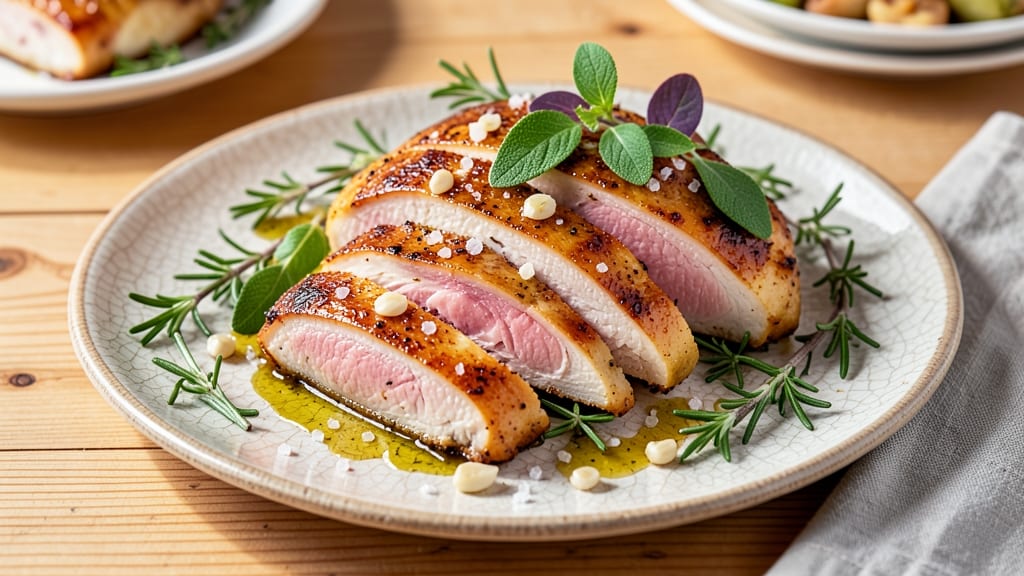
This baked herbal chicken recipe delivers restaurant-quality results with a golden crust and herb-infused juices that transform simple chicken into a showstopper. The secret lies in pan-searing before baking, which locks in moisture while creating that coveted crispy exterior.
I developed this method after years of experimenting with herb combinations—thyme, rosemary, and sage form the perfect aromatic trio that infuses the meat without overpowering its natural flavor.
The process is straightforward yet professional: marinate the chicken for at least 30 minutes (or overnight for deeper flavor), then sear it in a hot skillet to develop that caramelized crust before finishing in the oven.
This dual-cooking method ensures tender, juicy meat with crisp edges that hold up beautifully when sliced. The herbs aren't just sprinkled on top—they're finely chopped and pressed into the chicken, guaranteeing every bite is packed with aromatic intensity.
What you'll end up with is chicken that's visually stunning—golden brown with visible herb flecks—and incredibly flavorful, with juices that stay trapped inside thanks to the searing step.
The aroma alone will have everyone gathering at the table, and the texture contrast between the crispy exterior and tender interior makes each bite satisfying. This recipe proves you don't need complicated techniques to achieve restaurant-quality results at home.
Pair it with roasted vegetables or a fresh salad to complete the meal, and don't forget to save some of that delicious herb-infused pan juices for drizzling over the top.
The method scales perfectly for weeknight dinners or special occasions, making it a versatile addition to your cooking repertoire. Ready to elevate your chicken game?
Ingredients for baked herbal chicken
Herbs, golden crust, and juicy meat—this list delivers restaurant-worthy flavor with minimal effort.
| Ingredient | Amount | Notes |
|---|---|---|
| Boneless, Skinless Chicken Breasts 🍗 | 1 ½ lb | Pounded to even thickness |
| Fresh Thyme Leaves 🌿 | ¼ cup | Finely chopped, stems removed |
| Fresh Rosemary Sprigs 🌿 | ¼ cup | Finely chopped, leaves only |
| Fresh Sage Leaves 🌿 | ¼ cup | Finely chopped, stems removed |
| Extra-Virgin Olive Oil 🫒 | 2 tbsp | For marinade and searing |
| Fresh Garlic Cloves 🧄 | 4 cloves | Minced for marinade |
| Dry White Wine 🍷 | ¼ cup | Bold, dry variety preferred |
| Fresh Lemon Juice 🍋 | 2 tbsp | From 1 small lemon |
| Diamond Crystal Kosher Salt 🧂 | 1 ½ tsp | For seasoning and marinade |
| Freshly Ground Black Pepper 🌶️ | ½ tsp | For seasoning |
| Unsalted Butter 🧈 | 2 tbsp | For pan-searing |
| All-Purpose Flour 🌾 | 2 tbsp | For dredging chicken |
The herbs are non-negotiable here. Fresh thyme, rosemary, and sage from the grocery store's produce section (not the dried aisle) make all the difference—they're vibrant and packed with flavor. If you're using dried, cut the amount to one-third since they're more concentrated. For the freshest, hit up the market on the day of cooking, or look for organic herbs at Whole Foods if you're willing to splurge. The key is chopping them finely—use a sharp knife or pulse in a food processor for even distribution. And trust me, the golden crust you'll get from the pan-searing step is worth every minute of prep.
No white wine? Chicken broth with a splash of lemon juice works in a pinch, though you'll lose some depth. Fresh herbs wilting? Swap in dried at one-third the amount, but toss them in the marinade longer to rehydrate. The butter for searing? Full-fat is non-negotiable—it adds richness to the crust. Short on time? Microwave the butter 40 seconds to just melt it before searing. And if your chicken breasts are uneven, pound them between plastic wrap to even thickness—this ensures perfect doneness.
Marinate the chicken for at least 30 minutes (overnight is ideal), then pat dry before searing. The flour dredge adds texture but isn't required—skip it if you prefer a cleaner crust. Leftovers keep for 3 days in the fridge, but honestly, they reheat beautifully. Store in an airtight container with a paper towel on top to absorb any moisture. For meal prep, portion into containers with a drizzle of the pan juices—game-changer for flavor. And save those juices! They're packed with herb-infused goodness—freeze in ice cube trays for future use.
Why You'll Love This Recipe
- Just three steps: brush, sprinkle, bake. That’s it. No marinating overnight, no complicated techniques—just chicken, herbs, and olive oil, all coming together while you handle the rest of dinner.
- No-Fuss Prep: Just three steps: brush, sprinkle, bake. That’s it. No marinating overnight, no complicated techniques—just chicken, herbs, and olive oil, all coming together while you handle the rest of dinner.
- Herbal Magic: The rosemary and sage give this chicken a depth that’s hard to beat. It’s not just seasoned—it’s infused, with that bright, earthy aroma that makes every bite feel like a little flavor victory.
- Weeknight Workhorse: This is my go-to for busy nights, potlucks, or when I need something reliable. Slice it for sandwiches, serve it over pasta, or toss it in salads—it’s adaptable without trying too hard.
Step-by-step instructions for baked herbal chicken with crispy crust
Here's how to achieve that perfect golden crust and fragrant herb-infused chicken every time.
Pound and Marinate the Chicken
Place the 1.5 lb boneless, skinless chicken breasts between two sheets of plastic wrap. Using a meat mallet, pound them to an even ½-inch thickness—this ensures even cooking and prevents dryness. I press firmly but gently to avoid tearing the meat.
In a small bowl, combine the 0.25 cup finely chopped fresh thyme leaves, 0.25 cup chopped rosemary sprigs, 0.25 cup chopped sage leaves, 4 minced garlic cloves, 2 tbsp fresh lemon juice, 1.5 tsp kosher salt, and 0.5 tsp black pepper. Add the 2 tbsp extra-virgin olive oil and mix until everything is well coated.
Spread the herb mixture evenly over both sides of the pounded chicken. Let it marinate at room temperature for 30 minutes—this allows the flavors to penetrate deeply and the chicken to come to temperature gradually. Here's the thing—don't skip this step. The herbs need time to work their magic.
Create the Herb Butter Pan Crust
Preheat your oven to 425°F for maximum crispiness. Heat a large oven-safe skillet over medium-high heat and add the 2 tbsp unsalted butter. Let it melt completely, then reduce heat to medium and swirl to coat the pan evenly.
Press the marinated chicken into the butter-coated pan, ensuring it makes good contact with the hot surface. The butter should foam and bubble slightly—this creates that golden crust we're after. Sprinkle the 2 tbsp all-purpose flour evenly over the chicken. This forms a light crust that locks in juices and adds texture.
I press down gently on the chicken during the first minute—this prevents it from curling and ensures even contact with the pan. The flour will form a delicate crust that crisps beautifully in the oven. Don't walk away—watch for the edges to turn golden brown, which usually takes about 2-3 minutes on the stovetop.
Pan-Sear for Maximum Flavor
Once the chicken develops a golden crust on the bottom and releases easily from the pan, carefully transfer the skillet to the preheated oven. Pour the 0.25 cup dry white wine into the pan, scraping up all the browned bits from the bottom—this is where all the flavor hides. The wine will bubble vigorously for about 1-2 minutes before settling.
Return the chicken to the oven and bake for 12-15 minutes until the internal temperature reaches 165°F and the crust is deeply golden. You'll know it's done when the chicken releases easily from the pan and the juices run clear. I use a meat thermometer for accuracy—this prevents overcooking while ensuring safety.
Here's a pro tip: If the crust starts to darken too quickly, tent the pan with foil for the last few minutes. We want golden, not burnt. The wine helps keep the chicken moist while adding a subtle herbal depth to the crust.
Rest and Serve with Herb-Infused Juices
Remove the chicken from the oven and transfer it to a cutting board. Let it rest for 5-10 minutes before slicing—this crucial step allows the juices to redistribute throughout the meat. You'll notice the pan juices have reduced and thickened slightly from the wine and butter.
Slice the chicken against the grain into ½-inch thick portions. Spoon the herb-infused pan juices over the top and serve immediately. The combination of crispy crust, tender meat, and fragrant herb sauce makes this dish truly special. For extra flair, garnish with additional chopped herbs and a sprinkle of flaky sea salt.
This technique delivers restaurant-quality results at home—crispy on the outside, juicy on the inside, with layers of herbal flavor in every bite. The key is that perfect balance of stovetop searing and oven finishing.
Pro Tips For Making Baked Herbal Chicken
- CRANK THE OVEN TO 425°F: I learned this the hard way—starting at 375°F gives you dry, bland chicken. That high heat sears the outside fast, locking in juices while the herbs crisp just enough to release their aroma. Yes, it’s hot, but it’s worth it.
- CHOP HERBS FINE, THEN RUB THEM IN: Whole sprigs of rosemary and sage just sit there like decorative twigs. Strip the leaves, chop them roughly (no need for perfection), and press them into the chicken with your fingers—this guarantees flavor penetration. Skip the marinating step; this works faster.
- PAT DRY WITH PAPER TOWELS: Wet chicken breasts steam instead of brown. After seasoning, blot them thoroughly—this isn’t the time to be gentle. The dry surface helps the olive oil cling and creates that golden crust you actually want.
- USE A MEAT THERMOMETER: Guessing doneness with chicken is how you end up with rubbery meat. Aim for 165°F in the thickest part—no peeking, no relying on time alone. The herbs might smell done, but the center’s the real test. (Your future self will thank you.)
Essential equipment for this recipe
Oven-Safe Skillet
An oven-safe skillet is your secret weapon for achieving that perfect golden crust while keeping the chicken juicy. I recommend a 10-inch cast iron skillet like the Lodge Pre-Seasoned Cast Iron—it retains heat beautifully and develops a natural non-stick surface over time.
For a lighter option, a stainless steel oven-safe skillet from All-Clad works wonderfully too. The key is choosing a pan that can handle both stovetop searing and oven baking without warping. 🔥
Meat Thermometer
Never guess when it comes to chicken doneness—accuracy is everything. A digital instant-read thermometer like the ThermoWorks ThermoPop gives you precise internal temperature readings in seconds. For this recipe, aim for 165°F at the thickest part of the breast.
I find that using a thermometer prevents overcooking, which can turn your perfectly seared chicken into dry, tough meat. The ThermoPop is also dishwasher-safe, so cleanup is a breeze.
Meat Mallet
Pounding your chicken to an even thickness ensures it cooks uniformly and stays juicy. A plastic-covered meat mallet like the OXO Good Grips is my go-to—it’s gentle on your hands and does the job without bruising the meat.
Avoid metal mallets, which can tear the chicken fibers. The goal is to create an even ½-inch thickness across all breasts. This step is non-negotiable for consistent results, especially when baking multiple pieces at once.
Sharp Chef's Knife
Fresh herbs need to be finely chopped to infuse the chicken properly, and a sharp 8-inch chef's knife is essential. My favorite is the Wüsthof Classic—it stays sharp for years and handles herbs like thyme and rosemary with ease.
Dull knives crush herbs instead of chopping them, which releases bitter flavors. Invest in a good knife and keep it honed—it’s the difference between vibrant herb notes and a bland dish. A honings steel like the Mercer Culinary Genesis helps maintain that edge between sharpenings.
Fine-Mesh Strainer
If you’re using fresh herbs, a fine-mesh strainer helps remove stems and debris before chopping. I use a stainless steel strainer from OXO—it’s durable and easy to clean. This step ensures your herb mixture is smooth and free of tough stems, which can make the chicken texture uneven.
For dried herbs, skip this and measure directly, but reduce the amount to one-third of fresh herbs to avoid overpowering the dish.
Tongs for Safe Handling
When searing and transferring hot chicken, tongs are safer than forks or spatulas. A stainless steel tong set like the Mercer Culinary gives you a secure grip without piercing the meat. I use them to press the chicken into the pan during searing, ensuring even contact for that perfect crust.
Avoid flimsy tongs—they can bend under pressure, making the process messy and dangerous. A good pair lasts for years and keeps your kitchen safe.
Nutrition facts
Frequently asked questions
Can I use chicken thighs instead of breasts?
Yes! Chicken thighs work beautifully—just adjust the cooking time. Thighs stay juicier longer, so bake them for 20-25 minutes at 425°F until the internal temperature reaches 165°F. The skin will crisp up wonderfully, but skip the flour dredge since thighs don't need extra texture.
What if I don't have white wine?
No problem! Use chicken broth with 1 tbsp lemon juice instead. For extra depth, add 1 tsp honey or maple syrup to balance the herbs. The dish will still be flavorful—just slightly less complex. The key is maintaining the liquid-to-herb ratio in the pan.
How do I prevent the chicken from drying out?
Three secrets: 1) Pound to even thickness (½-inch), 2) Don't overcook (use a thermometer for 165°F), and 3) Rest for 5-10 minutes before slicing. The pan-searing step locks in juices, but overcrowding the pan or skipping the rest time will dry it out. The flour dredge also helps trap moisture.
Can I make this ahead of time?
Cook the chicken as directed, then store in an airtight container with a paper towel to absorb moisture. Reheat gently in a 350°F oven for 10-12 minutes or until warmed through. For best texture, reheat only what you'll serve immediately—leftovers reheat best when crispy. The herb flavors actually intensify overnight!
Which herbs work best if I don't have thyme/rosemary/sage?
Try these combos: Oregano + parsley + lemon zest (Mediterranean), cilantro + cumin + lime (Latin), or dill + tarragon + black pepper (French). For dried herbs, use ⅓ the amount of fresh. The key is balancing earthy (rosemary) with bright (lemon/thyme) notes.