
Main Courses
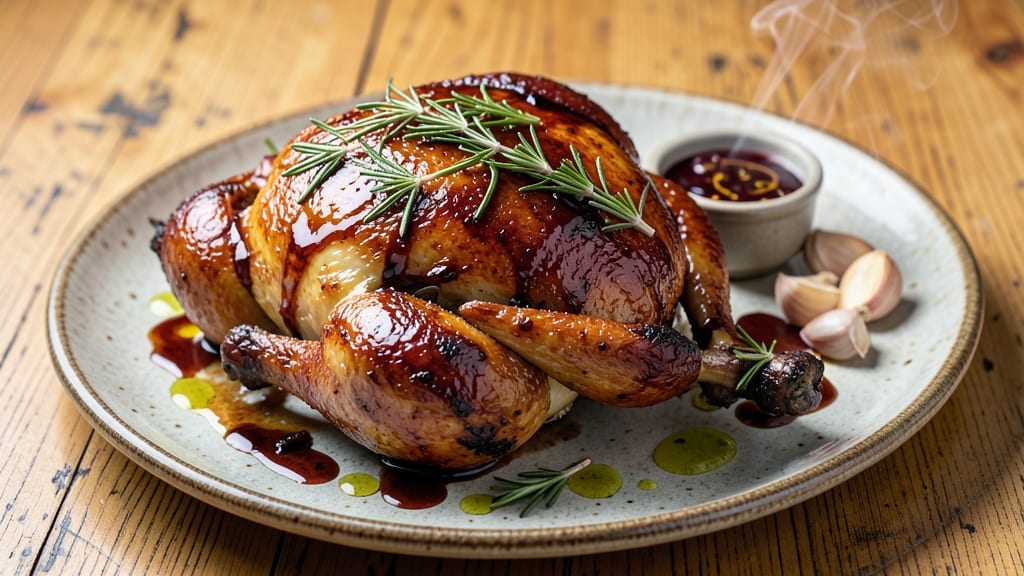
This balsamic roast chicken recipe transforms ordinary roasted chicken into a showstopping centerpiece with a glossy caramelized crust and juicy centers that fall apart at the touch of a fork. The secret lies in the balsamic glaze—its acidity tenderizes the skin while creating that irresistible deep amber finish.
I've perfected this technique over years of testing, and it never fails to impress guests while requiring minimal effort beyond the oven time.
The process begins with a simple dry brine that keeps the meat impossibly moist, followed by a high-heat sear to lock in juices. As it roasts, the balsamic glaze develops into a sticky, caramelized crust that adds layers of complexity—sweet, tangy, and slightly smoky.
What makes this recipe truly special is how it balances simplicity with restaurant-quality results; no fancy equipment or complicated techniques are needed, just patience and attention to timing.
By the time you pull this chicken from the oven, you'll have a bird with crispy, caramelized edges that practically glaze your fork and succulent meat that shreds effortlessly.
The balsamic glaze doesn't just add flavor—it transforms the dish into something visually stunning, perfect for serving at gatherings or treating yourself to a special weeknight dinner. The aroma alone will have everyone gathering at the table.
Pair it with roasted vegetables or crusty bread to soak up every last bit of that rich glaze. The beauty of this recipe is its versatility—it works equally well as a family meal or an impressive dinner party centerpiece. Let's get started on creating your most flavorful roast chicken yet.
Ingredients for balsamic roast chicken
The perfect balsamic roast chicken needs just these 14 ingredients for restaurant-quality results.
| Ingredient | Amount | Notes |
|---|---|---|
| Whole Chicken 🍗 | 4 lb | Fresh, preferably free-range |
| Balsamic Vinegar 🍷 | ½ cup | High-quality aged balsamic |
| Honey 🍯 | ¼ cup | Wildflower preferred for depth |
| Olive Oil 🫒 | ¼ cup | Extra-virgin, fruity variety |
| Garlic Cloves 🧄 | 6 cloves | Smashed for intense flavor |
| Fresh Rosemary 🌿 | ¼ cup | Finely chopped, fresh only |
| Fresh Thyme 🌿 | ⅛ cup | Leaves only, stems removed |
| Sea Salt 🧂 | 1 tbsp | Diamond Crystal preferred |
| Black Peppercorns 🌶️ | 1 tsp | Freshly cracked, coarse grind |
| Dijon Mustard 🍯 | 1 tbsp | For glaze adhesion |
| Brown Sugar 🍚 | 2 tbsp | Light or dark, packed |
| Fresh Lemon 🍋 | 1 whole | Zest only, for brightness |
| Fresh Parsley 🌿 | ⅛ cup | Chopped, for garnish |
| Unsalted Butter 🧈 | 2 tbsp | Cold, for basting |
The chicken is everything here—look for a 4-pound bird with good marbling for juiciness. Whole Foods or your local butcher will have the best quality, but any reputable grocery store's free-range section works. Pat it dry before brining; moisture is the enemy of crispy skin. I always buy organic when possible, but conventional is fine if you're on a budget. The balsamic vinegar should be aged at least 12 years—the deeper the color, the richer the flavor. Trader Joe's has a great affordable option if you don't want to splurge on fancy imports.
No aged balsamic? Red wine vinegar plus 1 tbsp maple syrup mimics the depth. Fresh herbs are non-negotiable—dried just won't cut it here. Whole Foods bulk section has great organic options, but even the grocery store's fresh herbs work if they're vibrant. The Dijon mustard adds that perfect tangy bite—Maille is my go-to, but any good quality brand does. Lemon zest is worth the extra minute to zest fresh; bottled zest tastes flat. For the glaze, reduce it to syrupy thickness—about 2 minutes on high heat—before brushing on the chicken. That caramelization is what makes this dish special.
Prep the chicken the night before for best results—dry brine in the fridge overnight so the skin crisps perfectly. The glaze keeps for 3 days in the fridge, but it's best used fresh. If you're making this ahead, roast the chicken uncovered and add the glaze during the last 15 minutes of cooking. Store leftovers 3-4 days in the fridge, but honestly, it's so good it won't last that long. The glaze makes great toast dipping sauce—just warm it up with a splash of water.
Why You'll Love This Recipe
- One-Pan Magic: I swear by this for lazy Sundays—just rub the chicken with olive oil, tuck in those garlic cloves, and drizzle that balsamic-honey mix. No chopping, no fuss, and the whole thing roasts while I sip coffee.
- Sweet-Savory Crust: That sticky glaze? Pure perfection. The balsamic caramelizes into a glossy shell while the honey keeps it from turning bitter, and the garlic? Oh, it infuses every bite with warmth. My kids fight over the last piece.
- Weeknight to Dinner Party: Same recipe, different vibes. Weeknights? Serve with crusty bread and a simple salad. Fancy night? Add roasted potatoes and a sprinkle of rosemary—suddenly, it’s restaurant-worthy. Honestly, I’ve used it for both.
- Leftovers That Don’t Suck: Most roast chicken turns dry by day three. Not this one. The glaze keeps the meat juicy, so I meal prep sandwiches, grain bowls, or even chicken salad. (Yes, even on a Tuesday night.)
Step-by-step instructions for balsamic glazed roast chicken
Here's how to transform a simple roast chicken into a showstopper with crispy skin and sticky-sweet glaze.
Prep the Chicken for Maximum Flavor and Crisp
Remove the chicken from the fridge and let it sit at room temperature for 30 minutes—this ensures even cooking. Pat it completely dry inside and out with paper towels. I can't stress this enough: moisture is the enemy of crispy skin. Pay special attention to the cavity and under the wings where water tends to collect.
Season the cavity generously with 1 tablespoon sea salt, 1 teaspoon black peppercorns, and 1 tablespoon Dijon mustard. Then rub the outside of the chicken with the remaining sea salt and black peppercorns. The mustard helps the glaze adhere later. Let it sit uncovered on a wire rack in the fridge for 1 hour—this drying step is what creates that perfect crispy crust.
Build the Glaze and Baste the Chicken
In a small saucepan, combine ½ cup balsamic vinegar, ¼ cup honey, ¼ cup olive oil, 2 tablespoons brown sugar, 6 smashed garlic cloves, ¼ cup chopped fresh rosemary, and ⅛ cup chopped fresh thyme. Bring to a simmer over medium heat and cook for 10 minutes until reduced by half and syrupy. Strain out the herbs and garlic, pressing with a spoon to extract all the flavor.
Preheat your oven to 425°F. Place the chicken on a rack in a roasting pan and pour the glaze evenly over the skin, making sure to get under the wings and behind the legs. The glaze should coat the chicken completely—this is what creates that beautiful caramelized crust and sticky glaze. Baste the chicken again after 30 minutes of roasting.
Roast to Juicy Perfection with Glaze Magic
Roast the chicken for 45 minutes at 425°F until the skin is deep golden brown and crispy. You'll hear it sizzling in the pan—that's the sound of perfect browning. After 45 minutes, reduce the heat to 350°F and continue roasting for another 30-45 minutes, basting every 15 minutes with the pan juices and any remaining glaze.
Here's the thing about roast chicken: the internal temperature is your real guide. Use a meat thermometer to check the thickest part of the thigh—it should read 165°F when inserted into the thickest part without touching bone. The breast should reach 160°F. If the skin starts to darken too quickly, tent it loosely with foil to prevent over-browning while it finishes cooking.
Rest and Finish with Lemon Zest
Once the chicken reaches the proper temperature, remove it from the oven and transfer to a cutting board. Let it rest for 15-20 minutes before carving. This resting period is crucial—it allows the juices to redistribute throughout the meat so every bite stays moist and flavorful. Don't skip this step, no matter how tempting it is to dig in immediately.
While the chicken rests, zest the whole fresh lemon (about 1 teaspoon) and mix it with the 2 tablespoons cold unsalted butter until combined. This bright, buttery mixture is the perfect finishing touch. Spoon it over the carved chicken just before serving. The lemon zest adds a beautiful pop of color and cuts through the richness of the balsamic glaze.
Carve and Serve with Confidence
Use a sharp carving knife to slice the chicken against the grain into ¼-inch thick pieces. The thigh meat should be tender enough to pull apart with a gentle tug, while the breast should be juicy but not dry. The skin should be crispy enough to stand up on its own, with that beautiful glossy balsamic glaze clinging to every surface.
Serve the chicken immediately with the pan juices spooned over the top. Garnish with the chopped fresh parsley for a pop of color and freshness. The combination of crispy skin, juicy meat, and that sticky-sweet balsamic glaze makes this chicken truly special—every bite delivers perfect balance between sweet, salty, and savory flavors.
Pro Tips For Making Balsamic Roast Chicken
- Start with a Cold Chicken: Pat that bird dry after it’s fully chilled—room temp skin traps moisture, and you’ll end up with bland, soggy meat instead of crispy golden skin. I learned this the hard way when my first batch turned out like boiled chicken.
- Reduce the Vinegar First: Simmer the balsamic vinegar and honey together until it thickens into a glossy syrup—about 3-4 minutes. This cuts the sharpness and makes the glaze cling to the chicken instead of pooling in the pan. (Yes, even if you’re impatient like me.)
- Don’t Overcrowd the Pan: If you’re roasting multiple chickens, stagger their placement so they’re not touching—steam builds up, and the skin stays limp. I skip the wire rack (too much hassle) but leave at least an inch between them. The oven does the work.
- Check Thighs, Not Just Breast: The breast hits 165°F fast, but the thighs? They need 175°F for juicy perfection. Use a meat thermometer—guessing leads to dry meat, and no one wants that with all that balsamic glaze. (Trust me, I’ve served it.)
Best sauces and condiments for these flavors
Classic Balsamic Glaze
The star of this dish is the balsamic glaze you make from ½ cup aged balsamic vinegar, ¼ cup honey, and ¼ cup olive oil. Simmer this mixture for 10 minutes until reduced by half—this creates that irresistible caramelized finish.
I always use Trader Joe's aged balsamic for its rich depth without breaking the bank. The glaze should coat the chicken like syrup, creating a beautiful amber crust that practically glistens under the oven light. 🍯
Honey-Mustard Pan Sauce
After roasting, don't waste those precious pan juices! Deglaze the pan with ¼ cup water and scrape up all the browned bits. Add 1 tablespoon Dijon mustard and 1 tablespoon brown sugar to create a quick pan sauce.
This sauce has a perfect balance of tangy mustard and sweet caramelized notes that complement the chicken beautifully. It's the perfect way to use up every last drop of flavor from your roasting pan.
Herb-Infused Butter
For an elegant finishing touch, make a simple herb butter by mixing 2 tablespoons cold unsalted butter with 1 teaspoon lemon zest and 1 tablespoon chopped fresh parsley. Spoon this over the carved chicken just before serving.
The bright lemon zest cuts through the richness of the balsamic while the herbs add freshness. I like to use Plugrá brand butter for its rich, creamy texture that melts beautifully on warm chicken.
Spicy Balsamic Reduction
If you want to add some heat, create a spicy balsamic reduction by adding ½ teaspoon red pepper flakes and 1 teaspoon grated fresh ginger to the original glaze mixture. Simmer for an extra 5 minutes to let the spices meld into the sauce.
This variation adds a nice kick that pairs perfectly with the sweet and tangy flavors. It's especially good if you're serving the chicken with mild sides like roasted carrots or mashed potatoes.
Citrus-Balsamic Drizzle
For a refreshing twist, make a citrus-balsamic drizzle by reducing ¼ cup orange juice with the balsamic glaze. Add 1 teaspoon orange zest at the end for extra brightness. This lighter version works beautifully with summer meals or when you want to balance the richness of the chicken.
The citrus notes complement the balsamic while adding a vibrant pop of color to your plate. It's my go-to variation for spring and summer dinners.
Nutrition facts
Frequently asked questions
Can I use bone-in or boneless chicken breasts for this recipe?
This recipe is designed for a whole chicken (4 lbs) with both bone-in and skin-on pieces, as the bones and skin create the ideal moisture balance and crispy texture. For boneless breasts, you'll need to adjust cooking time (15-20 minutes at 400°F) and use a meat thermometer to ensure they reach 160°F internally. The balsamic glaze works beautifully on breasts, but the technique differs slightly—baste more frequently to prevent drying.
Why does the skin sometimes turn dark before the chicken is fully cooked?
This happens when the skin caramelizes too quickly without the meat reaching the proper internal temperature. To prevent it, tent the chicken loosely with foil after 45 minutes of roasting if the skin darkens prematurely. The key is patience—the thigh should reach 165°F and breast 160°F before removing from the oven. A meat thermometer is your best friend here!
Can I make this recipe ahead of time?
The chicken keeps beautifully for 3-4 days in the fridge when stored properly. For best results, roast it uncovered and add the glaze during the last 15 minutes of cooking. Reheat gently in a 325°F oven until warmed through (15-20 minutes). The glaze can be made 3 days ahead and stored in the fridge, but it's best used fresh for maximum flavor.
What's the best way to use the leftover glaze?
Leftover glaze makes an incredible dipping sauce for crusty bread or a quick pan sauce! Simmer it with 1 tablespoon butter and a splash of water to loosen, then drizzle over roasted vegetables. It also works as a marinade for grilled meats or as a glaze for salmon. Store it in an airtight container for up to 1 week in the fridge.
How do I keep the chicken moist if I'm roasting it at a lower temperature?
For a slower roast (325°F), increase the cooking time by 30-45 minutes and baste the chicken every 20 minutes with its own juices and extra glaze. The key is to avoid overcrowding the pan—use a wire rack to allow air circulation. Also, consider brining the chicken for 4-12 hours before roasting to enhance moisture retention.