
Sauces & Condiments
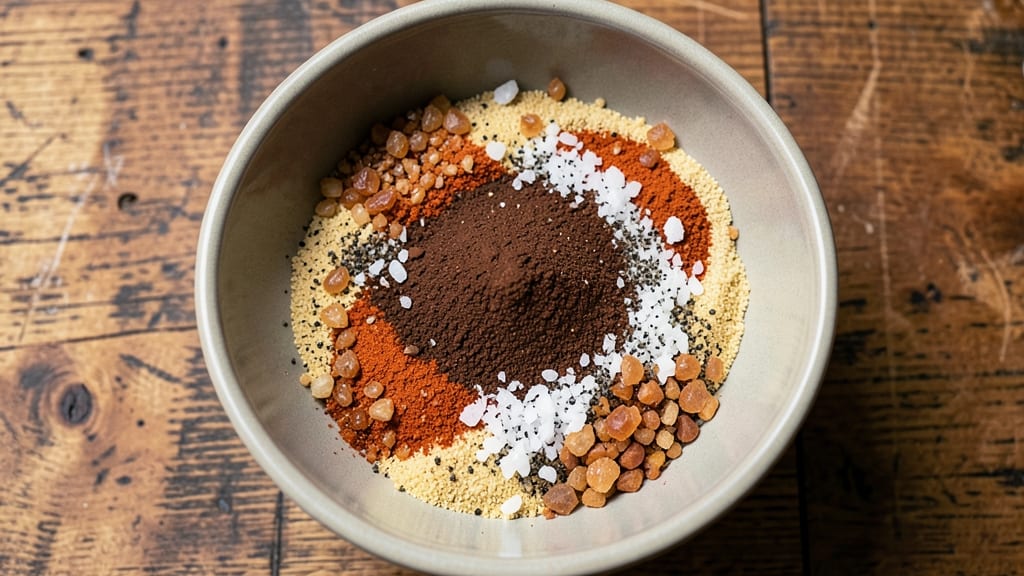
Transforming grilled chicken into a smoky, malty masterpiece starts with this beer-butt chicken rub recipe, designed to create a deep, caramelized crust that rivals any competition-style BBQ. The blend of coffee, spices, and brown sugar mimics the complexity of aged whiskey barrels—where beer-butt chicken gets its signature flavor.
I developed this mix after years of experimenting with dry rubs that could stand up to high-heat grilling while delivering that unmistakable malty depth.
This professional-grade dry spice blend requires just eight simple ingredients, each playing a crucial role in the flavor profile. The coffee grounds add bitterness and depth, while smoked paprika brings that essential smokiness.
Brown sugar caramelizes beautifully on the grill, creating a sticky, flavorful bark. Unlike pre-made rubs, this blend stays fresh for months when stored properly, making it a game-changer for your BBQ arsenal.
The magic happens when you apply this rub 1–2 hours before grilling, allowing the spices to adhere and begin developing their flavors. The result? Chicken with a crispy, caramelized exterior and tender, juicy meat underneath—every bite packed with layers of smoky, malty goodness.
This rub works equally well on wings, thighs, or whole chickens, ensuring consistent, restaurant-quality results every time.
Perfect for competition BBQ, game day, or weekend cookouts, this recipe delivers professional-level flavor with minimal effort. Once you try it, you’ll never settle for store-bought rubs again. Let’s get started on creating your signature dry spice blend!
Ingredients for beer butt chicken rub
Eight ingredients transform chicken into competition-worthy BBQ gold with smoky, malty depth.
| Ingredient | Amount | Notes |
|---|---|---|
| Instant Coffee Grounds ☕ | 2 tbsp | Finely ground for even distribution |
| Smoked Paprika 🌶️ | 2 tbsp | High-quality for authentic smokiness |
| Light Brown Sugar 🍚 | 1 cup | Packed for maximum caramelization |
| Granulated Garlic Powder 🧄 | 1 tbsp | Freshly ground preferred |
| Diamond Crystal Kosher Salt 🧂 | 1 tbsp | Fine grain for even coating |
| Ground Black Pepper 🌶️ | 1 tbsp | Freshly cracked for brightness |
| Ground Cinnamon 🌿 | ½ tbsp | Adds subtle warmth |
| Ground Coriander 🍋 | ½ tbsp | Citrusy depth to balance |
The coffee grounds are non-negotiable here—Starbucks or local roaster instant works best. Penzeys for their premium spices if you're splurging, but the grocery store stuff is fine if it's fresh. Look for smoked paprika labeled 'hickory' or 'mesquite' for that authentic beer-butt profile. The brown sugar should be packed—Domino or Muscovado brands caramelize beautifully. I always double-check the 'best by' date on spices; if it's older than six months, toss it. For the garlic powder, Simply Organic has the freshest ground versions, but any brand works if it's labeled '100% pure' with no anti-caking agents.
No instant coffee? Cold brew concentrate works in a pinch—just reduce it to 1 tbsp. Swap smoked paprika for half the amount of liquid smoke plus 1 tbsp regular paprika (trust me, it's close). Running low on coriander? Cumin at half the amount gives similar earthiness. The cinnamon adds warmth without overpowering—skip it if you prefer a cleaner profile. For extra depth, add 0.25 tsp of cayenne if you love heat. Store-bought rubs? Please—this blend beats them every time.
This rub stays potent for 6-12 months in an airtight container, away from light. I portion mine into small jars for easy access—one jar per grill session. For competition prep, I make a triple batch and freeze portions in 1 tbsp servings (per pound of chicken). The coffee grounds can darken over time, but that just means more depth. If your rub looks dry, add 1 tsp of olive oil per 2 tbsp of mix to revive it.
Why You'll Love This Recipe
- Pantry Magic: That instant coffee in the rub? It’s my secret weapon for deep, smoky richness without the fuss. Mix it with the paprika and sugar, slather it on, and boom—you’ve got flavor that tastes like it simmered all day, even if you’re back in 15 minutes.
- Craving-Worthy Crunch: The brown sugar and garlic powder caramelize into this addictive crust—crispy outside, juicy inside. Honestly, I’ve caught myself eating it straight off the bone when I think no one’s looking.
- Tailgate-Ready Rub: This isn’t just for weeknights. Slap it on wings for game day, rub it on thighs for a crowd, or even toss it on chicken breasts for a fancy-ish dinner. It’s the one dry rub that does it all without needing a fancy occasion.
- Budget-Friendly Powerhouse: Five ingredients, zero specialty items—this rub costs pennies per serving. Plus, the leftovers? They keep for weeks in the fridge, so you’re always one step ahead of takeout cravings. (Yes, even on a Tuesday night.)
Step-by-step instructions for smoky malty BBQ rub
This blend delivers deep, complex flavor with every application—perfect for grilled chicken.
Measure and Combine Dry Ingredients Precisely
In a medium mixing bowl, add the 2 tablespoons instant coffee grounds and 2 tablespoons smoked paprika. These two ingredients form the smoky, malty backbone of the rub. I like to use a small digital scale for accuracy with these fine powders—they pack differently than bulkier spices.
Next, add the 1 cup packed light brown sugar. Here's the thing—packing the sugar ensures even distribution and prevents clumping later. Use a spoon to gently press it into the bowl, then level it off with the back of a knife. This sugar isn't just for sweetness; it creates that beautiful caramelized crust during grilling.
Incorporate Aromatic and Seasoning Powders
Add the 1 tablespoon granulated garlic powder and 1 tablespoon diamond crystal kosher salt to the bowl. These should be freshly ground if possible—they make all the difference in flavor intensity. Sprinkle the 1 tablespoon ground black pepper over the top, then add the 0.5 tablespoon ground cinnamon and 0.5 tablespoon ground coriander. The cinnamon adds subtle warmth while the coriander brings that citrusy depth that balances everything.
At this point, you might notice the mixture looks uneven with some darker spots. That's normal—the instant coffee and smoked paprika create visual contrast, but when properly mixed, they'll distribute evenly. I use a silicone spatula to gently fold everything together, breaking up any sugar clumps as I go.
Mix Thoroughly Until Uniform
Transfer the mixture to a food processor fitted with the metal blade. Pulse in 1-second bursts until completely homogeneous. You're looking for a fine, even powder with no visible specks of sugar or coffee. Over-processing can create dust, but don't worry—this is a dry rub that needs texture.
For the final texture check, take a small pinch between your fingers and rub it between your palms. You should feel an even distribution of all components—no gritty bits or clumps. If you find any, pulse again in short bursts. This thorough mixing ensures every application delivers consistent flavor.
Store Properly for Maximum Freshness
Transfer the finished rub to an airtight container with a tight-sealing lid. I prefer glass jars with silicone seals for long-term storage—they keep out moisture better than plastic. Label the container with the date and contents, then store in a cool, dark place like your pantry.
This rub will keep for up to 3 months when stored properly. The spices will maintain their potency, though the sugar may slightly harden. To rehydrate, simply spread it on a baking sheet and bake at 200°F for 5 minutes to restore its texture before using. The flavor profile remains vibrant throughout its shelf life.
Pro Tips For Making Beer Butt Chicken Rub
- CRUSH THE COFFEE GRIND: I learned this the hard way—freshly ground instant coffee makes all the difference in this rub. That pre-ground stuff in the canister tastes flat and bitter. Grab a cheap mortar and pestle or pulse it in a spice grinder for 10 seconds. The aroma alone tells you why.
- SALT IN LAYERS: Don’t dump all the kosher salt at once. Start with half before applying the rub, then finish with the rest after. Diamond Crystal runs lighter than table salt, so you’ll need about 20% more than you’d use with regular salt. Trust me, your chicken won’t taste like a science experiment.
- WATCH THE SUGAR CARAMEL: Light brown sugar burns faster than you’d think, especially when mixed with garlic powder. If your grill or oven runs hot, spread the rub in a thin, even layer—no clumps. And for the love of BBQ, don’t rush the sear. Let it develop color for 3-4 minutes or you’ll just have a sad, sticky mess.
- SKIP THE PRE-MIX DRY RUB: Mix the rub right before applying it to the chicken. Smoked paprika loses its punch when stored, and the coffee grounds go stale in hours. Plus, wet your hands slightly when handling the rub—it sticks better and you won’t waste half of it on your fingers. (Yes, I’ve done that too.)
Pro cooking tips for perfect results
Rub Application Mastery
Apply the rub 1-2 hours before grilling to maximize adhesion and flavor development. For best results, pat the chicken dry with paper towels first—this ensures the rub sticks like glue.
I use a light coat on wings and thighs, but double up for whole chickens by applying a second layer after 30 minutes of resting time. The sugar in the rub needs time to caramelize properly, so don't rush this step. 🌡️
Grill Temperature Control
Maintain grill temperatures between 275-325°F for indirect heat cooking. This range prevents burning while allowing the sugar to develop that signature caramelized bark. I use a two-zone fire with charcoal—place the chicken on the cooler side and let the heat circulate naturally.
For gas grills, keep one burner off and use the other for indirect heat. The beer-butt flavor shines best when cooked low and slow.
Reverse Sear Technique
For competition-level results, try a reverse sear approach: Cook chicken at 225°F until internal temps reach 150°F (about 1-1.5 hours for thighs), then finish over direct heat. This method creates a perfect balance between tender meat and crispy crust.
The rub's sugar caramelizes beautifully during this final sear, creating that coveted glass-like bark. I recommend using a meat thermometer for accuracy—ThermoWorks Smoke is my go-to.
Post-Grill Resting
Let the chicken rest for 10-15 minutes after grilling before serving. This crucial step allows juices to redistribute throughout the meat, preventing dryness. I place the chicken on a cutting board, loosely tent with foil, and let it sit off the grill.
The resting time also lets the rub's flavors fully meld, creating that perfect harmony of smoky, malty, and slightly sweet notes. Trust me, skipping this step means losing flavor and texture.
Equipment Upgrades
Invest in a cast iron griddle for perfect sear marks and even heat distribution. I use my Lodge 12-inch griddle for wings and small pieces, while a charcoal smoker handles larger cuts. For maximum control, consider a digital temperature controller like the Traeger Pellet Grill—it maintains precise temps automatically.
Even a simple chimney starter for charcoal makes a world of difference in achieving consistent heat.
Nutrition facts
Frequently asked questions
Can I use this rub on other meats besides chicken?
This beer-butt blend works beautifully on pork ribs, brisket, and even salmon. The coffee and spices add depth to any protein, though pork benefits most from the caramelization. For salmon, reduce the sugar slightly (½ cup) to avoid overpowering the fish's delicate flavor.
Why does my rub clump when I try to apply it?
Clumping happens when moisture gets trapped in the sugar or coffee. To fix it, pulse the rub in a food processor for 5 seconds to break up clumps, or sift it through a fine-mesh strainer. For future use, store it in an airtight container with a deseiccant packet to absorb moisture.
How do I adjust the heat level?
This recipe is mild but smoky. For extra heat, add ½ teaspoon cayenne or 1 teaspoon chipotle powder. For a sweeter profile, increase the brown sugar to 1¼ cups. The key is balancing the coffee's bitterness—never exceed 3 tablespoons of coffee grounds.
Can I make this rub without coffee?
Yes! Replace the coffee with 1 tablespoon cocoa powder for chocolatey depth or 1 tablespoon molasses for a caramel-like richness. The molasses option works especially well for ribs. Both alternatives add complexity without the coffee's bitterness, though the "beer-butt" profile will be subtly different.
How much rub should I use per pound of chicken?
Use 1 tablespoon per pound for wings/thighs and 2 tablespoons per pound for whole chickens. The extra on larger pieces ensures even flavor penetration. For competition-style bark, apply a second coat 30 minutes before grilling** after the first layer has adhered.