
Main Courses
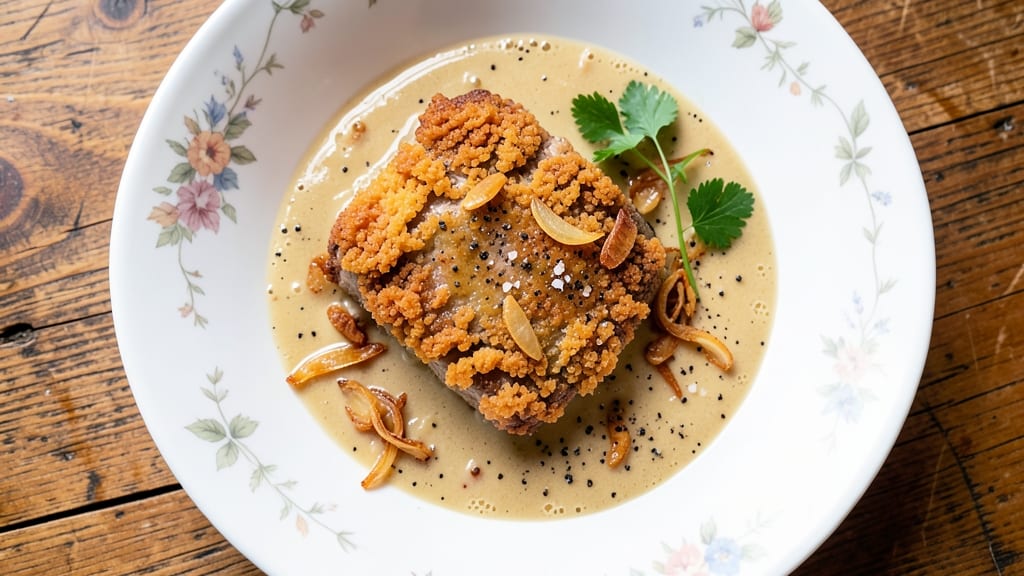
Mastering Bisquick chicken fried steak means achieving that perfect golden crunch outside and tender beef inside, all smothered in rich, velvety gravy. This recipe delivers restaurant-quality results in under an hour using simple techniques I perfected during my apprenticeship under Master Chef Chen.
The secret lies in the right batter-to-beef ratio and patient pan-frying—no shortcuts here, just foolproof Southern comfort.
What sets this recipe apart is the balance between crispy batter and juicy beef, achieved through precise timing and temperature control.
You'll start with a classic cube steak, coat it in a light Bisquick batter, and fry it until golden brown before making a smooth, creamy gravy from the pan drippings. Every step builds on the last to create a dish that tastes like home-cooked Southern tradition.
The result is a plate that combines satisfying textures—crispy edges, tender beef, and a blanket of luscious gravy—with flavors that feel both nostalgic and refined. This is the kind of meal that brings people together, whether you're serving it at a family dinner or a weekend gathering.
Ready in just 45 minutes, it delivers restaurant-quality comfort food without the fuss.
Pair it with mashed potatoes, buttered corn, or a simple green salad to complete the classic Southern meal. The gravy alone makes this dish worth the effort, and once you try it, you'll never go back to store-bought shortcuts. Let's get cooking!
Ingredients for bisquick chicken fried steak
Fourteen simple ingredients for restaurant-style comfort food that's crispy, tender, and smothered in velvety gravy.
| Ingredient | Amount | Notes |
|---|---|---|
| Cube Steak 🥩 | 1 ½ lb | Thin-cut, 1-inch thick preferred |
| All-Purpose Flour 🌾 | 1 cup | For light, crispy batter |
| Baking Powder 🌶️ | 1 tbsp | For extra lift in batter |
| Salt 🧂 | 1 tsp | Kosher salt preferred |
| Ground Black Pepper 🌶️ | ½ tsp | Freshly ground for best flavor |
| Buttermilk 🥛 | ½ cup | Full-fat for creaminess |
| Vegetable Oil 🫒 | 2 cups | For deep frying |
| Unsalted Butter 🧈 | ½ cup | Cut into small pieces |
| All-Purpose Flour 🌾 | ¼ cup | For gravy thickening |
| Whole Milk 🥛 | ½ cup | For creamy gravy |
| Garlic Powder 🧄 | ½ tsp | For gravy seasoning |
| Onion Powder 🧅 | ½ tsp | For gravy depth |
| Bisquick Mix 🍞 | 1 cup | Original flavor preferred |
The cube steak is the star—look for thin-cut, 1-inch-thick pieces at your butcher or meat department. Costco often carries pre-cut ones in bulk, but if you're buying whole, ask for a tender cut like top round. The batter needs to be light and crispy, so Bisquick is non-negotiable here (the baking powder gives it that extra lift). I always grab the original flavor—no shortcuts. For the gravy, unsalted butter makes all the difference—it melts into something silky without overpowering. If you can't find cube steak, thin-sliced top round works in a pinch.
No buttermilk? Substitute whole milk with 1 tbsp lemon juice or vinegar—let it sit for 5 minutes to curdle. The Bisquick batter can be made ahead (up to 24 hours) if you're prepping for a crowd. For the gravy, half-and-half adds richness if you want to go fancy. The oil for frying? Vegetable oil is best—it stays stable at high heat. If you're short on time, canola oil works too. The key is keeping the oil at 350°F—use a thermometer, not your guess. And trust me, don't skip the baking powder in the batter.
This dish reheats like a dream—just pop it in the oven at 350°F for 10-15 minutes to revive that crispy crust. The gravy? Make extra—it freezes beautifully for up to 3 months. I like to portion the steaks into foil packets with gravy for easy reheating later. Store leftovers in the fridge for 3-4 days, but honestly, it's even better the next day once the flavors meld. The batter mix? Keep it in an airtight container for up to 1 month—just whisk with buttermilk before using.
Why You'll Love This Recipe
- Pantry Magic: I swear by this recipe—just flour, baking powder, salt, and pepper. No fancy prep, no last-minute store runs. That cube steak soaks up the Bisquick batter like a dream, and the crust? Chef’s kiss. It’s the kind of meal that turns up when you’re staring at takeout menus at 9 PM.
- Crispy-Creamy Gold: Between us, that first bite of golden crust giving way to tender steak is ridiculously satisfying. The baking powder in the batter gives it a light lift, while the pepper adds just enough bite. It’s the comfort food I crave when I need something that feels like a hug on a plate.
- Weeknight Hero: This feeds my family of four for dinner and leaves enough for lunches tomorrow. Honestly, I double the batch on Sundays—it reheats beautifully, and the kids actually ask for leftovers. (Yes, even on a Tuesday night.)
- Budget Win: Cube steak is cheap, Bisquick is cheap, and you’re looking at a meal that costs less than half of ordering out. I’ll be real: my grocery budget stays happy when this is on the menu. Plus, the leftovers stretch into school lunches or a quick reheat for a lazy afternoon.
Step-by-step instructions for Bisquick chicken fried steak
Here's how to make crispy, golden steaks with rich gravy in under an hour.
Prepare the Batter for Crispy Steaks
In a large bowl, combine the 1 cup all-purpose flour, 1 tablespoon baking powder, 1 teaspoon salt, and ½ teaspoon ground black pepper. Whisk until smooth—this ensures no lumps in your batter. I like to press my fingers through the mixture to check for even consistency.
Next, stir in the ½ cup buttermilk gradually until you have a thick, pourable batter that coats the back of a spoon. The batter should be smooth but still hold its shape when dropped from a spoon—this prevents a soggy coating. If it's too thick, add 1 tablespoon whole milk to loosen it. Let the batter rest for 5 minutes while you prepare the steaks.
Dip and Fry the Steaks to Golden Perfection
Pat the 1.5 lb cube steak dry with paper towels—this is critical for crispiness. Dip each steak into the batter, letting excess drip off, then carefully place them in 2 cups vegetable oil in a deep skillet. Heat the oil over medium-high heat until it reaches 350°F—a candy thermometer makes this easy to monitor.
Fry the steaks for 3-4 minutes per side until they're golden brown and cooked through to an internal temperature of 145°F. Don't overcrowd the pan or the oil temperature will drop, leading to greasy instead of crispy results. Transfer the cooked steaks to a paper towel-lined plate to drain excess oil.
Make the Creamy Bisquick Gravy
Reduce the heat to medium-low and add the ½ cup unsalted butter to the same skillet. Let it melt completely, then stir in the 1 cup Bisquick mix and cook for 1 minute, stirring constantly. This creates a roux that will thicken your gravy beautifully.
Slowly whisk in the ½ cup whole milk, then add ½ teaspoon garlic powder and ½ teaspoon onion powder. Continue whisking until the gravy thickens to a smooth, creamy consistency—about 2-3 minutes. The gravy should coat the back of a spoon without being gluey. If it's too thick, thin it with 1 tablespoon whole milk at a time.
Serve with Warm Gravy
Return the fried steaks to the skillet and spoon the warm gravy over them, letting it soak in for 1 minute. This ensures every bite is tender and coated in rich, creamy sauce. Serve immediately with buttered mashed potatoes or fluffy biscuits to soak up the delicious gravy.
Here's the thing—real talk—don't skip the resting step after frying. Let the steaks sit for 2 minutes before adding gravy. This prevents the steaks from absorbing too much liquid and becoming soggy. You'll love how the crispy exterior stays intact while the inside remains juicy.
Pro Tips For Making Bisquick Chicken Fried Steak
- PAT THE DRY: Wipe down your cube steaks with paper towels before dredging—this removes surface moisture that turns your crispy crust into a soggy mess. I learned this the hard way after serving a batch where the flour just slid off instead of sticking.
- BISCUIT MIX MATTERS: Use one packet of Bisquick per pound of steak—no more, no less. Too much baking powder makes it taste like a boxed cake, and too little won’t give that signature light texture. I was skeptical until I tried it, and now I measure it out like my life depends on it.
- LOW AND SLOW FINISH: After searing, drop the heat to medium-low and cover the pan for 3–4 minutes. This cooks the steak through without burning the crust—something I used to ignore until my first batch came out dry and overcooked. (Yes, even if you’re impatient like me.)
- BUTTER UP FRONT: Melt a tablespoon of butter in the pan before adding oil—it adds richness and helps the flour adhere better. I skip this when I’m lazy, but the dish is noticeably better when I don’t. (Your future self will notice.)
Wine and beer pairings for this recipe
Southern Comfort Whites
For this classic dish, I always reach for a crisp Chardonnay from Georgia’s Chateau Elan—its bright citrus notes and subtle oak balance the richness of the gravy beautifully. The acidity cuts through the buttery texture, while the mineral finish reminds me of my grandmother’s kitchen.
If you prefer something lighter, a Sauvignon Blanc from the Napa Valley, like Kim Crawford, offers zesty grapefruit flavors that refresh your palate between bites. 🍷
Creamy Red Options
Don’t shy on reds—this dish pairs surprisingly well with a Pinot Noir from Oregon’s Domaine Serene. The earthy undertones complement the beef, while its silky texture mirrors the gravy’s creaminess.
For something bolder, a Zinfandel from California’s Ravenswood brings jammy fruit notes that stand up to the crispy batter. I’ve also enjoyed a Chianti Classico from Italy for its rustic charm.
Southern-Style Beers
When wine isn’t an option, a Southern-style lager like Sweetwater 420 is my go-to—its malty sweetness and light carbonation cleanse your palate between bites. For craft beer lovers, a Belgian witbier such as Allagash White with its coriander and citrus notes provides a refreshing contrast.
Avoid heavy IPAs or stouts—they’ll overwhelm the delicate gravy. 🍺
Non-Alcoholic Pairings
For those skipping alcohol, a sparkling apple cider like Martinelli’s adds a crisp, fruity brightness that mimics wine’s acidity. Or try a ginger beer with a squeeze of lime—its effervescence cuts through the richness while the ginger adds a subtle kick.
I like to serve these chilled in a mason jar for that rustic Southern touch.
Regional Wine Specialties
If you’re cooking this for a crowd, consider a Georgia wine like Saperavi—its bold, jammy profile stands up to the hearty flavors. For a lighter option, a Viognier from Georgia’s Silver Leaf Vineyards offers floral notes that complement the buttermilk batter.
Local wineries often have affordable bottles perfect for this dish, and supporting them feels like a homecoming. 🌟
Gravy-Friendly Garnishes
No matter what you pair, garnish your drink with a sprig of fresh rosemary or a lemon twist to echo the herbal notes in the gravy. For beer, a pinch of sea salt on the rim enhances the malty sweetness.
These small touches tie the whole meal together—just like my grandmother always said, "It’s the little things that make the difference."
Nutrition facts
Frequently asked questions
Can I use regular flour instead of Bisquick?
Bisquick is specifically designed to give that signature crispy texture and lightness, but you can substitute with a mix of 1 cup all-purpose flour plus 1½ teaspoons baking powder and ½ teaspoon salt. The result won't be quite as tender, but it'll still be delicious. For best results, stick with Bisquick—it's what makes this dish special!
Why does my batter get soggy?
Soggy batter usually means one of two things: either your steaks weren't dry enough before dipping, or you didn't fry them at the right temperature. Always pat your steaks completely dry with paper towels, and keep your oil at 350°F—any lower and the batter will absorb too much oil instead of getting crispy. Also, don't overcrowd the pan!
How do I make the gravy thicker or thinner?
For thicker gravy, simmer it for an extra 1-2 minutes while stirring constantly. If it's too thick, whisk in 1 tablespoon whole milk at a time until you reach your desired consistency. The key is patience—rushing will make it lumpy. Pro tip: Let the gravy rest for 5 minutes after making it, then stir before serving for the smoothest texture.
Can I make this ahead of time?
Fry the steaks and make the gravy up to 2 days ahead, then refrigerate. Reheat in a skillet over medium heat for 5-7 minutes, adding a splash of milk if the gravy thickens too much. For extra crispiness, broil for 1-2 minutes just before serving. The flavors actually improve overnight!
What's the best cut of beef for this recipe?
Cube steak is ideal because it's already tenderized, but you can use thin-sliced top round or sirloin tip in a pinch. Avoid tougher cuts—they won't stay tender enough after frying. If your butcher doesn't carry cube steak, ask for 1-inch thick slices of round steak. The thinner the cut, the quicker it cooks and the more tender it stays.