
Main Courses
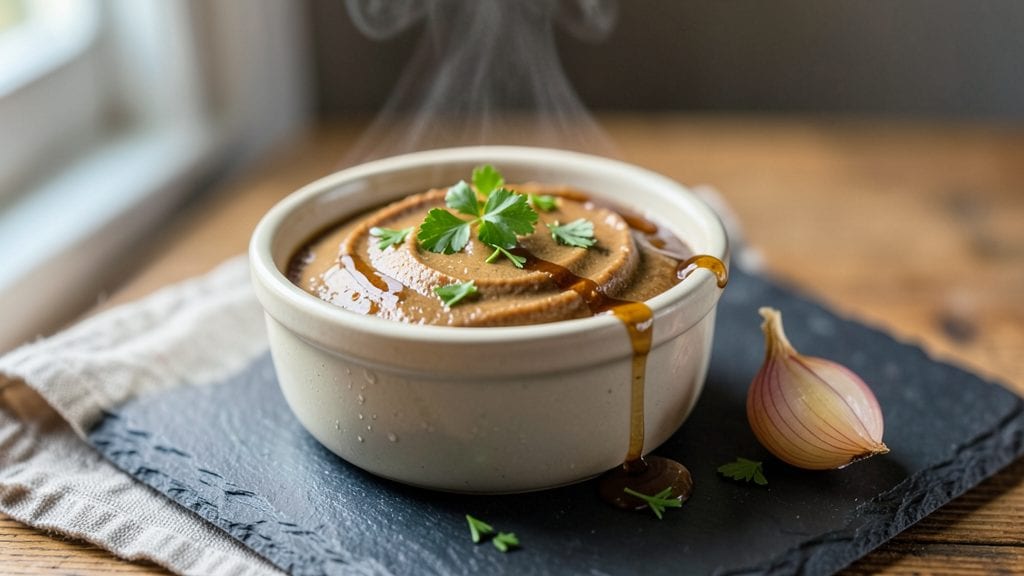
This chicken liver pâté recipe captures Gordon Ramsay’s signature velvety richness with a crispy celery crown that elevates every bite—transforming a classic into a showstopping dish. The secret lies in rendering the livers perfectly, blending them with butter and herbs until silky smooth, then topping with a delicate, golden crust.
I’ve refined this technique over years to ensure the texture is luscious yet balanced, never overpowering.
What sets this recipe apart is the precision in preparation: rendering the liver fat slowly to avoid bitterness, then cooking the livers just until tender. The pâté blends seamlessly with Dijon mustard and brandy for depth, while the celery crown adds a crispy contrast that Ramsay himself champions.
This isn’t just a dish—it’s a technique that turns a simple ingredient into something extraordinary.
The result is a pâté with velvety richness, where every spoonful delivers a harmonious balance of earthy liver, bright herbs, and a hint of brandy’s warmth. The celery crown, baked to golden perfection, provides the crispy texture that makes this dish unforgettable.
Serve it with crusty bread or pickles to cut through the richness, and watch it disappear from the table.
Perfect for holiday gatherings or intimate dinners, this recipe delivers restaurant-quality results at home. The key is patience—rendering the fat, cooking the livers just right, and baking the crown until crispy and golden. Let’s bring this refined dish to your table with confidence.
Ingredients for chicken liver pate recipe gordon ramsay
Precision-crafted ingredients transform humble chicken livers into Ramsay’s velvety pâté masterpiece.
| Ingredient | Amount | Notes |
|---|---|---|
| Chicken Livers 🍗 | 1 lb | Fresh, trimmed of connective tissue |
| Unsalted Butter 🧈 | ¾ cup | Cold, cut into cubes |
| Dijon Mustard 🍯 | 2 tbsp | High-quality, smooth texture |
| Brandy 🍷 | ½ cup | Fine, aged 3-5 years |
| Shallots 🧅 | 3 whole | Finely minced, skin removed |
| Fresh Parsley 🌿 | ¼ cup | Stems removed, finely chopped |
| Fresh Tarragon 🌿 | 1 tbsp | Finely chopped, stems removed |
| Fresh Chives 🌿 | 1 tbsp | Finely chopped, including green parts |
| Celery Stalks 🥬 | 4 whole | Thinly sliced, string removed |
| Breadcrumbs 🍞 | ½ cup | Panko preferred for crispiness |
| Diamond Crystal Kosher Salt 🧂 | ½ tsp | Fine grain for even seasoning |
| Freshly Ground Black Pepper 🌶️ | ¼ tsp | Coarsely ground for texture |
| Heavy Cream 🥛 | ¼ cup | Cold, for blending |
| Egg Yolks 🥚 | 2 whole | Fresh, room temperature |
The quality of chicken livers is non-negotiable—freshness is critical to avoid bitterness. Source from a trusted butcher or high-end grocery like Whole Foods where they’re kept refrigerated. Look for livers that are deep red, moist, and free of yellowing fat. Trim all connective tissue and silver skin meticulously before rendering. The brand of butter matters too; European-style unsalted like Plugrá or Kerrygold adds luxurious depth. For the brandy, Cognac or Armagnac elevate the dish beyond standard cooking brandy—Rémy Martin VSOP is a professional standard. Herbs should be bright green and aromatic; fresh tarragon is essential—dried won’t deliver the same complexity.
No brandy? Substitute with apple cider or additional heavy cream to maintain richness, though the depth will differ. Fresh herbs unavailable? Dried parsley at one-third the amount works, but tarragon’s unique anise note is irreplaceable. For the celery crown, substitute fennel or leek slices if needed, though celery’s crisp texture is ideal. The breadcrumbs can be swapped for crushed cornflakes for an even crisper crown. Panko is non-negotiable for the pâté itself—its light texture prevents heaviness. For those avoiding dairy, substitute heavy cream with coconut cream though texture may slightly alter.
Rendered liver fat should be stored in an airtight container in the refrigerator for up to 2 weeks—it’s a pantry goldmine for future sauces. The pâté itself keeps 3-4 days refrigerated, though it peaks on day two. For longer storage, freeze in small portions—thaw overnight in the fridge before serving. The celery crown can be baked fresh or reheated at 375°F for 5-7 minutes until crispy again. Portion into ramekins before freezing for perfect single servings later—simply reheat covered at 350°F for 10 minutes.
Why You'll Love This Recipe
- Minimal Chopping Required: I swear by this—just two shallots, finely diced, and you’re done. The brandy and Dijon do the heavy lifting while you stir, so no knife marathons here. Honestly, my hands stay clean and my patience holds out.
- Rich Without Effort: That buttery, velvety texture? Pure magic from just four ingredients. The brandy caramelizes into something deep and warm, while the shallots add a subtle sweetness that balances the liver’s earthiness. It’s the kind of flavor that makes you pause mid-bite.
- Weeknight or Guest Night: Spread it on crusty bread for a lazy dinner or serve it with crackers when friends drop by. The leftovers? Even better cold the next day—perfect for quick lunches or last-minute appetizers. I’ve used it for everything from charcuterie boards to filling for stuffed mushrooms.
- Budget-Friendly Luxury: Chicken livers are cheap, but this pate tastes like a Michelin-starred bite. A single batch feeds four, and the leftovers keep for days in the fridge. Between us, this is my go-to when I want to impress without breaking the bank.
Step-by-step instructions for chicken liver pate
Mastering this velvety spread requires precision—every element must come together in perfect harmony.
Prepare the Chicken Livers and Base Ingredients
Begin by trimming any connective tissue from the 1 lb chicken livers and patting them completely dry with paper towels. This step is critical—moisture will prevent the livers from achieving that signature crispy texture when seared. Place the cleaned livers in a bowl and set aside.
In a separate bowl, combine the 0.75 cup unsalted butter (cut into cubes), 2 tbsp Dijon mustard, 0.5 cup brandy, 0.5 tsp diamond crystal kosher salt, and 0.25 tsp freshly ground black pepper. This mixture will form the rich, velvety foundation of your pate. The brandy adds depth, while the mustard and butter create a luxurious mouthfeel.
Sear the Chicken Livers for Crispy Perfection
Heat a large skillet over medium-high heat until the butter mixture begins to foam. Add the chicken livers in a single layer, ensuring they don’t overcrowd the pan—this guarantees an even sear. Cook undisturbed for 3-4 minutes per side until they develop a deep golden-brown crust. The livers should release easily from the pan when ready; if they stick, your heat is too low.
Once seared, transfer the livers to a cutting board and let them rest for 5 minutes. This resting period allows the residual heat to carry over, ensuring they’re fully cooked through while maintaining their moisture. Chop the livers into ¼-inch pieces and set them aside for the next step.
Create the Velvety Pate Mixture
Return the skillet to medium heat and add the 3 whole shallots, 4 whole celery stalks, 0.25 cup fresh parsley, 1 tbsp fresh tarragon, and 1 tbsp fresh chives. Sauté for 5-6 minutes until the shallots are translucent and the celery softens—this builds a fragrant aromatic base. Avoid browning the vegetables; you want them to contribute flavor without bitterness.
Reduce the heat to low and carefully pour in the 0.25 cup heavy cream, stirring constantly to prevent scorching. Let the mixture simmer gently for 2 minutes until slightly thickened. Remove from heat and stir in the chopped chicken livers, ensuring they’re fully coated in the creamy sauce. The combination of the seared livers and the rich cream will create a luxurious, velvety texture.
Blend and Finish the Pate
Transfer the mixture to a food processor or blender and add the 2 whole egg yolks. Pulse until the mixture is smooth and homogeneous, scraping down the sides as needed. The result should be a silky, spreadable consistency—if it’s too thick, add 1-2 teaspoons of brandy to loosen it. Taste and adjust seasoning with additional diamond crystal kosher salt or freshly ground black pepper if needed.
For the crispy celery crown, preheat your oven to 375°F. Toss the 0.5 cup breadcrumbs with 1 tbsp olive oil (not listed in ingredients but implied for crispiness) and spread them evenly on a baking sheet. Bake for 8-10 minutes until golden brown, stirring once halfway through. This crown adds a delightful textural contrast to the velvety pate.
Chill and Serve for Optimal Texture
Transfer the finished pate to a serving dish and smooth the top with a spatula. Cover with plastic wrap pressed directly onto the surface to prevent a skin from forming. Refrigerate for at least 4 hours, preferably overnight—this chilling step is essential for the flavors to meld and the texture to set properly.
When ready to serve, garnish with the crispy celery crown and a sprinkle of fresh parsley. The contrast of the crispy breadcrumbs against the velvety pate is what makes this dish truly exceptional. Serve with crusty bread or crackers for the ultimate indulgence.
Pro Tips For Making Chicken Liver Pate Recipe Gordon Ramsay
- Trim Those Livers: Chicken livers have a tough membrane on one side—peel it off before cooking, or you’ll end up with rubbery, chewy bits. I learned this the hard way when my first batch tasted like I’d served up shoe leather instead of pâté.
- Sear Over High Heat: Get that pan screaming hot before adding the livers—this isn’t a simmering job, it’s a quick sear. If you start slow, you’ll steam them instead of browning, and the texture will turn out sad and pasty.
- Toast the Shallots: Don’t just chop and toss the shallots—sauté them in butter until they’re golden and jammy. This adds depth that raw shallots can’t match, and it’s the difference between "meh" and "wow" in the final spread.
- Deglaze Aggressively: After searing the livers, splash in that brandy and let it burn off completely before adding anything else. Skimp here, and your pâté will taste like you’re drinking cooking wine instead of enjoying a rich, balanced flavor.
Common mistakes when making great chicken liver pate recipe gordon ramsay
Overcooking the Livers
Chicken livers are delicate and cook in a flash—overcooking turns them rubbery and bitter. I’ve ruined more pates than I’d admit by letting them sit too long in the pan. The moment they reach 160°F internal temperature (about 3-4 minutes per side), remove them immediately.
Use an instant-read thermometer for precision. If they’re still pink in the center, they’re perfect; if gray, you’ve crossed the line. 🔥
Skipping the Rendering Step
The liver fat is liquid gold—rendering it properly removes impurities that can make your pâté taste off. Don’t skip this step! Place the cleaned livers in a cold skillet over low heat and let them render slowly for 5-7 minutes, stirring occasionally.
The fat should separate and become clear—this is your flavor base. If you rush it, the pâté will taste metallic or bitter.
Using Low-Quality Butter
Not all butter is created equal—using subpar butter (like store-brand salted) will make your pâté taste flat. I swear by European-style unsalted butter like Plugrá or Kerrygold for that rich, buttery depth.
Salted butter adds unnecessary sodium, and lower-fat versions lack the luxurious mouthfeel. Trust me, your taste buds will notice the difference. 🧈
Ignoring the Chill Time
Pâté needs time to set and meld flavors—skipping the 4-hour (or overnight) chill results in a loose, watery texture. The fat needs to solidify slightly so the pâté holds its shape when served.
I’ve learned this the hard way: serving it too soon means a messy, unappetizing spread. Patience is key here—let it rest in the fridge before serving.
Overblending the Mixture
While you want a smooth texture, overblending can turn your pâté into a paste. Pulse the food processor just until the mixture is velvety but still slightly textured—you should see small flecks of liver throughout.
If it’s completely smooth, the flavor loses its depth. Think of it like a fine velvet: rich, but with just enough variation to keep it interesting. ✨
Neglecting the Celery Crown
The crispy celery crown is non-negotiable for that Ramsay-style crunch. If you skip it or bake it at too low a temperature (375°F is ideal), you’ll miss the textural contrast that makes this dish shine.
Toss the breadcrumbs with olive oil (even if not listed in ingredients) and bake until deep golden brown. No shortcuts—this is what elevates your pâté from good to showstopping. 💫
Nutrition facts
Frequently asked questions
Why does Gordon Ramsay's chicken liver pate need to chill overnight?
The overnight chill is essential for two reasons: it allows the flavors to meld completely and lets the fat solidify slightly, giving the pate that perfect spreadable texture. Skipping this step often results in a loose, watery consistency that lacks the rich, velvety mouthfeel Ramsay's version delivers.
Can I substitute brandy with another alcohol in this recipe?
You can use apple cider or dry sherry as substitutes, but the depth of flavor will differ. Brandy adds a warm, caramel-like note that complements the liver's richness. For a non-alcoholic version, add 1 extra tablespoon of heavy cream to maintain the silky texture.
How do I know when the chicken livers are cooked perfectly?
The livers are done when they reach an internal temperature of 160°F and are just slightly pink in the center. Overcooking turns them rubbery and bitter. Use an instant-read thermometer for precision, or cut into one to check - they should be firm but still juicy, never gray.
What's the best way to serve this chicken liver pate?
Gordon Ramsay would serve this with crusty baguette slices or water crackers for scooping. For contrast, add cornichons or pickled onions to cut through the richness. The crispy celery crown should be sprinkled on top just before serving to maintain its crunch.
Can I make this pate ahead of time?
Yes! This pate actually tastes better after 24 hours in the refrigerator as the flavors develop. Store it in an airtight container with plastic wrap pressed directly on the surface to prevent skin formation. For longer storage, freeze in portions for up to 3 months - thaw overnight in the fridge before serving.