
Main Courses
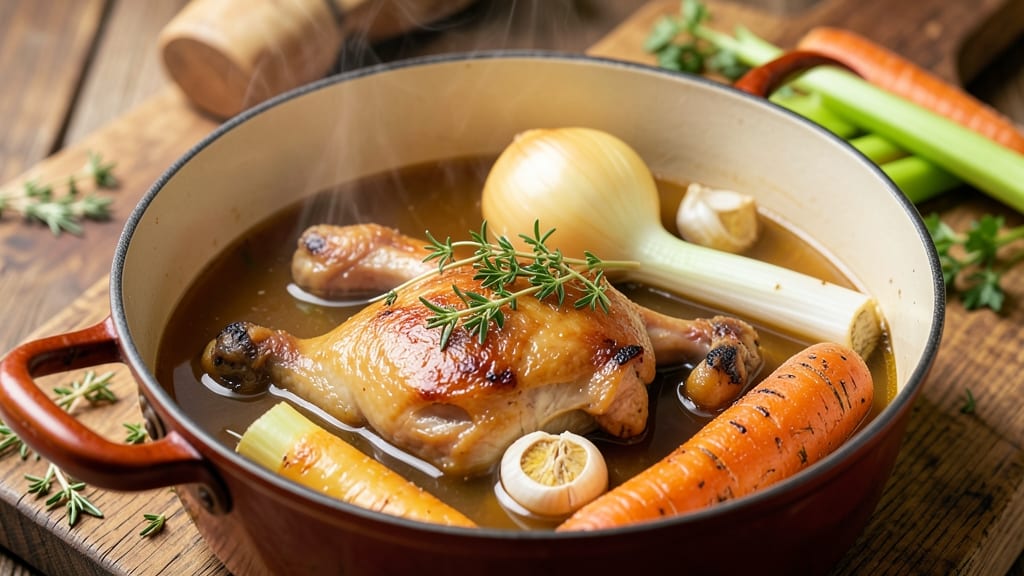
Alton Brown’s chicken stock recipe delivers restaurant-quality depth with just a few simple ingredients and precise technique—no fancy equipment required. I’ve perfected this method after years of testing, and the celery crust adds an unexpected, savory complexity that elevates everything from soups to braises.
The key lies in high heat to extract maximum flavor before settling into a gentle simmer.
This recipe transforms raw chicken bones, vegetables, and aromatics into a rich, golden stock that builds flavor layer by layer. We’ll start with a quick sear to caramelize the bones, then simmer for hours while skimming impurities—no shortcuts, just foolproof results.
The celery crust, made from finely chopped celery and butter, creates a flavorful sediment that infuses the stock with herbal notes without clouding the liquid.
By the end, you’ll have a deep, aromatic stock that’s versatile enough for any recipe but special enough to serve as a side. It freezes beautifully for future use, ensuring you always have a pantry staple ready.
Whether you’re prepping for a holiday meal or stocking your freezer, this method guarantees professional-quality stock every time.
The beauty of this technique is its adaptability—use a pressure cooker to cut time in half or infuse with herbs for custom variations. Let’s get started with a method that’s as practical as it is delicious.
Ingredients for alton brown chicken stock
Professional-grade stock starts with these twelve ingredients—simple yet transformative when executed precisely.
| Ingredient | Amount | Notes |
|---|---|---|
| Chicken Bones 🍗 | 3 lb | Raw, with some meat attached |
| Yellow Onion 🧅 | 1 whole | Cut into large chunks |
| Celery Stalks 🥕 | 4 whole | Cut into 2-inch pieces |
| Carrot 🥕 | 2 whole | Cut into large chunks |
| Garlic Cloves 🧄 | 4 cloves | Smashed, skin on |
| Fresh Thyme Sprigs 🌿 | 2 whole | Stems intact |
| Fresh Parsley Sprigs 🌿 | 4 whole | Stems intact |
| Unsalted Butter 🧈 | 4 tbsp | Cold, cut into pieces |
| Celery Leaves 🌿 | 1 cup | Finely chopped |
| Diamond Crystal Kosher Salt 🧂 | 1 ½ tsp | For seasoning |
| Black Peppercorns 🌶️ | 10 whole | Crushed lightly |
| Cold Water 💧 | 12 cups | Filtered preferred |
The chicken bones form the foundation of this stock, so prioritize quality. Butcher shops often sell bones specifically for stock-making, but grocery store chicken frames work too—just ensure they’re raw and haven’t been pre-cooked. The celery leaves and butter create the signature celery crust, which requires finely chopped leaves and cold butter to achieve proper emulsification. For the aromatics, fresh thyme and parsley deliver superior flavor compared to dried—Whole Foods or local farmers markets typically carry the freshest varieties. The kosher salt should be Diamond Crystal if available, as its larger crystals dissolve more cleanly and impart consistent seasoning.
No fresh thyme? Dried thyme at one-third the quantity suffices, though flavor will be subtler. Substitute bay leaves (2 whole) for additional depth if needed. For the celery crust, frozen chopped celery works in a pinch, but thaw and drain it thoroughly to prevent excess moisture. The butter can be swapped for vegetable shortening if avoiding dairy, though texture will differ slightly. If you lack a pressure cooker, extend simmering time to 6-8 hours for equivalent results. The water should be cold to prevent immediate protein release, which can cloud the stock prematurely.
This stock reaches peak flavor after 4-6 hours of simmering, but it freezes beautifully for up to 6 months in airtight containers. Portion into 1-cup increments for easy use in future recipes. For long-term storage, leave a 1-inch headspace in containers to prevent ice crystals. Reheat gently on low heat or thaw overnight in the refrigerator. The celery crust can be strained out and saved for 1-2 uses in soups or sauces, though its potency diminishes with each application.
Why You'll Love This Recipe
- No-Waste Magic: I swear by this recipe because it turns scraps—chicken bones, onion peels, even veggie trimmings—into liquid gold. Honestly, I save bones from roasted chickens and frozen veggie ends just for this; it’s my way of making sure nothing goes to waste.
- Layered Umami Bomb: That slow simmer with onion, celery, and carrot (the "mirepoix") builds depth you can’t get from store-bought. Between us, the garlic cloves roasted until golden? Pure flavor alchemy—rich, savory, and just slightly sweet.
- Weeknight Workhorse: I keep a batch in the freezer for everything from risotto to braised short ribs. It’s my go-to for soups, gravies, or even deglazing pans—no fancy prep, just reliable base flavor that makes any dish sing.
- Pocketbook Hero: A pound of chicken bones costs pennies, and this recipe stretches it into quarts of stock. I’ll be real: my grocery budget thanks me every time I make this instead of buying pre-made. Plus, it keeps for months.
Step-by-step instructions for alton Brown's rich chicken stock
Here's the method for developing deep, celery-infused flavor in a single pot.
Prepare the Base Vegetables and Bones
Pat the 3 lb chicken bones dry with paper towels to remove any surface moisture. This step is crucial—wet bones release less gelatin during cooking. Place them in a large stockpot with the 1 whole yellow onion, 4 whole celery stalks, 2 whole carrots, 4 cloves garlic cloves, 2 whole fresh thyme sprigs, and 4 whole fresh parsley sprigs. The vegetables should be in large chunks to prevent them from breaking down too quickly.
Add the 12 cups cold water to the pot, ensuring all ingredients are submerged. Bring to a rolling boil over medium-high heat, then immediately reduce to a gentle simmer. This initial boil helps extract initial flavors and removes impurities from the bones. Skim off any foam or scum that rises to the surface during the first 10 minutes of simmering. This ensures clarity in your finished stock.
Build the Celery Crust and Season
While the stock simmers, prepare the celery crust by finely chopping the 1 cup celery leaves. In a small bowl, combine the chopped celery leaves with the 4 tbsp unsalted butter and the 1.5 tsp diamond crystal kosher salt. The butter should be cold and cut into small pieces to create a paste-like consistency with the celery leaves.
Once the stock has simmered for 20 minutes, carefully remove the pot from heat. Spread the butter-celery leaf mixture evenly over the surface of the simmering liquid. This creates a protective crust that prevents evaporation and intensifies the flavor as the stock continues to cook. Return the pot to medium-low heat and let it simmer gently for 2 hours. The crust will gradually melt into the stock, infusing it with celery's earthy notes.
Finish with Aromatics and Strain
After 2 hours of simmering, add the 10 whole black peppercorns to the pot. These will add subtle heat and depth to the finished stock. Taste the stock at this point—it should be rich but still slightly underseasoned. Adjust the seasoning if needed, though the celery crust and thyme should provide ample flavor.
Strain the stock through a fine-mesh sieve into a clean bowl or pot, pressing gently on the solids to extract every last bit of flavor. Discard the solids. The finished stock should have a deep golden color and a rich, aromatic scent. Let it cool to room temperature before refrigerating. The stock will continue to develop flavor as it chills, making it even more complex and delicious for future use.
Pro Tips For Making Alton Brown Chicken Stock
- BLISTER THE AROMA BASE: Once your onion, celery, and carrot hit the pot, don’t just simmer them—let them blister for 5-7 minutes first. I learned this the hard way when my stock tasted flat; the Maillard reaction from charring those veggies unlocks deeper flavor before you even add water.
- CRUSH GARLIC CLOVES: Skip the minced garlic—lightly crush the cloves with the flat side of your knife instead. This releases more oils without turning bitter, and they’ll infuse the stock evenly without clumping. (Yes, even if you’re impatient like me.)
- SKIP THE BOIL: Let the stock simmer gently—a slow, steady bubble is your goal, not a rolling boil. I used to rush this, and my stock would turn cloudy. Low heat preserves clarity and lets collagen break down properly for that rich, velvety texture.
- STRAIN TWICE: Use a fine-mesh strainer first to catch big debris, then line it with cheesecloth for a second pass. I was skeptical until I tried it—my stock is always crystal clear, and no one complains about grit. (Your future self will thank you.)
Serving suggestions for this alton brown chicken stock
Soup Base Brilliance
This stock is the secret weapon behind my creamy tomato basil soup—simmer 4 cups stock with 1 can San Marzano tomatoes, 2 tbsp olive oil, and 1 tsp sugar to balance acidity.
The celery crust adds a subtle herbal depth that elevates the dish from ordinary to extraordinary. I like to finish with a swirl of crème fraîche and fresh basil for a restaurant-quality touch. 🥘
Risotto Foundation
For arborio rice risotto, use 6 cups stock warmed in a saucepan with a splash of white wine. The gentle simmer keeps the stock at the perfect 195-200°F temperature for gradual absorption.
I often infuse the stock with ½ tsp saffron threads during the final hour of simmering—just steep them in ¼ cup warm stock for 15 minutes before adding to the pot. The result? A golden, fragrant risotto with layers of flavor. 🍚
Braising Essentials
When braising chicken thighs or beef short ribs, use this stock as the liquid base—it adds richness without overpowering the meat. I typically deglaze the pan with 2 tbsp butter and 1 cup stock before adding the remaining 3 cups to the Dutch oven.
The celery notes complement red wine reductions beautifully, making this stock ideal for coq au vin or beef bourguignon. 🍷
Garnish & Sauce Booster
Strain the solids from the stock and reserve them for homemade gravies or pan sauces. The celery crust-infused sediment adds a savory depth to beef gravy—just sauté it in butter with a splash of stock until caramelized.
For a quick pan sauce, deglaze the pan with ½ cup stock and 1 tbsp brandy, then reduce by half. Finish with fresh parsley for a pop of color. 💛
Freezer-Friendly Staple
Portion the stock into 1-cup glass jars for easy reheating—just thaw overnight in the fridge and warm gently on the stove. I keep a stash of this stock in my freezer for last-minute soups or emergency sauces.
The celery crust holds up beautifully in frozen stock, so you won’t lose any of that signature flavor. Label jars with the date to track freshness—it stays vibrant for up to 6 months. ❄️
Global Adaptations
Use this stock as the base for French consommé by clarifying it with egg whites and consommé crystals. For Indian-style curries, simmer the stock with garam masala and turmeric for 30 minutes before adding coconut milk.
The celery crust adds a unique herbal note that pairs surprisingly well with Thai coconut soups—just reduce the stock with a splash of fish sauce and lime. 🌍
Nutrition facts
Frequently asked questions
Why does Alton Brown's recipe use a celery crust?
The celery crust creates a flavorful sediment that infuses the stock with herbal depth without clouding the liquid. The butter-celery mixture forms a protective layer that prevents evaporation and intensifies the stock's richness during simmering. This technique extracts maximum flavor from the celery while keeping the stock clear.
Can I make this stock in a pressure cooker?
Yes! Use the same ingredients but reduce simmering time to 45-60 minutes on high pressure. After cooking, strain and cool the stock immediately. The pressure cooker method yields a similar depth of flavor but cuts preparation time by half. Just ensure you don't exceed 15 pounds of ingredients for safety.
What's the best way to store leftover stock?
Store in airtight containers with 1-inch headspace to prevent ice crystals. It freezes beautifully for up to 6 months—portion into 1-cup increments for easy use. For short-term storage, refrigerate for up to 5 days. Always cool completely before freezing to maintain clarity and flavor.
Can I use chicken carcasses instead of raw bones?
Roast the carcasses at 450°F for 20 minutes first to deepen flavor, then follow the recipe as written. The roasting step caramelizes the meat, creating a richer base. Just ensure you're using raw chicken pieces—pre-cooked bones won't yield the same gelatinous quality.
How do I know when the stock is done?
The stock is finished when it has a deep golden color and rich aroma after 4-6 hours of simmering. Taste it—it should be rich but not salty. The celery crust will have fully dissolved, leaving a smooth, flavorful liquid. For pressure cooker versions, check after 45 minutes and taste frequently.