
Soups & Stews
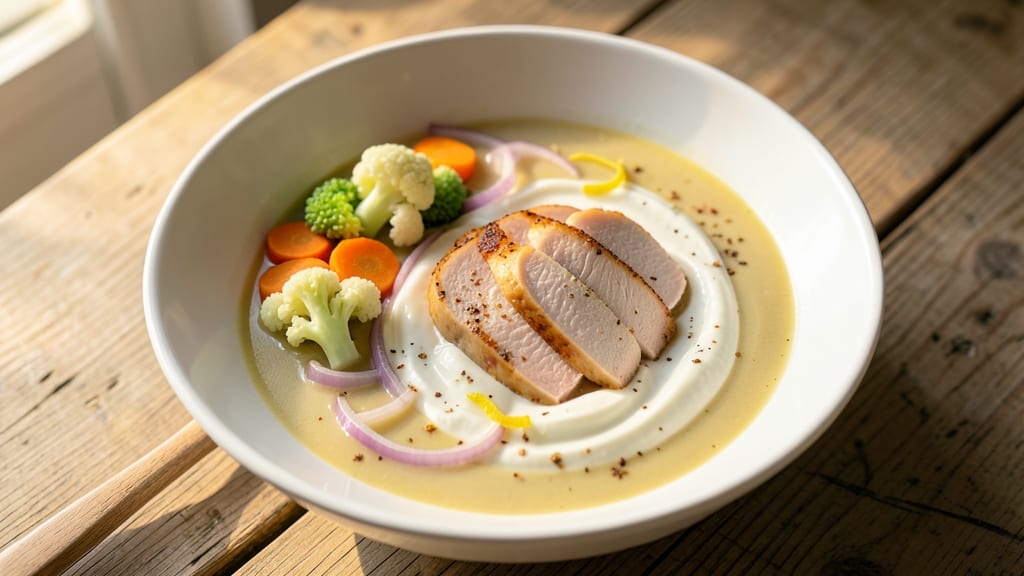
This bariatric cream of chicken soup delivers all the comforting richness of classic cream soup without the heavy calories or fat—perfect for post-surgery meals. ✨ The secret lies in using lean protein, low-sodium broth, and natural thickeners like pureed cauliflower or Greek yogurt to create a silky texture without dairy overload.
Every spoonful provides gentle comfort while supporting your nutritional needs, making it an ideal choice for those following a bariatric-friendly diet.
The recipe focuses on high-protein, low-calorie ingredients to ensure you get the nourishment you need without compromising flavor. Chicken breast replaces fatty cuts, and a blend of vegetables like carrots and celery adds natural sweetness and nutrients.
The soup is pureed to a smooth consistency, making it gentle on sensitive stomachs while still feeling indulgent. Portion control is built in—each serving is carefully measured to fit bariatric guidelines.
What sets this apart is the balance of comfort and nutrition—creamy without heavy cream, flavorful without excess salt, and satisfying without weighing you down.
The silky texture comes from a combination of broth reduction and a touch of Greek yogurt for richness, while herbs like thyme and bay leaf add depth without calories. It’s the kind of meal that feels like a hug for your taste buds while supporting your health goals.
Perfect for meal prep or a quick lunch, this soup can be adjusted for individual needs—add more protein powder for extra calories or reduce the broth slightly for a thicker consistency.
Always consult your dietitian to tailor portions to your specific requirements. Here’s how to make it—simple, nourishing, and full of comfort.
Ingredients for bariatric cream of chicken soup
Lean protein, silky veggies, and clever thickeners create this bariatric-friendly comfort dish.
| Ingredient | Amount | Notes |
|---|---|---|
| Boneless Skinless Chicken Breast 🍗 | 12 oz | Lean protein source for bariatric diet |
| Low-Sodium Chicken Broth 💧 | 4 cups | High-quality, low-sodium preferred |
| Fresh Cauliflower 🥬 | 4 oz | Steamed and pureed for thickness |
| Plain Nonfat Greek Yogurt 🥛 | ¼ cup | For creaminess without dairy fat |
| Fresh Carrots 🥕 | ½ cup | Diced, about 1 medium carrot |
| Yellow Onion 🧅 | ¼ cup | Diced, about 1 small onion |
| Celery Stalks 🧆 | ¼ cup | Diced, about 2 medium stalks |
| Garlic Cloves 🧄 | 2 cloves | Minced for aromatic depth |
| Fresh Thyme Leaves 🌿 | ½ tsp | Or 1/8 tsp dried thyme |
| Bay Leaves 🍃 | 1 whole | Removed before serving |
| Black Peppercorns 🌶️ | ¼ tsp | Freshly ground preferred |
| Diamond Crystal Kosher Salt 🧂 | ¼ tsp | Adjust to taste, low-sodium |
| Extra-Virgin Olive Oil 🫒 | 1 tbsp | For sautéing vegetables |
| Lemon Juice 🍋 | 1 tbsp | Freshly squeezed for brightness |
The chicken breast is non-negotiable here—skinless, boneless cuts keep calories in check while delivering protein. Trader Joe's or Whole Foods carry excellent pre-trimmed options, but any boneless breast works. For the broth, low-sodium is critical—check labels carefully. The cauliflower is the secret weapon: steamed until tender, then pureed until completely smooth. It replaces heavy cream without the guilt. Fresh thyme and bay leaf add depth without calories, but dried works in a pinch at one-third the amount.
No Greek yogurt? Unsweetened almond milk blended with cornstarch mimics the creaminess (mix 1/4 cup almond milk with 1 tsp cornstarch). Carrots and celery can be swapped for zucchini or butternut squash if preferred. The olive oil is just for sautéing—don't worry about the calories here, as they're offset by the broth and veggies. For extra protein, stir in 1 scoop unflavored whey protein powder at the end (adjust liquid as needed). The lemon juice brightens everything—fresh is best, but bottled works if you're in a hurry.
This soup tastes even better the next day as flavors meld. Store in glass containers for up to 4 days in the fridge. For longer storage, freeze portions in ice cube trays—thaw overnight in the fridge. Portion control is built in: each serving is about 1 cup, perfect for bariatric guidelines. Double the batch and freeze half for future meals—meal prep gold. Always reheat gently to preserve the silky texture.
Why You'll Love This Recipe
- No-Fuss Assembly: I swear, this comes together faster than ordering takeout. Shred the chicken while the broth simmers, toss in chopped cauliflower and carrots—boom—it’s done. No fancy techniques, just a pot, a knife, and 20 minutes of your time.
- Silky Cream Without Guilt: That Greek yogurt swap is pure magic. It thickens the soup beautifully without the heaviness, and the carrots add just enough natural sweetness to balance the richness. Honestly, I’d eat this even if I wasn’t watching portions.
- Meal Prep MVP: Between us, this is my go-to for lunch all week. The flavors only get better as it sits—just reheat and grab. Plus, it’s the kind of soup that tastes just as good cold in a thermos as it does hot in a bowl.
- Budget-Friendly Protein: Lean chicken breast and cauliflower stretch this recipe for days. I make a double batch, freeze half, and still have leftovers that disappear faster than my willpower on a bad day. (Yes, even on a Tuesday night.)
Step-by-step instructions for bariatric cream of chicken soup
Here's how to craft a velvety, protein-packed soup that delivers all the comfort without the heaviness.
🍳 Step 1: Sauté the Vegetable Base
Heat the 1 tablespoon extra-virgin olive oil in a medium saucepan over medium heat. Add the diced yellow onion, celery stalks, and fresh carrots—these form your aromatic trifecta. Cook for 5-6 minutes until the vegetables soften and the onion becomes translucent.
Here's the thing—don't rush this step. Those softened vegetables release their natural sweetness and form the flavor foundation. Add the 2 minced garlic cloves and 0.5 teaspoon fresh thyme leaves and cook for another 30 seconds until fragrant. The thyme should perfume the kitchen with its earthy aroma—this is where the magic starts.
🍳 Step 2: Cook the Chicken Until Tender
Push the vegetable mixture to one side of the pan and add the 12 ounces boneless skinless chicken breast, cut into ½-inch cubes. Cook for 5-6 minutes until the chicken loses its raw opacity and develops a light golden crust. You'll see the edges start to crisp—that's your signal to flip the pieces halfway through.
I like to press down gently on the chicken cubes during the first minute—this prevents them from curling and ensures even contact with the pan. Once the chicken is cooked through, remove it with a slotted spoon and set aside. The pan will retain all that delicious chicken flavor, which we'll use to build our velvety base.
🥘 Step 3: Build the Silky Base
Return the cooked chicken to the pan and pour in the 4 cups low-sodium chicken broth. Add the 1 whole bay leaf, 0.25 teaspoon black peppercorns, and 0.25 teaspoon Diamond Crystal kosher salt. Bring to a gentle simmer over medium-low heat and cook for 10 minutes to infuse the broth with all those wonderful flavors.
While it simmers, steam the 4 ounces fresh cauliflower until fork-tender (about 3-4 minutes in boiling water). Drain well and reserve ¼ cup of the cooking water, then purée the cauliflower with the reserved water until completely smooth. This creates our natural thickener—no heavy cream needed.
🥘 Step 4: Finish with Creamy Texture
Strain the chicken and vegetable mixture through a fine-mesh sieve, pressing gently to extract all the flavorful juices. Return the strained mixture to the pan and stir in the cauliflower purée. Simmer for 5 minutes until slightly thickened—it should coat the back of a spoon but still be light and silky.
Here's where we add the 0.25 cup plain nonfat Greek yogurt and 1 tablespoon lemon juice. Stir gently to incorporate, then taste and adjust seasoning. The yogurt adds creaminess without dairy fat, while the lemon brightens everything up. The soup should be rich but still light enough for bariatric needs.
⏰ Step 5: Serve Warm and Enjoy
Ladle the soup into bowls and garnish with a sprinkle of fresh thyme leaves and a few lemon zest shavings. Serve immediately while warm—this soup is all about that comforting embrace on a chilly day. Each spoonful delivers tender chicken, velvety texture, and all the comforting flavors without the heaviness.
Real talk: the key to this recipe is patience with the vegetable cooking and proper straining. That extra effort ensures a smooth, restaurant-quality texture that feels indulgent while being bariatric-friendly. Leftovers keep well in the fridge for 3-4 days—just reheat gently to maintain that silky consistency.
Pro Tips For Making Bariatric Cream Of Chicken Soup
- SHRED CHICKEN LOW: Once the chicken hits 165°F, pull it from the broth immediately and let it rest under foil for 5 minutes. I learned this the hard way—overcooking turns it rubbery, and you’ll end up with a soup that tastes more like sad, dry meat than creamy comfort.
- SAUTE VEGETABLES FIRST: Cook the carrots and cauliflower in a dry pan for 3-4 minutes before adding broth. This jumpstarts their flavor and caramelizes them just enough to make the soup taste richer without extra fat—your bariatric diet will thank you for the texture boost.
- STIR YOGURT GENTLY: When folding in the Greek yogurt, reduce heat to low and stir with a whisk or rubber spatula in one direction. I used to add it hot and end up with curdled lumps—this keeps it silky smooth every time, even if you’re nervous about the heat.
- SKIP THE BOIL: Simmer the broth at a steady bubble, not a rolling boil. After burning through three batches, I finally realized this keeps the broth from turning cloudy and preserves the delicate flavor of the low-sodium chicken base—your soup will taste fresher, not cooked-down.
Essential equipment for bariatric cream of chicken soup
Essential Pot Types
For this recipe, a medium-sized saucepan with a tight-fitting lid is your best friend. I recommend a 3-4 quart capacity—enough room for the soup to simmer gently without boiling over. A stainless steel or heavy-bottomed pan distributes heat evenly, preventing hot spots that can scorch your vegetables.
My go-to is a Calphalon stainless steel saucepan—it’s durable and heats up quickly. If you’re on a budget, a Cuisinart MultiClad Pro is a great alternative. 🥘
Must-Have Tools
A fine-mesh strainer is non-negotiable for achieving that silky texture. I use a 3-inch diameter stainless steel strainer to separate the chicken and vegetables from the broth while keeping all the flavorful juices.
A handheld immersion blender is another game-changer—it lets you purée the cauliflower directly in the pan for a smoother, cleaner process. If you don’t have one, a regular blender works, but you’ll need to transfer the cauliflower to it first. 💫
Precision Measuring
Bariatric diets require careful portion control, so accurate measuring tools are key. Use a digital kitchen scale for the chicken breast and cauliflower to ensure you hit the 12 oz and 4 oz targets precisely.
A set of stainless steel measuring spoons (like the OXO Good Grips brand) makes it easy to measure the thyme, salt, and pepper to the teaspoon. For liquids, a liquid measuring cup with clear markings ensures you add exactly 4 cups of broth without overfilling.
Precision here keeps your soup both flavorful and bariatric-friendly. ⚖️
Garnish Essentials
Fresh garnishes elevate the presentation and flavor without adding calories. Keep fresh thyme sprigs and a zester on hand to add a bright finish. A microplane is perfect for creating fine lemon zest shavings that add a pop of color and acidity.
For extra flair, a small pair of kitchen shears helps trim thyme leaves neatly. These tools make garnishing effortless and keep your soup looking restaurant-worthy. ✨
Storage Solutions
For meal prep, airtight glass containers are ideal for storing leftovers. I love Pyrex 4-cup storage containers with snap-on lids—they’re microwave-safe and stack neatly in the fridge. For freezing, quart-sized freezer bags work best—squeeze out excess air to prevent freezer burn.
Label each bag with the date to track freshness. A fine-mesh skimmer also comes in handy for transferring hot soup into containers without spills. ❄️
Nutrition facts
Frequently asked questions
Can I use regular cream of chicken soup instead of making this from scratch?
Not ideal for bariatric needs. Most canned cream soups contain high calories, fat, and sodium—often 300+ calories per serving and 800+ mg sodium. This recipe uses nonfat Greek yogurt and cauliflower purée for creaminess while keeping calories under 150 per serving and sodium under 300 mg. The texture is also smoother and easier to digest.
How do I adjust this for dumping syndrome after bariatric surgery?
For dumping syndrome, reduce the broth slightly to 3 cups and serve the soup lukewarm or cold to slow digestion. Add 1 tablespoon cornstarch to thicken further, and avoid lemon juice (acid can trigger symptoms). Serve with 1 slice whole-grain toast to absorb liquid. Always sip slowly and avoid drinking liquids with meals.
What's the best way to add extra protein without ruining the texture?
Stir in 1 scoop unflavored whey or pea protein powder at the end (about 20g protein per scoop). Mix with 1-2 tablespoons cold broth first to prevent clumping. For dairy-free options, use 1/4 cup silken tofu purée instead of Greek yogurt. Both methods keep the silky texture while boosting protein to 25g per serving.
Can I make this soup dairy-free?
Replace the Greek yogurt with 1/4 cup unsweetened almond milk blended with 1 teaspoon cornstarch for creaminess. For extra richness, add 1/4 cup pureed white beans (like cannellini). The cauliflower purée still provides natural thickness, and the soup will taste just as velvety.
Why does my homemade version taste different from the recipe?
Three common culprits: over-simmering (burns flavor), skipping the straining step (leaves fibrous bits), or using high-sodium broth. Always simmer gently, strain thoroughly, and taste the broth before adding salt. Fresh herbs (thyme/bay leaf) are key—dried herbs work but need 1/3 the amount. The lemon juice also brightens flavors—don't skip it!