
Main Courses
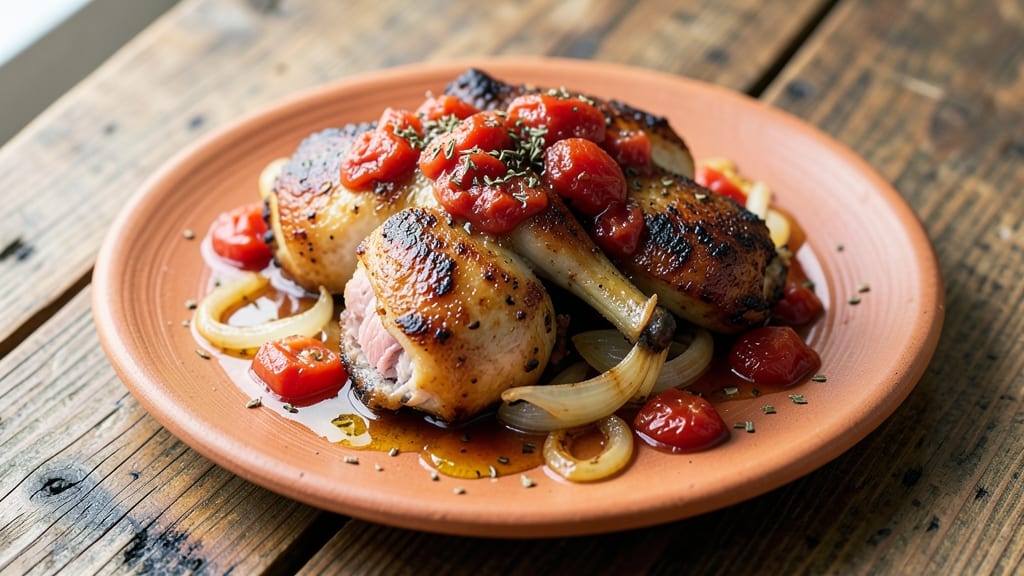
This chicken thighs with canned tomatoes recipe transforms simple pantry staples into a restaurant-worthy braise that’s rich, tender, and effortlessly flavorful. The secret lies in slow-cooking the thighs until they’re fall-apart juicy while letting the canned tomatoes caramelize into a thick, savory sauce—no fancy ingredients required.
I developed this method after realizing how often canned tomatoes get overlooked in home cooking, and it’s now my go-to weeknight dinner when I need something hearty yet hands-off.
The beauty of this dish is its versatility: it works equally well on the stovetop or in the oven, and the 40-minute timeline includes prep, cooking, and resting time.
You’ll start with seasoned chicken thighs seared in a hot pan, then simmered in a mix of canned tomatoes, aromatics, and herbs until the sauce reduces to a glossy, concentrated flavor.
The result is a dish where the chicken absorbs the deep, tangy essence of the tomatoes while staying impossibly tender.
What makes this recipe stand out is how it balances simplicity with depth—no special techniques, just precise timing and layering of flavors. The dish delivers crispy edges on the chicken, a sauce that clings to every bite, and a natural sweetness from the tomatoes that cuts through the richness.
Serve it over fluffy rice or with crusty bread to soak up every last drop of that velvety sauce, and you’ve got a meal that feels indulgent without requiring hours in the kitchen.
Once you try this method, you’ll never underestimate what canned tomatoes can do. The recipe scales easily for a crowd, and leftovers reheat beautifully, making it perfect for meal prep.
Whether you’re feeding a family or treating yourself to a cozy dinner, this one-pan wonder delivers professional-quality results with minimal effort. Let’s get cooking—your taste buds will thank you.
Ingredients for chicken thighs canned tomatoes
Pantry staples meet restaurant-quality flavor in this simple one-pan braise.
| Ingredient | Amount | Notes |
|---|---|---|
| Bone-In Chicken Thighs 🍗 | 1 ½ lb | Skin-on, trimmed of excess fat |
| Canned San Marzano Tomatoes 🍅 | 28 oz | Crushed or diced, no salt added |
| Yellow Onion 🧅 | 1 whole | Diced, about 1 cup |
| Garlic Cloves 🧄 | 4 cloves | Minced, about 1 tbsp |
| Extra-Virgin Olive Oil 🫒 | 2 tbsp | For searing chicken |
| Dried Oregano 🍃 | 1 tsp | Crushed between fingers |
| Dried Thyme 🌿 | 1 tsp | Or 1 tbsp fresh |
| Salt 🧂 | 1 ½ tsp | Kosher or sea salt |
| Ground Black Pepper 🌶️ | ½ tsp | Freshly ground |
| Bay Leaves 🌿 | 2 whole | Removed before serving |
| Red Wine 🍷 | ½ cup | Dry, like Cabernet Sauvignon |
| Chicken Broth 💧 | ½ cup | Low-sodium preferred |
| Fresh Parsley 🌿 | ¼ cup | Chopped, for garnish |
The chicken thighs are the star—bone-in and skin-on for maximum flavor. Look for thighs with good marbling at the grocery store; the butcher section often has better cuts. Trader Joe's or Whole Foods usually carry high-quality ones, but any well-marbled thigh works. San Marzano tomatoes are worth the splurge here—their sweetness and low acidity make all the difference. If you can't find them, any high-quality canned tomatoes (like Muir Glen) will do. The skin-on thighs crisp beautifully when seared, so don't peel it off—just pat it dry before cooking for better browning.
No red wine? Substitute with extra chicken broth—just use the full 0.5 cup. Fresh thyme is ideal, but dried works at one-third the amount. The oregano can be swapped for Italian seasoning if needed. For the tomatoes, if you accidentally grab salted ones, just reduce the added salt by half. The bay leaves add depth but can be skipped if you're short on herbs. The red wine adds complexity, but if you're avoiding alcohol, beef broth with a splash of balsamic works well too. The fresh parsley is optional but brightens up the dish—skip it if you're out, but add it back in if you've got it.
This dish reheats beautifully—honestly tastes better the next day once everything melds. Keeps for 4-5 days in the fridge, freezes for 3 months. I like to portion mine into containers so lunches are sorted for the week. The sauce thickens as it cools, so you can always add a splash of water or broth when reheating if it gets too thick. Store the chicken and sauce separately if freezing, then combine when reheating.
Why You'll Love This Recipe
- One-Pan Magic: I swear by this recipe when I’m too tired to wash extra dishes. Just toss the bone-in thighs, diced onion, and crushed garlic in a deep skillet with olive oil, let them sear until golden, then pour in those San Marzano tomatoes. That’s it—no straining, no fuss, just pure, sticky, flavorful perfection.
- San Marzano Secret Weapon: Honestly, the tomatoes make or break this dish. Their natural sweetness balances the richness of the thighs, while the acidity cuts through the fat just enough to keep every bite bright. I’ll be real: I’ve tried this with regular canned tomatoes, and it’s good, but San Marzano? That’s the difference between "dinner" and "I’d drive 20 minutes for this again."
- Leftovers That Beg for More: This recipe doubles as tomorrow’s lunch without any extra effort. The flavors only deepen overnight, so the next day, I reheat it with a splash of water or broth—suddenly, it’s a hearty soup or a quick pasta sauce. My kids actually ask for the leftovers, and that’s saying something.
- Budget-Friendly Luxury: Bone-in thighs are cheaper than breasts but way more forgiving, and they stay juicy no matter how long they cook. Pair that with a jar of tomatoes you’ll use for weeks, and you’ve got a meal that tastes like you spent hours on it—without the grocery bill to prove it. (Yes, even on a Tuesday night.)
Step-by-step instructions for braised chicken thighs with tomatoes
Here's how to create tender, flavorful chicken thighs in one pan using simple techniques.
Sear the Chicken Thighs Until Golden
Pat the 1.5 lb bone-in chicken thighs completely dry with paper towels. This step is crucial for achieving crispy skin. Heat 2 tbsp extra-virgin olive oil in a large Dutch oven over medium-high heat until shimmering. Place the chicken thighs skin-side down in the pan, leaving space between each piece. Press down gently on the thighs during the first minute to prevent curling.
Cook undisturbed for 5-6 minutes until the skin is deep golden brown and crispy. You'll know it's ready when it releases easily from the pan. Flip the chicken thighs and cook for another 4-5 minutes on the second side until golden brown. Remove the chicken from the pan and set aside on a plate, leaving the rendered fat in the pot.
Sauté Aromatics and Deglaze the Pan
In the same Dutch oven, add the diced yellow onion and cook over medium heat for 4-5 minutes until softened and translucent. Add the 4 cloves minced garlic cloves and cook for 30 seconds until fragrant. Be careful not to let the garlic burn—it should smell sweet and inviting, not bitter.
Pour in the 0.5 cup red wine and scrape up any browned bits from the bottom of the pan with a wooden spoon. This step, called deglazing, captures all the rich flavors that would otherwise stick to the pan. Let the wine simmer for 2-3 minutes until reduced by half, leaving behind a concentrated, flavorful liquid.
Build the Braising Sauce
Add the 28 oz canned San Marzano tomatoes, 0.5 cup chicken broth, 1.5 tsp salt, 0.5 tsp ground black pepper, 1 tsp dried oregano, 1 tsp dried thyme, and 2 whole bay leaves to the Dutch oven. Stir well to combine all ingredients. The mixture should be bubbling gently—this is your braising liquid that will infuse the chicken with deep, savory flavors.
Return the chicken thighs to the pot, skin-side up, along with any accumulated juices. Bring the mixture to a gentle simmer over medium-low heat. Here's the thing—you want the liquid to bubble softly around the chicken, not boil vigorously. Cover the pot with a tight-fitting lid and let it simmer for 25 minutes. This slow cooking ensures the chicken becomes fork-tender while absorbing all the rich tomato and herb flavors.
Finish and Rest the Chicken
After 25 minutes, remove the lid and increase the heat to medium. Simmer uncovered for an additional 5-7 minutes to reduce the sauce slightly and allow the flavors to concentrate. The chicken is done when it's fork-tender and the sauce has thickened to a velvety consistency. You'll notice the sauce clings to the chicken and coats the bottom of the pot.
Remove the 2 whole bay leaves before serving. Let the chicken rest for 5 minutes before serving. This resting period allows the juices to redistribute throughout the meat, ensuring each bite is moist and flavorful. Garnish with 0.25 cup chopped fresh parsley just before serving to add a fresh, bright contrast to the rich tomato sauce.
Pro Tips For Making Chicken Thighs Canned Tomatoes
- Brown the Skin First: Skip the direct-to-tomatoes shortcut—sear those thighs in olive oil over medium-high heat until the skin turns golden and crispy. I used to toss them in raw, and the sauce always tasted flat; the Maillard reaction from browning builds depth that canned tomatoes alone can’t match.
- Drain, Don’t Rinse Tomatoes: Open those San Marzano cans and drain the juice completely—no exceptions. The excess liquid dilutes the sauce, turning it into a watery stew. Save the juice for another day or use it to thin later if needed, but start with a dry base for a rich, concentrated flavor.
- Deglaze Aggressively: After searing the chicken, don’t just splash in a little wine or broth—scrape every last bit of browned bits from the pan with a wooden spoon while adding the onions and garlic. Those bits are pure flavor, and skipping this step is like leaving money on the table.
- Simmer Uncovered: Let that sauce reduce uncovered for the last 10–15 minutes, even if it looks scary. The evaporation tightens the texture and deepens the tomato flavor—covered simmering keeps it watery. (Yes, even if you’re impatient like me.)
Troubleshooting great chicken thighs canned tomatoes
Undercooked Chicken
If your chicken thighs feel rubbery or don't reach 165°F internal temperature, you likely didn't cook them long enough. Use a meat thermometer to check the thickest part of the thigh—it should read 165°F at the center.
For bone-in thighs, aim for 30-35 minutes total cooking time after searing. If they're still undercooked, return them to the pot with the sauce and simmer uncovered for another 5-10 minutes until fully done. 🌡️
Sauce Too Thin
The sauce may lack body if you didn't reduce it enough or used too much liquid. After simmering, increase heat to medium and cook uncovered for 10-15 extra minutes, stirring occasionally.
For a quicker fix, mix 1 tbsp cornstarch with 2 tbsp cold water, stir into the sauce, and simmer for 2-3 minutes until thickened. Alternatively, remove the chicken and reduce the sauce alone first, then return the chicken to reheat.
Tomato Flavor Fading
If the tomatoes taste bland, they may need more acidity or depth. Add 1 tsp balsamic vinegar or ½ tsp red pepper flakes to brighten flavors. For extra richness, stir in 1 tbsp tomato paste and simmer for 5 minutes.
Fresh herbs like basil or parsley added at the end also elevate the dish. The key is balancing sweetness—San Marzano tomatoes are naturally sweeter, so if using regular canned tomatoes, add ½ tsp sugar to complement.
Skin Not Crispy
Dull or soggy skin happens when chicken isn't dried properly or cooked at too low heat. Pat thighs extremely dry with paper towels before searing, and use a hot, dry pan (no oil needed if thighs are very fatty).
Sear over medium-high heat for 5-6 minutes undisturbed—don't rush this step. If skin sticks, it's not ready. For extra crispiness, broil for 2-3 minutes at the end, watching closely to avoid burning.
Overly Salty Dish
If the sauce tastes too salty, dilute it by adding ¼ cup warm water or broth and simmering for 5 minutes. For a more dramatic fix, remove the chicken and reduce the sauce alone until it thickens, then return the chicken and adjust seasoning.
If using salted canned tomatoes, reduce added salt by ½ tsp initially. Taste as you go—it's easier to add more salt later than to fix oversalting.
Burnt Onions or Garlic
Onions or garlic burn when cooked too long at high heat. Sauté onions over medium heat for 4-5 minutes until soft but not browned. Add garlic only in the last 30 seconds of cooking—it should smell sweet, not bitter.
If they burn, remove the pan from heat immediately and scrape out the burnt bits with a spoon. Replace with fresh aromatics if needed, or cover the burnt flavor with extra tomatoes or herbs.
Nutrition facts
Frequently asked questions
Can I use boneless chicken thighs instead of bone-in?
Yes, but adjust the cooking time! Boneless thighs cook faster—reduce the braising time to 20 minutes instead of 25 minutes and check for doneness at 165°F. The sauce will still work perfectly, though bone-in thighs add deeper flavor and stay juicier longer.
What's the best way to store leftovers?
Store in an airtight container with the sauce for up to 4-5 days in the fridge. Reheat gently on the stovetop over low heat with a splash of water or broth to restore moisture. For freezing, separate the chicken and sauce—freeze for 3 months and thaw overnight in the fridge. The sauce thickens when cold, so thin with broth when reheating.
Can I make this in a slow cooker?
Sear the chicken first, then transfer everything to a slow cooker. Cook on low for 4-5 hours or high for 2-3 hours until chicken reaches 165°F. The slow cooker makes the sauce even more tender and concentrated. Just skip the final uncovered simmer—it won't reduce as much.
Why does my sauce turn out watery?
This usually happens if you didn't reduce the sauce long enough or used too much liquid. After simmering, increase heat to medium and cook uncovered for 10-15 extra minutes, stirring occasionally. For instant thickening, mix 1 tbsp cornstarch with 2 tbsp cold water, stir into the sauce, and simmer for 2-3 minutes. The sauce should coat the back of a spoon when done.
What sides pair best with this dish?
This braise shines with fluffy jasmine rice or crusty Italian bread to soak up the sauce. For a lighter option, serve with roasted potatoes or a fresh arugula salad with lemon vinaigrette. The rich tomato sauce balances well with bright, acidic flavors like capers or pickled vegetables too.